Scientific Notation Of 0.00006

Ever stumble upon a number so small it makes your head spin just trying to count the zeros? Or maybe a number so massive it takes up half your screen? That's where scientific notation comes to the rescue! It's like a secret code that makes dealing with incredibly large or incredibly small numbers a breeze. Think of it as a superpower for simplifying the universe, one digit at a time. And trust me, learning it is surprisingly fun, like cracking a mathematical puzzle.
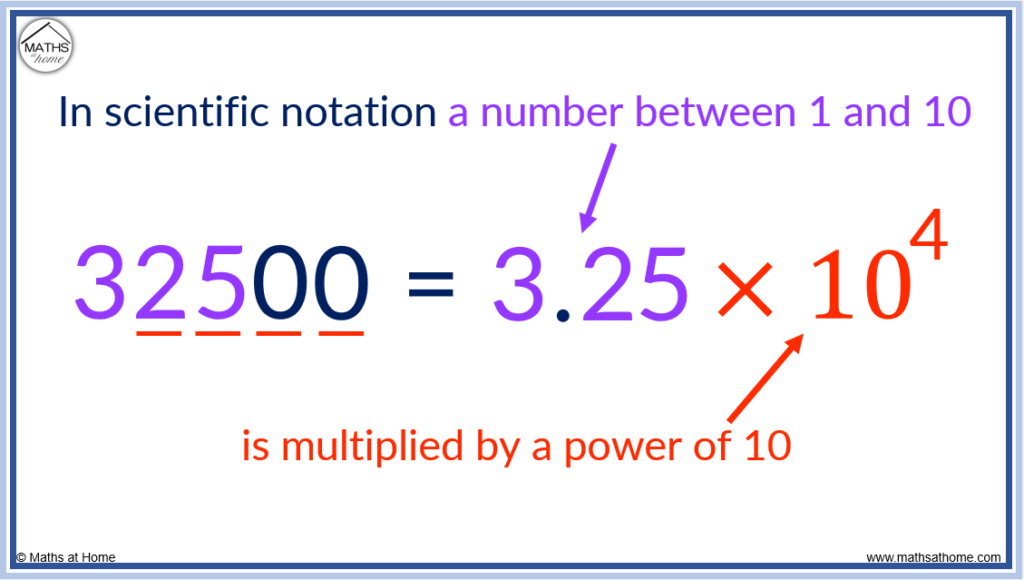
So, what exactly is scientific notation? At its heart, it's a way of expressing any number as a number between 1 and 10 (we call this the coefficient) multiplied by a power of 10. The power of 10 tells you how many places to move the decimal point to get back to the original number. This is especially useful when you're talking about things like the distance to faraway galaxies or the size of tiny bacteria. For instance, the number 0.00006, which is our focus here, can be elegantly expressed using scientific notation.
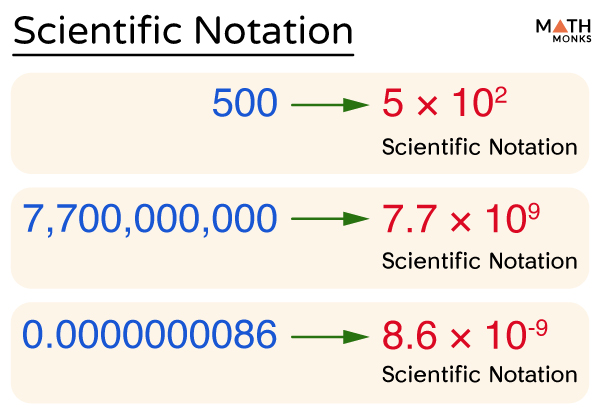
The purpose of scientific notation is simple: to simplify and standardize the way we write and manipulate very large and very small numbers. Imagine trying to do calculations with numbers like 0.00000000000000000000000000166 (the mass of a hydrogen atom in kilograms). It's not only tedious to write, but it's also incredibly easy to make a mistake when counting all those zeros. Scientific notation solves this problem by condensing the number into a more manageable form.
Must Read
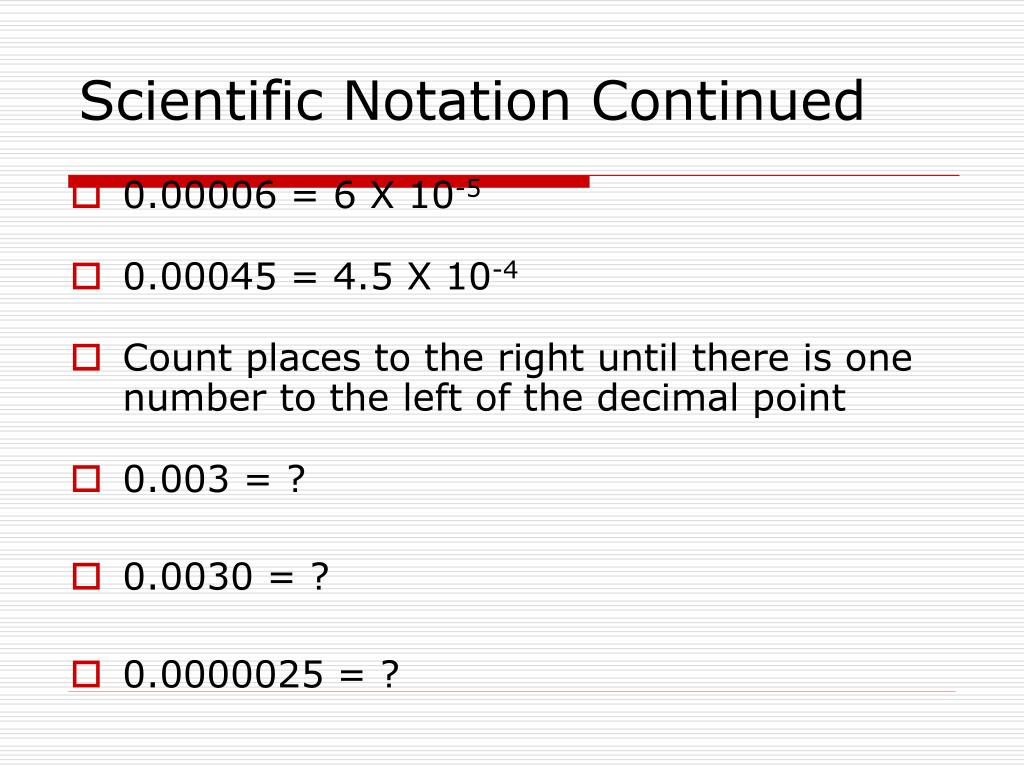
Now, let's get back to our example: 0.00006. To convert this to scientific notation, we need to find the coefficient (a number between 1 and 10). We do this by moving the decimal point to the right until we have 6.0. We moved the decimal point 5 places to the right. Since we moved the decimal to the right to get a number between 1 and 10, the exponent will be negative. Therefore, 0.00006 in scientific notation is 6.0 x 10⁻⁵. See? Much easier to write and understand!
Scientific notation isn't just some abstract concept confined to textbooks. You'll find it in education, especially in subjects like physics, chemistry, and astronomy, where extreme numbers are commonplace. But it also pops up in daily life! Think about the storage capacity of your computer's hard drive (often expressed in terabytes, which is a massive number) or the tiny amounts of ingredients in your medicines (measured in micrograms). Even in cooking, you might encounter recipes that call for minuscule amounts of spices expressed in a similar, though less formal, way.
Want to explore scientific notation further? It's easier than you think! Start by practicing converting small numbers, like 0.001 or 0.0000001, into scientific notation. You can also look at the specifications of electronic devices – you’ll often find memory sizes or processing speeds expressed in ways that are essentially simplified scientific notation. Try downloading a scientific calculator app on your phone; many of these have dedicated buttons for entering and displaying numbers in scientific notation. Experiment, play around, and don't be afraid to make mistakes! The more you practice, the more comfortable you'll become with this powerful tool.