
Safest Place In World From Natural Disasters
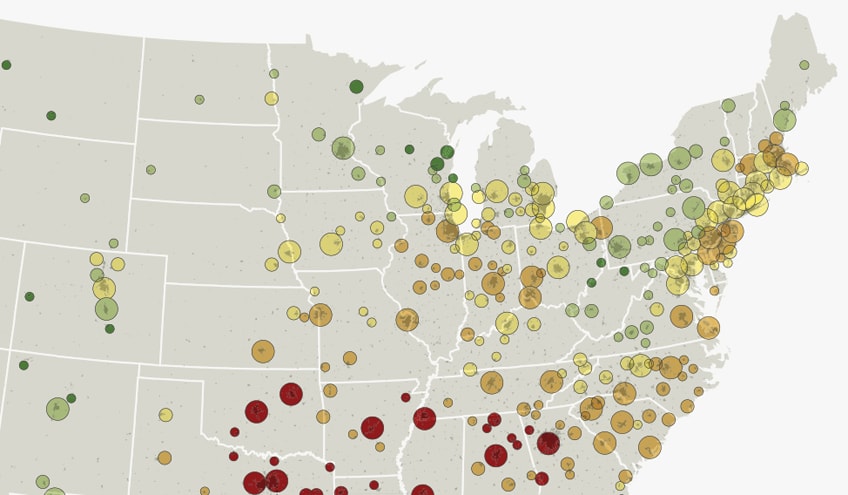
Ever wonder, just for kicks, where you’d bolt if Mother Nature decided to throw her absolute worst tantrum? Like, if she went full Godzilla on the planet? We're not talking about zombie apocalypses here, just good old-fashioned floods, quakes, and fiery mountains. It’s a fun thought experiment, right?
Because let's be real, some places just seem to be asking for it. Living on the "Ring of Fire"? Enjoying a sunny beach house that's practically in the ocean? Brave. Admirable, even. But maybe not the top choice for disaster-proofing your life.
So, Where's the Chill Zone?
Our quest for the ultimate safe haven begins by kicking out the obvious troublemakers. Islands? Nope! Pretty, but tsunamis love islands. Volcanoes? Double nope! They’re literally ticking time bombs. Coasts? Sorry, hurricane magnets and flood zones galore. High mountains? Landslides and avalanches wave hello. Deep valleys? Flash floods are not your friend.
Must Read
This isn't about finding a place where nothing bad ever happens. That's a unicorn. This is about finding the spot that seems to have drawn the shortest straw in the "natural disaster lottery." The place where the biggest worry might be a really stubborn gnat or running out of milk.
You might think, "Oh, surely it's somewhere super remote, like a bunker in the Arctic!" While the Arctic is certainly remote, it's also got its own unique charms, like minuscule temperatures and the distinct possibility of becoming a polar bear's afternoon snack. Not exactly chill, pun intended.

The Geologically "Boring" Sweet Spot
Turns out, the safest spots are often the most… unassuming. We're talking about places that are far from tectonic plate boundaries. Think of the Earth as a giant jigsaw puzzle. Where the pieces meet? That’s where the exciting (read: terrifying) stuff happens: earthquakes, volcanoes, mountain building. We want the boring, flat middle of a really big, stable puzzle piece.
So, we're looking for landlocked locations, away from coastlines, and definitely not near any major fault lines. We want somewhere with a fairly stable, moderate climate – not prone to extreme heatwaves, brutal blizzards, or endless droughts. It's a tall order, but surprisingly, some places come pretty darn close.

Imagine a place where the ground underfoot hasn't rumbled in millennia. Where the nearest active volcano is so far away, it might as well be on Mars. And the ocean? A distant, hazy memory. Sounds kind of peaceful, doesn't it?
The Unsung Heroes of Safety
One of the top contenders often cited for its lack of dramatic natural flair is Botswana. Yep, in Southern Africa. It's landlocked, situated on a very stable part of the African plate, and far from major seismic zones. Volcanoes? Nope. Tsunamis? Impossible. Hurricanes? Not a thing here. Floods? Mostly localized, not continent-swallowing events. The biggest natural "drama" might be a drought, which, while serious, isn't exactly a Hollywood-style disaster movie.

Another quirky candidate? Certain deep, inland parts of Australia. While the coastal regions can get a bit wild (cyclones, bushfires), vast swathes of the interior are incredibly stable. No volcanoes, no major earthquakes, miles and miles from any tsunami threat. Of course, you've got to contend with the heat, the isolation, and some truly unique wildlife that might give you a fright, but that’s a different kind of "natural disaster" altogether, right?
Then there are places in the interior of continents like parts of Canada or the stable shields of northern Europe. Think ancient, worn-down geology that's been chilling out for billions of years. These areas are far from oceanic mayhem and tectonic tantrums. While they might get blizzards or the occasional tornado (looking at you, North America!), they generally avoid the "big five" – major earthquakes, tsunamis, volcanoes, hurricanes/cyclones, and widespread mega-floods.

The Catch (There's Always a Catch!)
Now, before you pack your bags for Gaborone or the middle of the Nullarbor Plain, let's inject a little reality. No place on Earth is 100% immune. Even the "safest" spots have their quirks. Botswana has droughts and heat. The Australian outback has heat, drought, and critters that look like they escaped from a sci-fi movie. Interior Canada has bone-chilling winters and, well, mosquitoes the size of small birds.
The "safest" place is often also the most remote, the most isolated, or the one with the fewest people. Because, let's face it, natural disasters become "disasters" when they impact human populations. A massive earthquake in an uninhabited desert is just geology doing its thing. An earthquake in a bustling city? Catastrophe.
So, while it’s fun to imagine a perfectly serene bubble, the real takeaway is a bit more nuanced. It's about understanding risks, appreciating the incredible forces shaping our planet, and maybe, just maybe, making sure your emergency kit is stocked, no matter where you live. Because even in the calmest corners, nature always has a surprise up her sleeve!