Okay, picture this: You're hosting the world's most epic potluck. Mountains of deliciousness everywhere! But you need to quickly find out if anyone brought a dish with, say, nuts (because Aunt Mildred has… well, let's just say she really dislikes nuts). That's kind of like querying a MongoDB database with Ruby, checking if a certain value lives inside an array. Let's dive into how we wrangle those pesky arrays with Ruby and MongoDB!
Finding the Dish of Your Dreams (or Nightmares!)
Imagine your MongoDB collection is like a super-organized recipe book. Each document is a recipe, and some recipes have an "ingredients" field. This field is an array, listing all the culinary goodies required. Now, you want to find all the recipes that use "chocolate." Time to roll up our sleeves!
First, you need your Ruby code to connect to your MongoDB database. Let's assume you've already done that. You've got a @recipes collection object, ready and waiting to be queried. The magic happens with the .find method, which lets you specify criteria to filter your data.
To find recipes that use chocolate, we use this groovy incantation:
@recipes.find(ingredients: "chocolate")
BAM! That's it! MongoDB is off hunting, ferreting out all the documents where the ingredients array contains the string "chocolate". Easy peasy lemon squeezy!
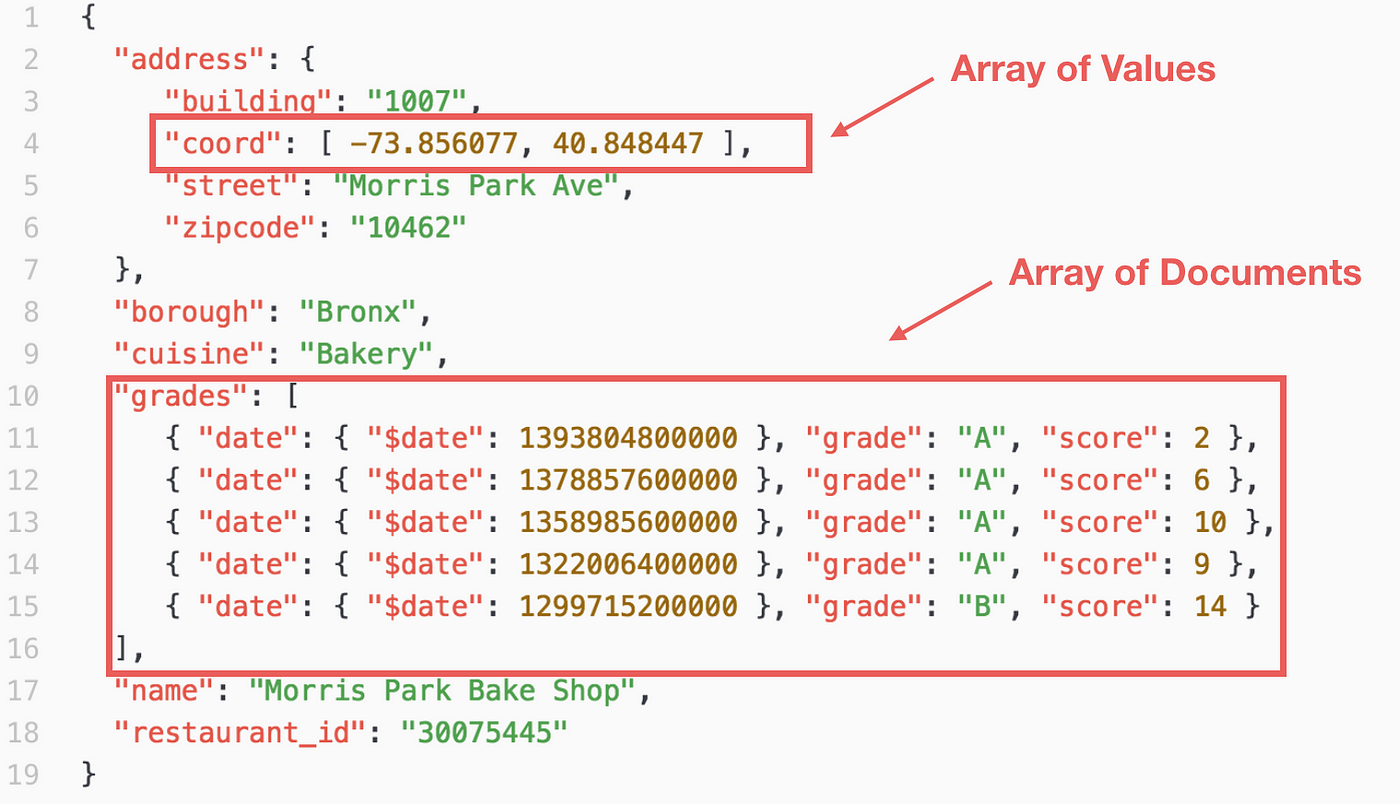
MongoDB Query Array | How query array works in MongoDB?
More Than Just Chocolate: A World of Possibilities!
But what if you're a bit more discerning than just "chocolate"? Maybe you want recipes that have "chocolate" and "peanuts"? Well, buckle up, because it gets even more powerful! You can combine conditions with MongoDB's operators, which are like little coding ninjas.
If you only want the Peanut Butter Cup Brownies (because, let's be honest, they sound amazing), you can use the $all operator! This little gem ensures that all the specified values are present in the array.
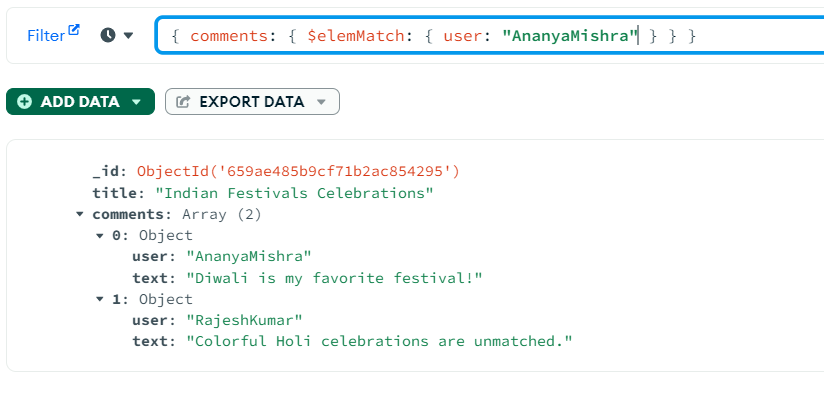
MongoDB nested array string field value length query - TheCodeBuzz
This query will only return the Peanut Butter Cup Brownies recipe. The Chocolate Chip Cookies recipe, sadly, will be left in the cold.
Feeling fancy? You can also use the $in operator to check if any of a list of values exists in the array. Maybe you want to find recipes that contain either "chocolate" or "vanilla". This operator is your new best friend:
This will grab any recipe that lists either chocolate or vanilla in its ingredients. Imagine the possibilities! Chocolate cake, vanilla ice cream, maybe even a chocolate-vanilla swirl masterpiece!
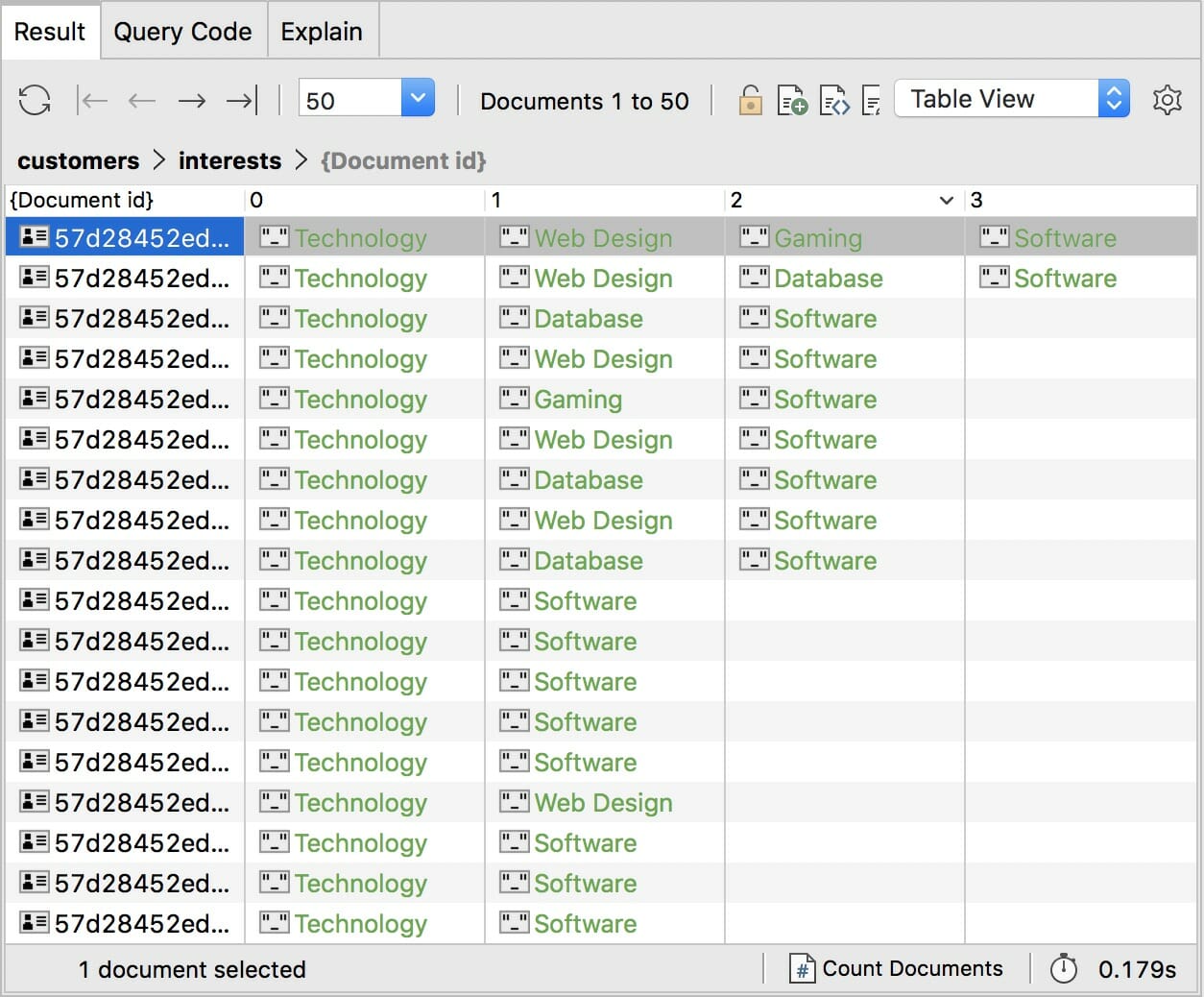
How to Query MongoDB Arrays Without Using the mongo Shell
Beware the Case Sensitivity Dragon!
Now, a word of caution! MongoDB, by default, is quite picky about capitalization. "Chocolate" is not the same as "chocolate" (unless you're talking to my spellchecker). If you want to ignore capitalization, you'll need to unleash the power of regular expressions!
That /chocolate/i bit is a regular expression that tells MongoDB to find "chocolate" regardless of case. The i flag makes it case-insensitive. This is like shouting "CHOCOLATE!" at your database and having it understand you perfectly, even if you whisper "chocolate".
So, there you have it! Querying MongoDB arrays with Ruby is like being a culinary detective, sniffing out specific ingredients in a vast collection of recipes. With these tools in your arsenal, you'll be whipping up database queries like a seasoned chef in no time! Go forth and conquer those arrays! And maybe bake some Peanut Butter Cup Brownies while you're at it. You deserve it.