
Recharge Ac Com Service Port Finder
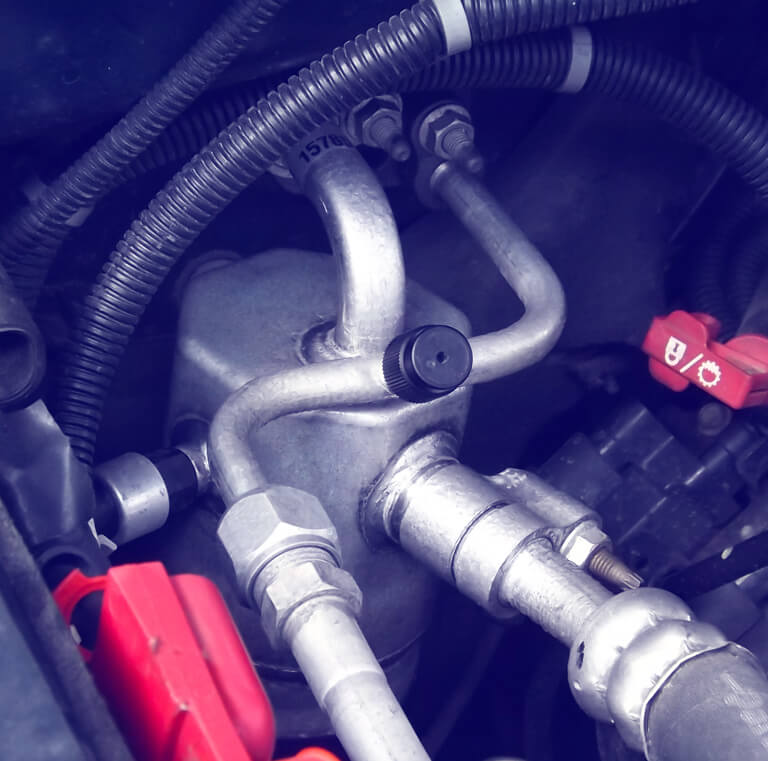
Okay, so picture this: You're cruising down the highway, windows up, feeling like the king or queen of the road. Except... wait a minute. Why is it suddenly feeling like you're trapped in a sauna? Your car's AC has decided to stage a rebellion and is blowing hot air like it's auditioning for a dragon movie. Time to recharge that bad boy! But here's the million-dollar question: where in the automotive world do you even start? Fear not, my friend! We're about to embark on a quest – a quest to find the elusive AC service ports.
Think of your car's AC system like a circulatory system, only instead of blood, it's refrigerant coursing through its metallic veins. And just like a doctor needs access points to check your health, you need access points to recharge your AC. These access points are called service ports – also known as fittings, valves or even Schrader valves if you want to impress your mechanic – and they're your gateway to icy cool bliss.
The Great AC Port Hide-and-Seek
Now, finding these ports can feel like a game of automotive hide-and-seek. Carmakers, in their infinite wisdom (or perhaps to boost the local mechanic's business), like to stash them in various locations. It's like an Easter egg hunt, only instead of chocolate, you get the satisfaction of a working AC system. (Okay, maybe slightly less satisfying than chocolate.)
Must Read
First, let's talk about the suspects. There are typically two ports: a low-pressure port and a high-pressure port. And here's the kicker: you'll only be using the low-pressure port for recharging. Trying to hook up your recharge kit to the high-pressure side is like trying to fit a square peg in a round hole – it won't work, and it could even be dangerous! Think of it as trying to convince your cat to enjoy bath time; the cat, like the system, simply will not appreciate it.
Pro-tip: The ports are different sizes, and recharge kits are designed to only fit the low-pressure port. It's a safety mechanism, because accidentally hooking up to the high-pressure side is a very bad idea. We're talking potential damage to your AC system, or even worse – injury! So, always double-check before you connect anything.

Where Are They Hiding? Common Suspect Locations
So, where are these sneaky little ports lurking? Here are a few prime locations to start your search:
*Under the Hood: This is the most common hiding place. Pop the hood and start scanning. Look near the firewall (that's the metal barrier between the engine and the passenger compartment). Also, check near the accumulator (a cylindrical metal container, often black, silver, or blue) or the compressor (a pump driven by the engine).
*Along AC Lines: Trace the AC lines (the metal or rubber tubes that carry the refrigerant). The ports are often located somewhere along these lines. It's like following a treasure map, but instead of X marking the spot, it's a small cap with a valve underneath.

Engine Compartment Sides: Sometimes, just to keep things interesting, car manufacturers decide to tuck the ports on the sides of the engine compartment, near the wheel wells. Because why make things easy, right?
Remember: The low-pressure port will typically have a cap labeled "L" or "Low." However, don't rely solely on labels! Always compare the size of the port to the connector on your recharge kit. If it doesn't fit easily, don't force it!

The Size Matters (And So Does the Shape!)
As we touched on earlier, port size is key. The low-pressure port is usually smaller than the high-pressure port. It’s like the difference between a regular straw and one of those jumbo-sized smoothie straws. Also, the shape of the connector can vary, but they're usually capped. It's kind of like tiny little hats for your AC system. Make sure you remove the cap before attempting to connect your recharge kit.
Still Lost? Enlist Some Help!
If you've searched high and low, and your AC service ports are playing Houdini, don't despair! There are a few things you can do:
*Consult Your Owner's Manual: Believe it or not, your car's owner's manual might actually be useful! (I know, shocking, right?) Some manuals will show the location of the AC service ports. It's worth a look, even if it's just to confirm that the ports are indeed hidden somewhere on your vehicle.

Search Online: The internet is a treasure trove of information (and cat videos, of course). Search for "[Your Car Make and Model] AC Service Port Location" on Google or YouTube. You might find a video or forum post that shows exactly where to find them.
*Ask a Mechanic: If all else fails, don't be afraid to ask a professional. A mechanic can quickly locate the ports and even recharge your AC system for you. Sure, it'll cost you some money, but think of it as an investment in your sanity (and your comfort on those hot summer days).
So, there you have it! Your crash course in finding the elusive AC service ports. With a little patience and a bit of detective work, you'll be well on your way to restoring your car's AC to its former glory. And remember, stay cool, be safe, and don’t forget to celebrate with a well-deserved ice cream after your mission is accomplished!