
Recharge Ac Com Ac Service Port Finder
Ever felt that blast of summer air hitting you like a betrayal because your car AC is blowing warmer than a politician's promises? We've all been there. It's the automotive equivalent of ordering a refreshing iced latte and getting a lukewarm cup of sadness.
But before you resign yourself to a summer of sweaty commutes, let's talk about reclaiming your cool. A big part of that is understanding your car's AC system, and specifically, knowing how to give it a little recharge. That's where knowing about your AC service port comes in. Think of it as the gateway to a cooler you.
Decoding the AC System: A Breath of Fresh (Cold) Air
Your car's AC is a closed system that relies on refrigerant to cool the air. Over time, refrigerant can leak, leading to a decline in cooling performance. This is where a recharge comes in handy, and to do that, you need to find the right port. It's kind of like knowing where to plug in your phone – essential for keeping things running smoothly.
Must Read
So, what is an AC service port? It’s a valve that allows you to add refrigerant to your AC system. Finding it is the first step to becoming your own personal AC technician (okay, maybe not that professional, but certainly empowered).
The Great AC Service Port Hunt: Where to Look
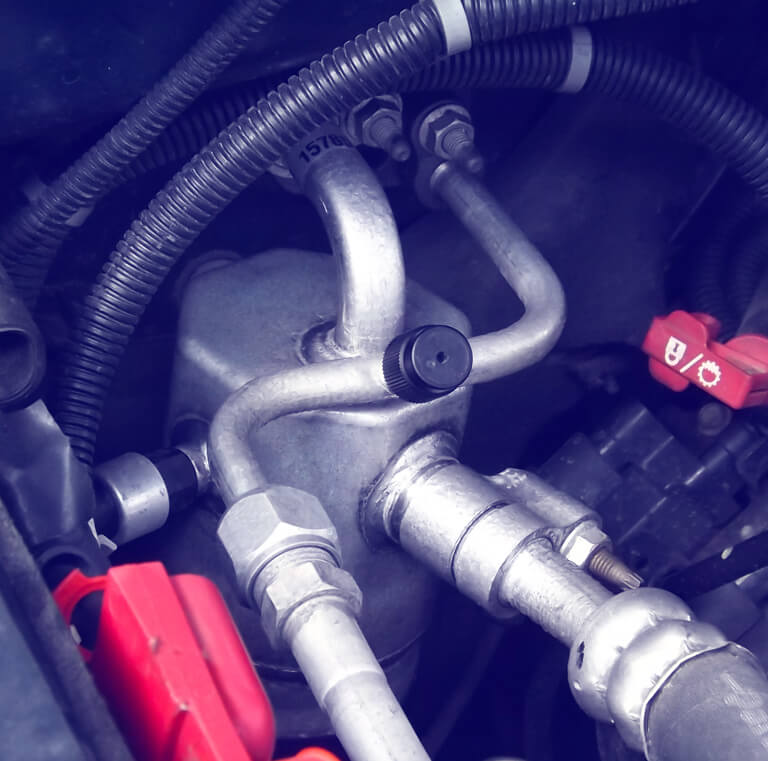
The AC system actually has two ports, the high-pressure and low-pressure ports. When recharging, you'll only be using the low-pressure port. It's usually found under the hood, near the compressor or accumulator. Don’t worry, it's not hidden like the Ark of the Covenant. Think of it more like where you'd expect it to be: near the AC components.

Here are a few tips for your search:
- Look for caps labeled "L" or "Low." These are your clues. They’re often plastic and color-coded (usually black).
- Follow the AC lines. Trace the metal lines coming from the compressor. The low-pressure port is generally along one of these lines.
- Consult your car's manual. Yes, the dusty tome in your glove compartment might actually be useful. Many manuals have diagrams showing the location of the service ports.
Important safety tip: Always wear safety glasses when working with your car's AC system. Refrigerant can cause serious injury if it comes into contact with your eyes.

Recharge Kits: The DIY Approach to Coolness
Once you’ve located the low-pressure service port, you'll need a recharge kit. These kits typically include a can of refrigerant, a hose with a gauge, and instructions. Follow the instructions carefully. Overcharging can be just as bad as undercharging and can damage your AC system.
Think of it like seasoning a dish: a little is good, too much can ruin the whole thing. The gauge on the recharge kit helps you monitor the pressure and avoid overfilling.

When to Call in the Pros
While recharging your AC can be a DIY project, there are times when it's best to seek professional help. If you suspect a major leak, if you're not comfortable working on your car, or if you've tried recharging and it's still not working, it's time to visit a qualified mechanic. They have the tools and expertise to diagnose and repair more complex AC problems.
Trying to fix a serious AC issue yourself without the right knowledge can be like trying to conduct an orchestra without knowing how to read music – it’s probably not going to end well.

A Little Slice of Automotive History
Did you know that car AC wasn't always a standard feature? It was a luxury option for decades, and early systems were notoriously unreliable. Imagine driving a classic Cadillac in the summer heat without AC! Talk about a sweaty situation.
Now, we have readily available recharge options and a general expectation of icy-cold air on demand. How far we've come!
Reflection: Finding Cool in the Everyday
The quest for a functioning car AC system might seem like a small thing, but it's a reminder of how much we rely on these little comforts in our daily lives. It's also a great example of how a little knowledge and some DIY spirit can empower us to take control of our surroundings and improve our quality of life. So, whether you're battling the summer heat or just want to keep your car running smoothly, knowing your way around your AC system is a valuable skill. Stay cool out there!