
Professional Security Monitoring Services Components
Alright, grab yourself a coffee, pull up a chair. We're about to delve into something that sounds utterly mundane but is actually kind of like a secret superhero lair for your home or business: Professional Security Monitoring Services. Now, you might think it's just a camera watching a dude trip over a garden gnome, but oh, my friend, it's so much more! It's a whole orchestra of tech, working in harmony to keep the bad guys (and sometimes, your mischievous cat) at bay.
The Eyes and Ears: Your Sensors – Not Just for Spies Anymore!
First up, we've got the sensors. These are the unsung heroes, the little tattletales of your security system. Think of them as tiny, highly observant guardians scattered around your property.
You’ve got your classic door and window sensors. These are like a digital "Do Not Disturb" sign. If someone opens a door or window that shouldn't be opened, BAM! Alarm triggered. They're surprisingly simple but incredibly effective. I once saw a professional installation where a window sensor was placed so discreetly, it looked like part of the window frame. Very James Bond, if James Bond was protecting a suburban ranch house.
Must Read
Then there are the motion detectors. These guys are basically invisible tripwires. They use infrared technology to sense changes in heat, which usually means a body (or, let's be honest, your dog doing zoomies at 3 AM). Modern ones are often pet-immune, meaning Fido won't set off the alarm unless he's somehow learned to levitate a small human and carry them past the sensor. Ahem, just kidding... mostly.
My personal favorite for a touch of drama? The glass break detectors. These are acoustic marvels. They don't just react to any loud noise; they're specifically tuned to the unique frequency of shattering glass. So, your kid practicing the drums? Fine. Your clumsy relative dropping a plate? No problem. A burglar trying to smash their way in? WHOOP WHOOP WHOOP! It's like having a tiny, well-trained bat listening out for trouble.
And let's not forget the environmental sensors. These aren't just about burglars! We're talking smoke detectors that call for help even if you're not home, carbon monoxide detectors (a silent killer, seriously, get one!), and even flood sensors. Did you know CO alarms save hundreds of lives a year? They're more than just security; they're life security.

The Brains of the Operation: The Control Panel
Now, all these clever sensors need a central command post, right? That's where the control panel comes in. This is the brain, the central nervous system, the grand orchestrator of your security system. It collects all the information from your sensors and decides what to do next.
Modern control panels are often sleek touchscreens, far cry from those bulky beige boxes of yesteryear. They let you arm and disarm your system, see sensor statuses, and probably even tell you the weather (okay, maybe not the weather, but it feels like they could). Many also offer remote access via a smartphone app, so you can arm your house from your car, your office, or even from a beach in Aruba. Just remember not to accidentally disarm it while you're half-asleep scrolling through cat videos!
The Lifeline: Communication Path – Because It Needs to Tell Someone!
So, the sensors detect trouble, the control panel processes it. But then what? It needs to scream for help! That scream travels via the communication path.

The most popular and reliable option these days is cellular monitoring. Think of it like your home security system having its own indestructible cell phone. No phone lines to cut, no internet wires to snip. It's dedicated, encrypted, and generally considered the most secure way to transmit alarm signals. It's like having a direct, unblockable line to the good guys.
Many systems also use internet (IP) monitoring. This is fast and efficient, but it relies on your home internet connection. If your internet goes down (thanks, squirrel!), so does that communication path. That's why often, systems will use a dual-path communication, combining both cellular and IP. It’s like having a primary road and a super-secret backup tunnel, just in case.
And then there's the old stalwart, the POTS line (Plain Old Telephone Service). Yes, the landline. It still exists! While reliable in its day, it's easily cut by an intruder and honestly, who even has a landline anymore? It's like sending a fax when you could just send an email. It works, but it’s definitely not the preferred modern method.
The Watchdogs: The Monitoring Center
Okay, the system detected an intruder, the control panel got the message, and it sent out an SOS via cellular. Who receives it? Enter the monitoring center. These are the real unsung heroes, operating 24/7, 365 days a year.
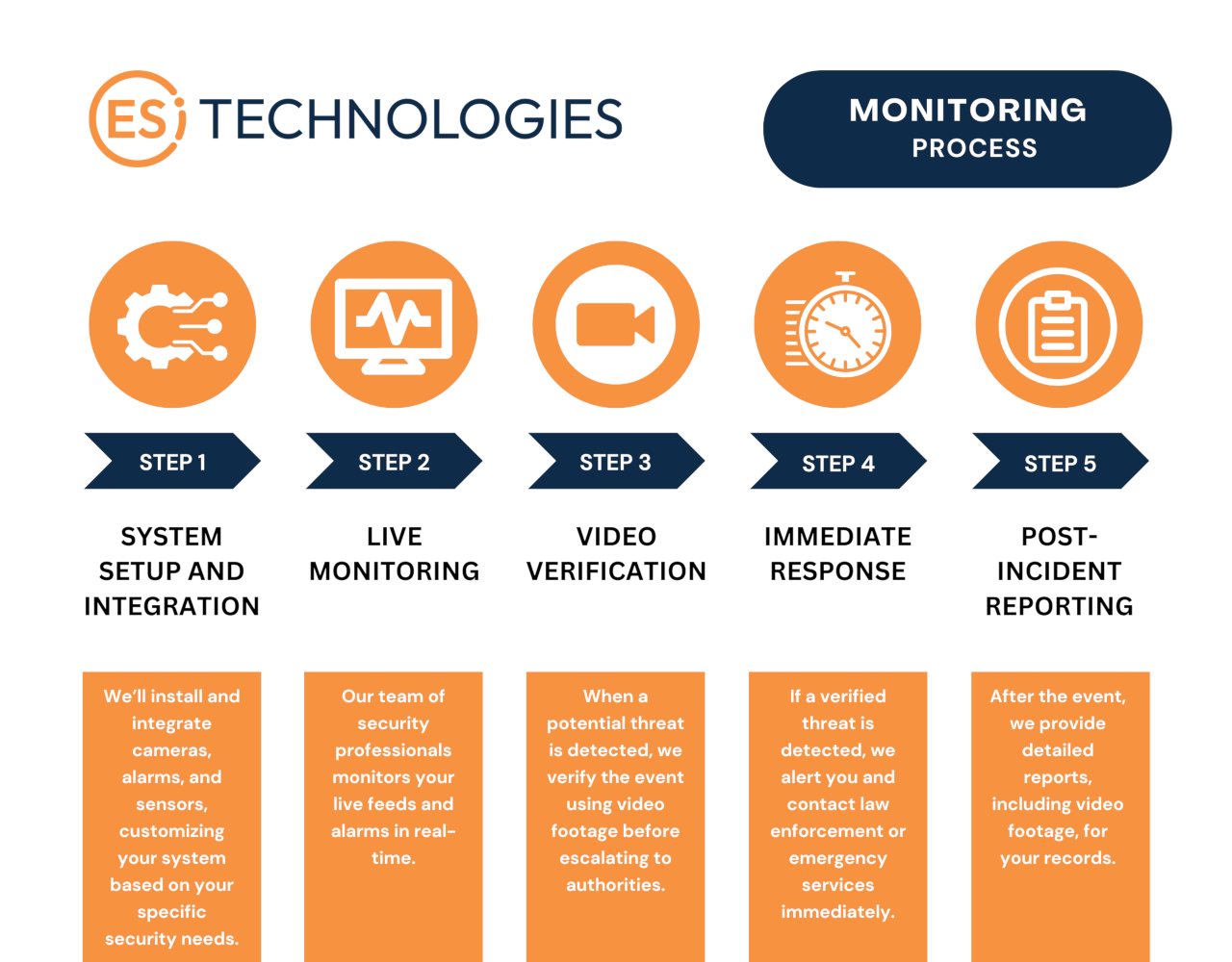
Imagine a room full of highly trained individuals, staring at screens, ready to spring into action. They're not just waiting for alarms; they're also verifying signals, trying to reach you first to ensure it's not a false alarm (because nobody wants to waste police resources for a rogue curtain flapping in the wind). They're like air traffic controllers for emergencies.
When an alarm comes in, their first step is often to try and contact you or your designated contacts. If they can't reach anyone, or if you confirm there's a problem, then they dispatch the appropriate authorities – police, fire, or even paramedics. They’re essentially your personal emergency dispatchers, but instead of relying on you to call 911, your house calls them!

The Action Plan: Response Protocols
Finally, we have the response protocols. This is the carefully choreographed dance of what happens after the alarm signal reaches the monitoring center. It’s not just a blind call to the police.
Most reputable monitoring services have a detailed protocol. They’ll attempt to verify the alarm, often by calling your home or your cell phone. This verification step is crucial for reducing false alarms. Then, if needed, they contact the appropriate emergency services. And guess what? Some even offer video verification, where they can actually peek at your cameras to confirm a break-in, leading to faster, higher-priority police response.
So, there you have it. From tiny sensors to dedicated communication paths and 24/7 human vigilance, professional security monitoring services are a sophisticated, interconnected system designed to give you peace of mind. It’s not just about cameras and loud sirens; it's a symphony of technology and human expertise working together. And frankly, knowing all that, maybe I should teach my cat to disarm the system. Just kidding... mostly.