
Placement Of Carbon Monoxide Detector
Okay, so picture this: I recently decided it was time to finally tackle that neglected corner of the garage, you know, the one where good intentions go to die? Dust bunnies the size of small rodents, tools I hadn't seen since the Bush administration, and a general air of "I'll get to it someday." Anyway, as I was digging through the archaeological layers of forgotten projects, I stumbled upon a box of miscellaneous bits and bobs. Inside? A brand-new, still-in-the-plastic carbon monoxide detector. And a wave of, shall we say, mild panic washed over me.
My immediate thought was, "Oh, right! I bought this ages ago and totally forgot." My second thought, probably more concerning, was "Where on earth was I actually supposed to put this thing?" Because, let's be honest, we all know we need them, like seatbelts or a good Wi-Fi password, but the specifics? That's where things get a little fuzzy for a lot of us, isn't it? Hands up if you’ve ever just slapped it on the wall next to the smoke detector and called it a day. (Guilty as charged, once upon a time.)
The Silent Sneak: Why Placement Really Matters
Carbon monoxide, or CO for short, is the ultimate stealth villain. It's invisible, odorless, and tasteless. You literally won't know it's there until it starts messing with your brain and body. That's why proper detector placement isn't just a suggestion; it’s a lifesaver. Unlike a smoke detector that reacts to visible particles, a CO detector needs to be where the gas is most likely to build up and, crucially, where it can warn you before you’re in serious trouble.
Must Read
Think of it like this: you wouldn't put a lifeguard in the deep end if everyone swims in the shallow end, right? Same principle applies here. We need our little guardians in the right spots.
Myth Busting: Where NOT to Put It
Before we dive into the "where to," let's clear up some common pitfalls. Because, hey, nobody wants to spend good money on a safety device only to render it useless, or worse, have it chirp at you constantly for no good reason.
- Right next to fuel-burning appliances: Your furnace, water heater, gas stove – these are potential sources, yes, but putting the detector too close can lead to false alarms from small, safe amounts of CO during startup or brief operation. Give it some space, folks.
- In the garage: I know, you’re thinking, "But my car engine! CO!" And you're right. But car exhaust is expected in a garage. A detector here will just constantly go off, making you pull your hair out and eventually ignore it. Plus, you're not generally sleeping in your garage, are you?
- Too close to windows or vents: Air currents can dilute or push away CO, meaning your detector might not pick up on a real problem quickly enough. Keep it away from drafts.
- High-humidity areas: Bathrooms, laundry rooms. The moisture can interfere with the sensor and lead to false alarms or even damage the unit.
- Direct sunlight or extreme temperatures: Heat and cold can affect the sensor's accuracy.
The Sweet Spot: Where to Place Your CO Detector
Alright, now for the important stuff. The places where your CO detector can truly shine and keep your household safe. This is where you want to pay close attention.
1. Near Sleeping Areas (The Absolute Must-Do)
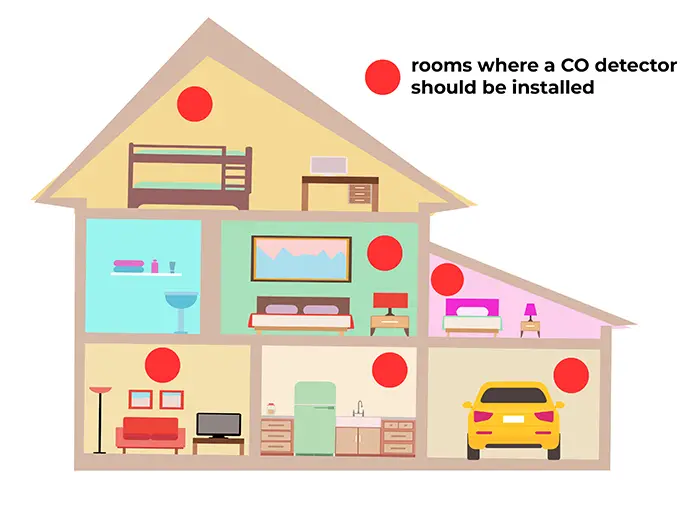
This is probably the most critical placement. Why? Because you're most vulnerable when you're asleep. You won't smell or see CO, and your body's initial warning signs (headache, dizziness) might just feel like a bad dream or the onset of the flu. A detector near bedrooms gives you the best chance of waking up and reacting before it's too late. Think hallway outside bedrooms, or even inside larger bedrooms.
2. On Every Level of Your Home
If you have a multi-story house, you need a detector on every single level. CO can spread throughout a home, and one detector on the first floor isn't going to cut it if a problem starts upstairs while you're downstairs, or vice versa. More is definitely better here, especially if you have an attached garage or multiple fuel-burning appliances.

3. Near Fuel-Burning Appliances (But Not Too Close!)
Yes, I just said don't put it right next to them. But having one in the vicinity of potential sources like your furnace, water heater, or fireplace is still a good idea. A good rule of thumb is 5 to 20 feet away from these appliances. This gives it enough distance to avoid false alarms but still be close enough to detect an issue quickly.
4. At the Right Height
This is another common point of confusion. CO is slightly lighter than air at room temperature, but it mixes pretty readily with air. So, unlike smoke detectors that generally go on the ceiling, CO detectors are often recommended at a height that's eye-level or lower on a wall, generally about 5 feet from the floor. Some models can be plugged directly into wall outlets. The key is to ensure it’s not obstructed by furniture or curtains and is in an area with good airflow.

If you have an attached garage, consider a detector inside the house, in the room or hallway immediately adjacent to the garage door. That way, if CO seeps in, you'll know.
Final Thoughts: Don't Forget the Basics!
Remember, these devices aren't set-it-and-forget-it items. You need to test them regularly (that little button isn't just for show!), and they have an expiration date, usually 5-7 years, often printed on the back. Once it's expired, it's time for a new one – don't try to stretch its lifespan, it's not worth the risk.
So, next time you're doing a safety check, or even just looking for something to procrastinate with (you know you do it!), take a moment to eyeball your CO detector placement. Is it doing its job effectively? Is it in the best possible spot to protect you and your loved ones? Because when it comes to the silent killer, a little strategic thinking goes a very, very long way. Stay safe out there!
