
Orbital Diagram For Magnesium
Alright, buckle up, science adventurers! We're diving headfirst into the wacky world of electron arrangements, specifically for our pal, Magnesium! Don't worry, it's not nearly as intimidating as it sounds. Think of it like organizing your sock drawer – but with electrons, and way more fun (okay, maybe not more fun than finding a twenty in your old jeans, but close!).
The Electron Hotel: Orbitals!
Imagine each atom is a fancy hotel, and the electrons are the guests. Now, these guests don't just pile up in the lobby; they have specific rooms, or rather, orbitals. These orbitals are like designated parking spots for electrons around the nucleus of the atom, our hotel's central hub. Each orbital can only hold a maximum of two electrons, and they have to be opposites (one spins up, one spins down, like two magnets attracting each other).
Magnesium, bless its heart, has 12 electrons clamoring for a room. So, how do we figure out who gets which room? That's where the orbital diagram comes in! It's like a detailed hotel floor plan, showing us exactly where all the electrons are chilling.
Must Read
Level One: The 1s Orbital
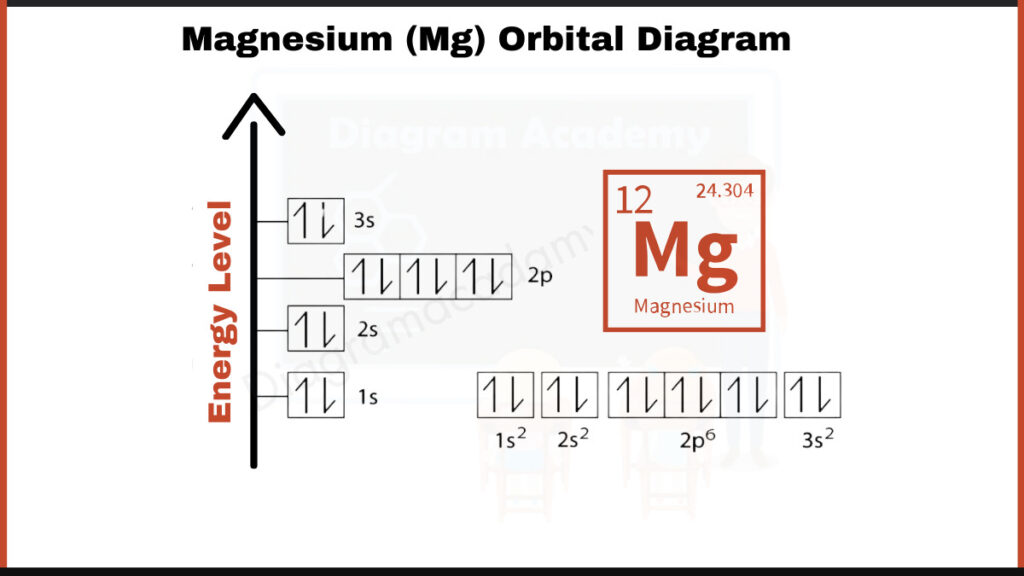
The first floor, closest to the nucleus (the hotel manager's office, perhaps?), is the 1s orbital. This is a tiny room, only fitting two electrons. According to the Aufbau principle (which is just a fancy way of saying "electrons fill the lowest energy levels first"), the first two electrons of Magnesium are going to grab this prime real estate. We represent this in our orbital diagram with two arrows pointing in opposite directions in a single box representing the 1s orbital.
Level Two: 2s and 2p Orbitals
Next up, the second floor! Here, we have two kinds of rooms: the 2s orbital and the 2p orbitals. The 2s orbital is a single room, just like the 1s. So, our next two electrons snuggle in there. Then, things get interesting. We have the 2p orbitals. These are a set of three orbitals, each holding two electrons for a total of six electrons! Picture three identical rooms side-by-side. These rooms are all at the same energy level (degenerate orbitals), so the electrons will each take their own room before doubling up. This is called Hund's Rule, or "shotgun rules". Electrons like their own space until they absolutely have to share! Magnesium's next six electrons happily fill up all three 2p orbitals.

"Remember! Electrons are like teenagers – they want their own space!"
Level Three: The 3s Orbital
Now, we're on the third floor! At the start of the third floor, we find the 3s orbital. We've already placed 10 electrons (2 in 1s, 2 in 2s, and 6 in 2p). Magnesium has 12 electrons, so we need two more spots! These last two electrons happily settle into the 3s orbital. And just like that, we've accommodated all of Magnesium's electron "guests".
So, how does our orbital diagram look? It's essentially a series of boxes (representing orbitals), each labeled with its energy level and type (1s, 2s, 2p, 3s). Each box either has one up arrow and one down arrow (indicating a filled orbital) or is empty.

Putting It All Together
The orbital diagram for Magnesium looks something like this (imagine boxes and arrows, okay?):
1s: ↑↓
2s: ↑↓
2p: ↑↓ ↑↓ ↑↓
3s: ↑↓
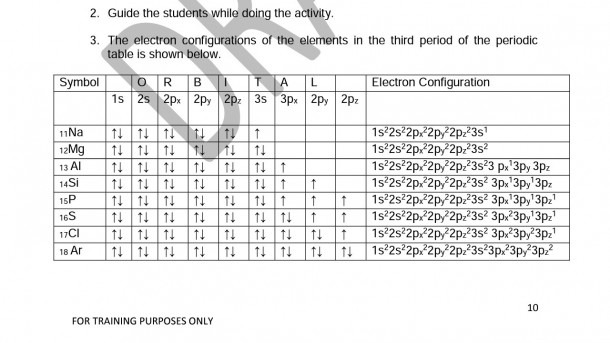
See? Not so scary! We successfully mapped out the electron arrangements for Magnesium!
Think of it as a blueprint that reveals a lot about how Magnesium interacts with other elements. It’s like knowing the seating arrangement at a dinner party – you can predict who's likely to cause a stir and who's going to get along!
Now you're practically an electron allocation expert! Go forth and impress your friends with your newfound knowledge of orbital diagrams! Who knows, you might even spark their own passion for atomic organization. And if not, at least you know where Magnesium keeps its socks. Which is probably more organized than your sock drawer, let's be honest.
