
Nuclear Fusion And Nuclear Fission Similarities
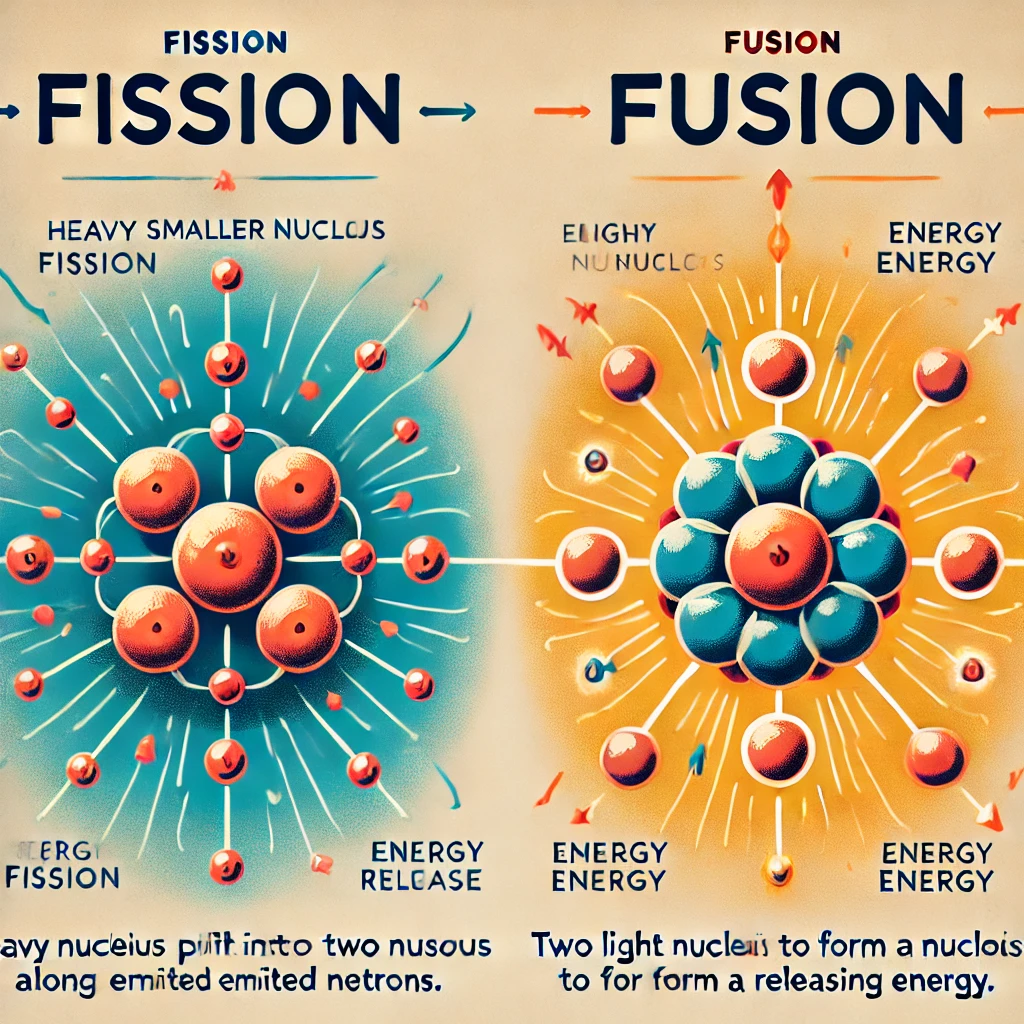
Okay, folks, let's talk nuclear! You know, the stuff that makes some people sweat and others daydream about clean energy. We're diving into fission and fusion. Get ready for my slightly... unconventional take.
They're Both About Atoms, Duh!
First, let's state the obvious. Both fission and fusion involve atoms. We're not talking about your grandma's knitting needles here.
They both mess with the tiny particles that make up everything. Think of it like atomic LEGOs, but way more powerful and potentially explosive. Okay, maybe don’t think too much about the explosive part.
Must Read
They Both Produce Energy (Big Time!)
Here's where things get interesting. Both processes release massive amounts of energy. Seriously, HUGE. We're talking enough juice to power cities, or, you know, not-so-friendly bombs.
My unpopular opinion? They're both just trying to give us electricity! It’s just that one is like a controlled explosion and the other is like a controlled... well, even bigger explosion. But controlled, okay?
Think of it this way: fission is like setting off a string of firecrackers. Fusion is like unleashing a miniature sun. Both noisy, both bright, both kinda scary if you're not careful.
Breaking and Making: Two Sides of the Same Coin?
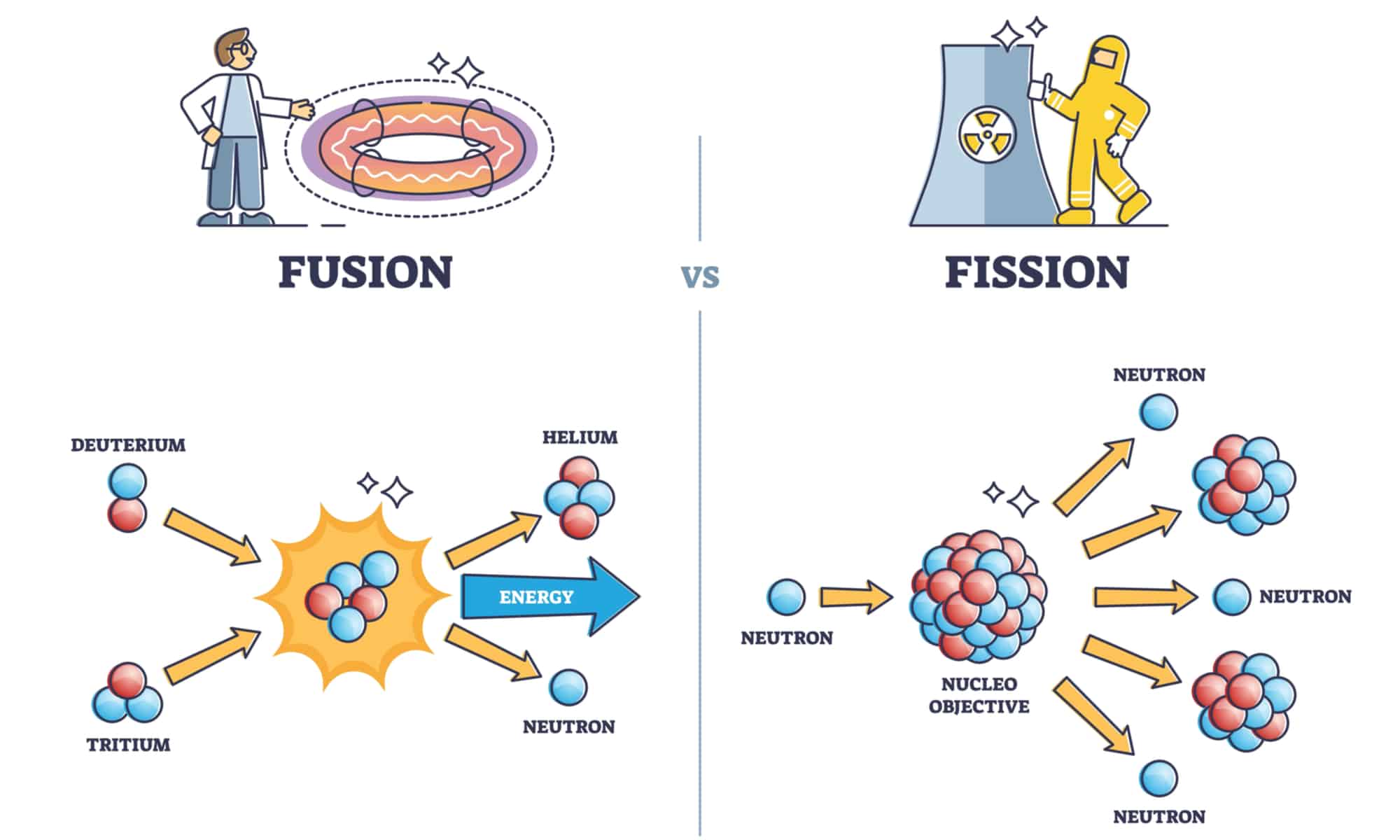
Okay, so fission is all about splitting atoms. Think of it like cracking a walnut with a sledgehammer. You get smaller pieces (and a bit of a mess), but hey, you also get that delicious walnut meat! Or in this case, energy.
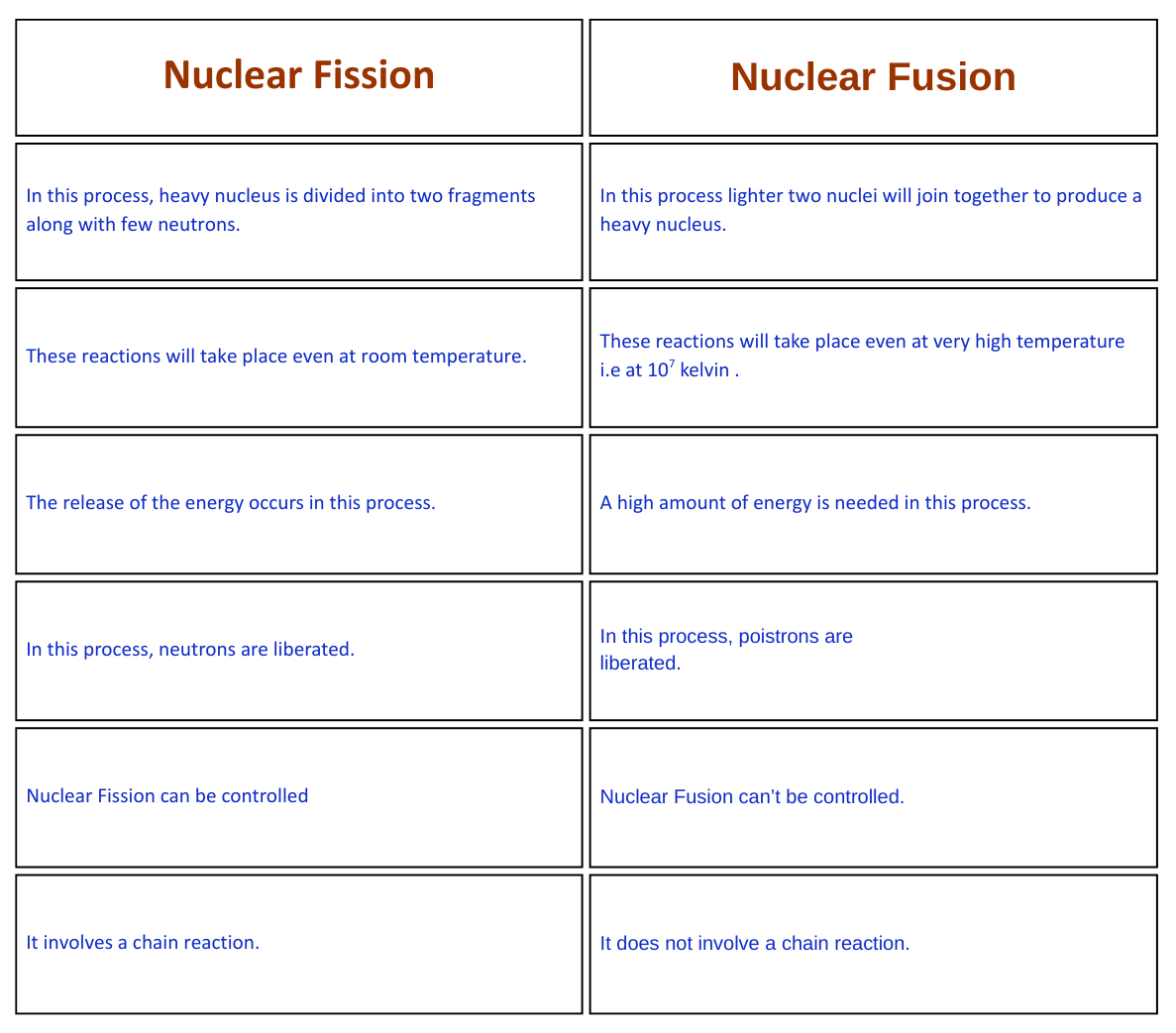
Fusion, on the other hand, is about smashing atoms together. It's like trying to make a bigger, even more awesome LEGO creation out of two smaller ones. Except these LEGOs are incredibly tiny and incredibly energetic.
Here's my slightly heretical view: isn’t smashing kind of like a violent form of breaking? I mean, you're still ending up with different stuff than you started with. Just saying!
Controlled Chaos: That's the Name of the Game
Now, the key word here is "controlled." We don't want uncontrolled nuclear reactions happening in our backyards. Trust me on this one.
Both fission and fusion require some serious control mechanisms. Think of it like driving a race car. You want to go fast, but you also want to stay on the track and avoid crashing into a wall.

Scientists spend a lot of time figuring out how to keep these reactions from going haywire. They're basically atomic traffic cops, making sure everything flows smoothly and safely. Well, mostly safely.
Radioactivity: The Unwanted Guest
Let's be honest, radioactivity is the elephant in the room. Both fission and fusion can produce radioactive byproducts. These byproducts can stick around for a while and be a bit of a nuisance.
Fission, traditionally, has a bigger issue with long-lived radioactive waste. It's like that guest who overstays their welcome and leaves a mess behind. A messy, radioactive mess.
Fusion theoretically produces less long-lived radioactive waste, but the technology is still being developed. It's like inviting a guest who promises to clean up after themselves. We'll see about that.
The Potential: Clean Energy Dreams
Despite the potential downsides, both fission and fusion hold the promise of clean, abundant energy. Imagine a world powered by the atom, with no more fossil fuels or greenhouse gases. Sounds pretty good, right?

Fission is already being used to generate electricity in nuclear power plants around the world. It's a proven technology, but it comes with the baggage of radioactive waste.
Fusion is the holy grail of energy research. If we can crack the code, we could have a virtually limitless source of clean energy. But it's a big "if." It's like chasing a unicorn that might not even exist. But hey, unicorns are cool!
My Unpopular Opinion: They're Just Different Flavors of Atomic Pie!
Okay, here it is, my truly controversial take. I think fission and fusion are more similar than we give them credit for. They're both about manipulating atoms to release energy.
One breaks atoms apart, the other smashes them together. But at the end of the day, they're both just different ways of baking the same atomic pie! A pie that tastes like... well, energy. Maybe a little bit like radiation, too, but let's not focus on that.
Think of it like this: you can make a cake by mixing ingredients in different ways. You can whisk the eggs first, or you can add them later. You can use different types of flour or different amounts of sugar. But at the end of the day, it's still a cake.
The Future is Nuclear (Maybe?)
Whether we embrace fission, fusion, or both, it's clear that nuclear energy will play a role in our future. We need to find ways to address the challenges of radioactive waste and safety concerns.
But the potential benefits are too great to ignore. Clean, abundant energy could solve some of the biggest problems facing our planet. And who knows, maybe someday we'll all be driving flying cars powered by tiny fusion reactors. Okay, maybe that's a bit optimistic.
So, the next time you hear about nuclear energy, remember my unconventional take. It's all about atoms, energy, and a little bit of controlled chaos. And maybe, just maybe, a slice of atomic pie.
"The future is already here – it's just not very evenly distributed." - William Gibson. Perhaps that applies to fusion power?
Let's embrace the atomic age, responsibly of course! And remember, always recycle your radioactive waste... just kidding! (Don't do that.)