
Molar Mass Of Ammonium Sulfate

Hey! So you're wrestling with ammonium sulfate, huh? Don't worry, we've all been there. It sounds way scarier than it actually is. Especially when we start talking about the molar mass. But, like, what even is molar mass? Think of it as the weight of a mole… and no, I'm not talking about the fuzzy little garden critters.
A mole, in chemistry terms, is just a really big number. Like, 6.022 x 10²³, Avogadro's number. Yeah, try imagining that many somethings. I can barely picture ten donuts, let alone that many molecules! So, molar mass is the mass of that many molecules or formula units of a substance. Okay, enough with the definitions – let's get to the good stuff!
Breaking Down Ammonium Sulfate (and Not Breaking a Sweat)
Ammonium sulfate. Its chemical formula is (NH4)2SO4. Looks intimidating, right? But let's dissect this beast. Think of it like a LEGO castle – just a bunch of pieces stuck together. We need to figure out which elements are in our formula.
Must Read
We've got:
- Nitrogen (N) - A key ingredient in everything from fertilizer to… well, let’s just stick with fertilizer for now.
- Hydrogen (H) - The most abundant element in the universe! And, you know, essential for life. No biggie.
- Sulfur (S) - Smells like rotten eggs in its elemental form. Thankfully, it behaves much better in ammonium sulfate!
- Oxygen (O) - You're breathing it right now! Pretty crucial.
Now, how many of each do we have? This is where that subscript and parentheses action comes into play. Remember to distribute! It's like algebra, but less… soul-crushing?
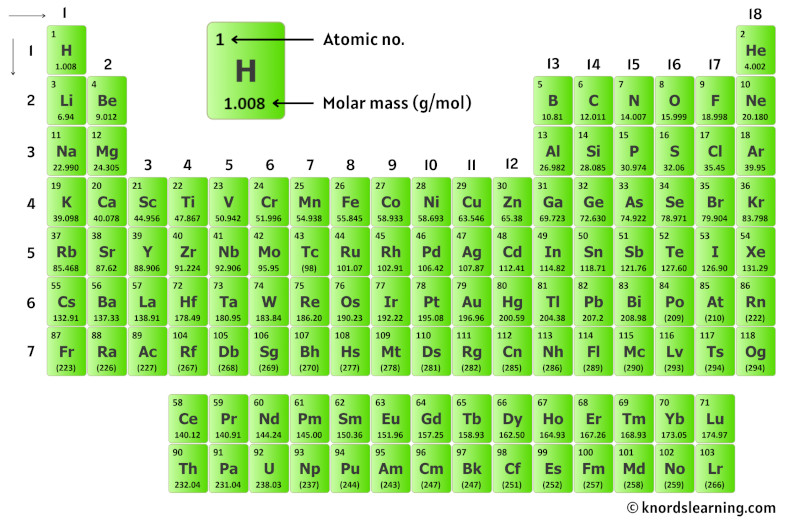
- Nitrogen (N): We have 2 ammonium ions (NH4), and each contains 1 nitrogen atom, so 2 * 1 = 2 nitrogen atoms.
- Hydrogen (H): Each ammonium ion (NH4) has 4 hydrogen atoms. Since we have 2 ammonium ions, we have 2 * 4 = 8 hydrogen atoms.
- Sulfur (S): The SO4 part has 1 sulfur atom. So, just 1. Easy peasy!
- Oxygen (O): SO4 has 4 oxygen atoms. That's all, folks!
The Periodic Table: Your New Best Friend (Seriously!)
Now, grab your trusty periodic table (you have one handy, right? No? Google it! It’s your friend!). We need the atomic masses of each element. These are usually listed at the bottom of each element's box. These values are generally in atomic mass units (amu), but for molar mass, we're going to use grams per mole (g/mol). It's the same number, just a different unit!
Looking up our elements, we find roughly:
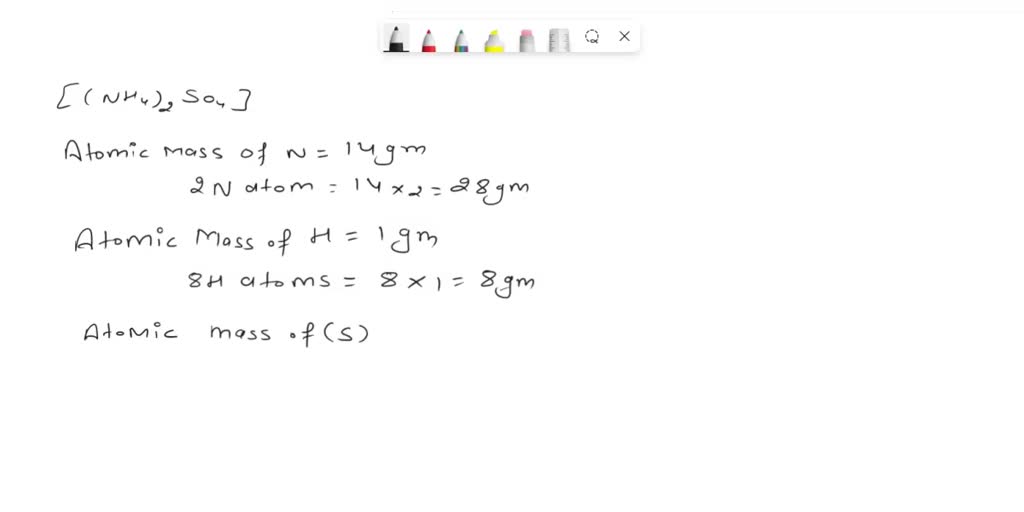
- Nitrogen (N): 14.01 g/mol
- Hydrogen (H): 1.01 g/mol
- Sulfur (S): 32.07 g/mol
- Oxygen (O): 16.00 g/mol
Okay, time for the math! And don't worry, it's just multiplication and addition. You got this!
Calculating the Molar Mass: Show Time!
Here's the plan. We multiply the number of atoms of each element by its atomic mass, and then we add all those numbers together. It’s like baking a cake, except instead of flour and sugar, we're using atoms and atomic masses. Yum?

So, here we go:
- Nitrogen (N): 2 atoms * 14.01 g/mol = 28.02 g/mol
- Hydrogen (H): 8 atoms * 1.01 g/mol = 8.08 g/mol
- Sulfur (S): 1 atom * 32.07 g/mol = 32.07 g/mol
- Oxygen (O): 4 atoms * 16.00 g/mol = 64.00 g/mol
Now, add ‘em all up!
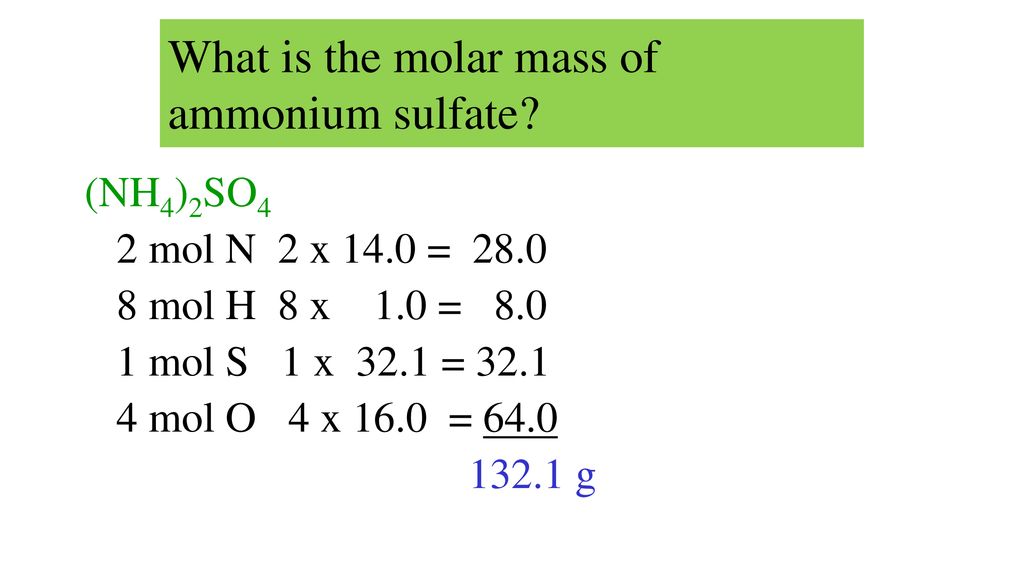
28.02 + 8.08 + 32.07 + 64.00 = 132.17 g/mol
Ta-da! The molar mass of ammonium sulfate (NH4)2SO4 is approximately 132.17 g/mol. That wasn’t so bad, was it? Now you can impress all your friends at your next chemistry-themed party! (Assuming you have those.)
See? Molar mass isn't so scary after all. It's just a little puzzle to solve. And now you’ve solved it! Go celebrate with a donut. You deserve it!