
Mcq On Mensuration For Class 10
Hey there, geometry gurus! Ready to rumble with some mensuration? Yeah, yeah, I know what you're thinking: "Mensuration? Sounds like some ancient, boring ritual!" But trust me, it's way cooler than it sounds. Especially when we're talking Class 10 style!
Think of it like this: mensuration is all about measuring stuff. Big stuff. Little stuff. Weirdly shaped stuff. Basically, if it exists in the 3D world (or even just the 2D one!), mensuration lets you figure out its area, volume, or perimeter. Pretty nifty, huh?
And what's the best way to test your mensuration might? MCQs, baby! Multiple Choice Questions are your secret weapon to conquering those tricky formulas and concepts. Let's dive in!
Must Read
Why Mensuration Rocks (and Doesn't Suck)
Okay, I get it. Formulas can be intimidating. But let's break it down. Mensuration is essentially applied geometry. You're not just staring at shapes; you're doing things with them. Figuring out how much paint you need for a room? Mensuration. Deciding if that giant inflatable T-Rex will fit in your backyard? Mensuration. Building a Death Star (hypothetically, of course)? Mensuration!
Plus, mensuration is all about real-world applications. Unlike some abstract math concepts (looking at you, imaginary numbers!), you can actually see and touch the things you're measuring. That makes it way more relatable, right?
Consider this: a pizza. You want to maximize your pizza slice, right? That’s all about area! Or imagine filling a cone with ice cream. You want to cram as much deliciousness in there as possible! That’s volume at play!
MCQs: Your Ticket to Mensuration Mastery
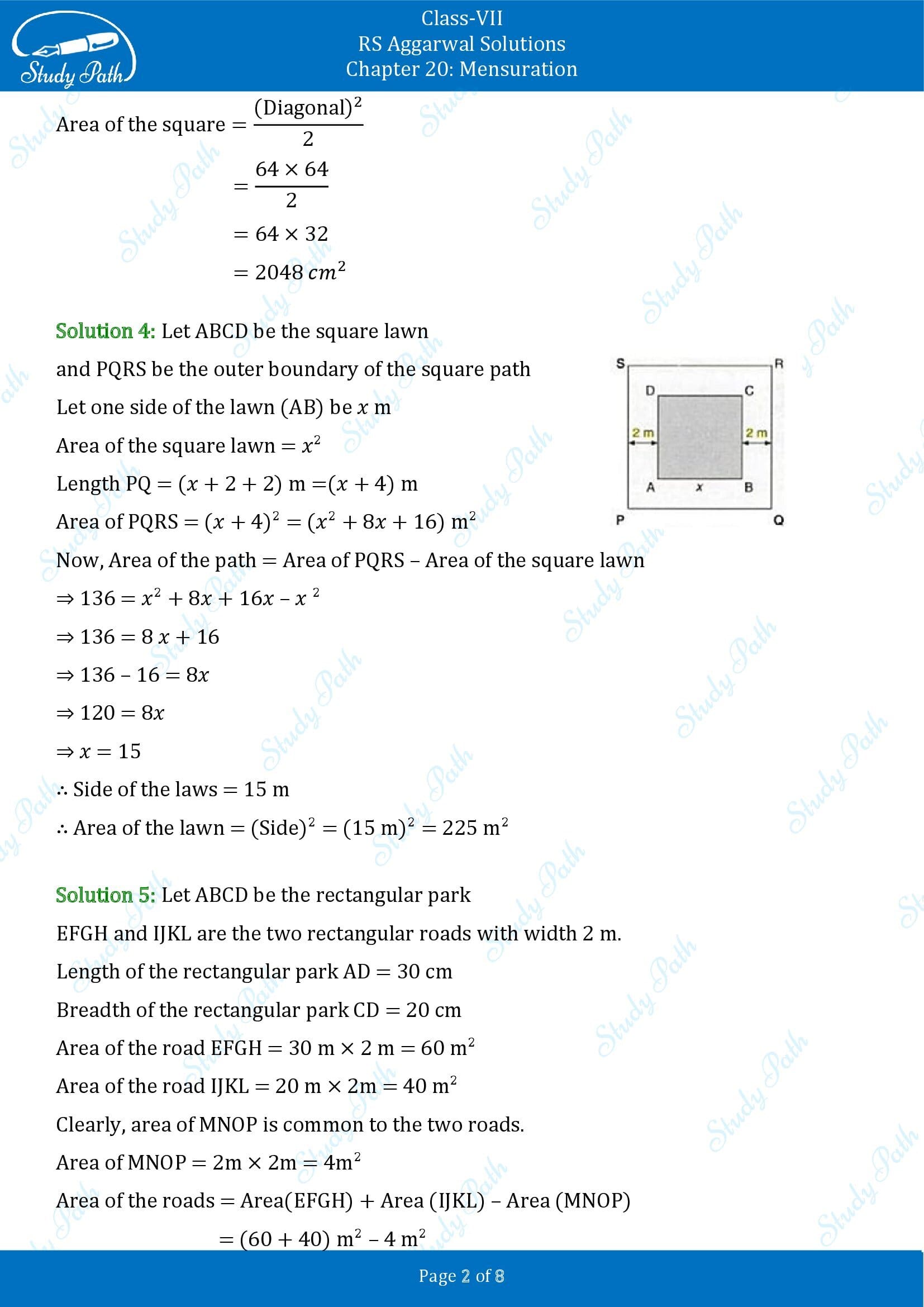
Now, about those MCQs. They're not just about memorizing formulas (although that helps). They're about understanding the concepts. Think of them as mini-puzzles. Each question presents a scenario, and you have to choose the right solution from a set of options. It’s like a mathematical escape room!
Here's the key: Read carefully! Mensuration problems often have sneaky wording designed to trip you up. Pay close attention to the units (centimeters vs. meters, for example). A simple mistake in units can lead to a totally wrong answer.
Also, don't be afraid to draw a diagram. Visualizing the problem can make it much easier to solve. A quick sketch of that cone, cylinder, or sphere can be a game-changer.
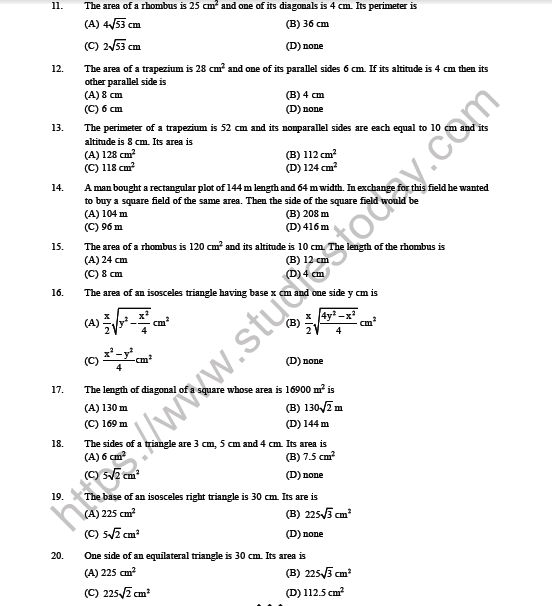
And, importantly, process of elimination is your best friend. If you're not sure about the answer, try to rule out the options that are definitely wrong. You might just stumble upon the correct one!
Mensuration: It's All About Shapes!
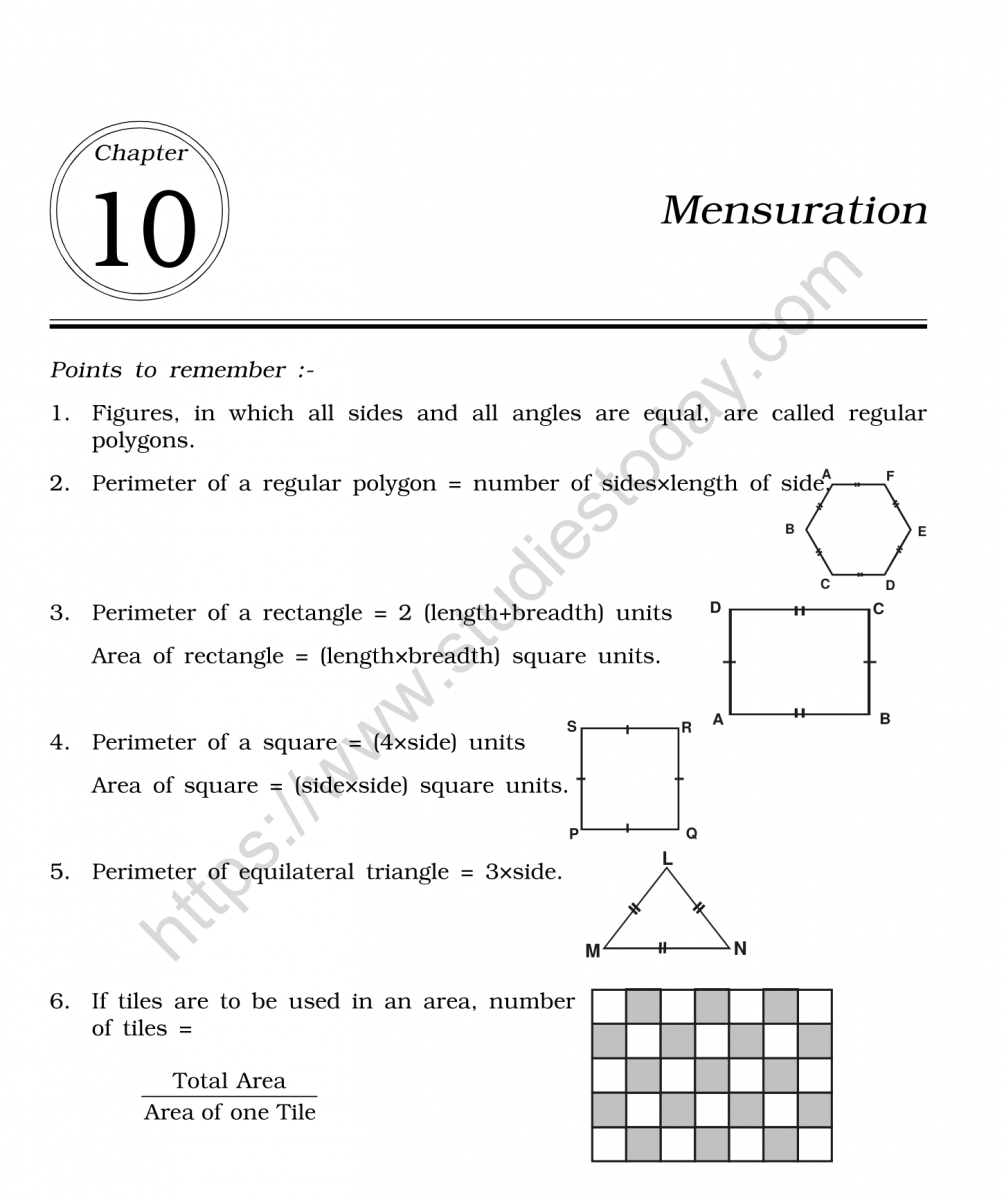
Let's talk about the stars of the show: the shapes themselves. You've got your classic circles, squares, rectangles, and triangles. But then you get into the 3D world with cubes, cuboids, cylinders, cones, spheres, and even the occasional frustum (don’t worry about that one too much!).
Each shape has its own set of formulas. But the good news is, many of them are related. For example, the volume of a cylinder is just the area of its base (a circle) multiplied by its height. See? Not so scary after all!
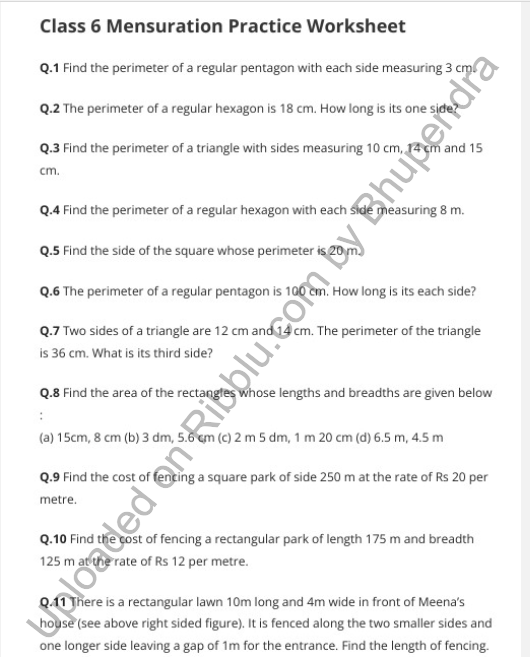
Don’t forget those surface areas either! We're talking about the total area of all the faces or curved surfaces. Understanding the difference between total surface area and curved surface area is crucial. Imagine painting a soccer ball (sphere). You'd need to know the total surface area to figure out how much paint to buy.
Fun Fact Break!
Did you know that the formula for the volume of a sphere (4/3πr³) was supposedly discovered by Archimedes? Legend has it that he was so proud of this discovery that he asked for a sphere inscribed in a cylinder to be engraved on his tombstone!
Another cool fact: the ratio of a circle's circumference to its diameter is always π (pi), approximately 3.14159. This number is irrational, meaning it goes on forever without repeating. Talk about a never-ending story!
Embrace the Mensuration Challenge!
So, are you ready to tackle those mensuration MCQs? Remember, it's not just about memorizing formulas; it's about understanding the concepts and applying them to real-world problems.
Don't be afraid to make mistakes. That's how you learn! And most importantly, have fun! Mensuration is a fascinating subject that can open your eyes to the mathematical beauty of the world around you.
Go forth, conquer those shapes, and become a mensuration master! Good luck!