
Kenneth Rosen Discrete Mathematics And Its Applications 6th Edition

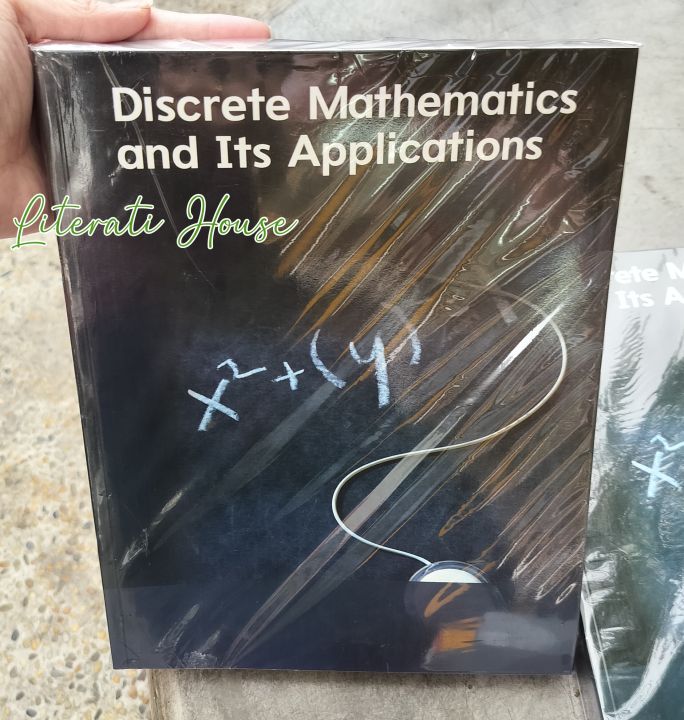
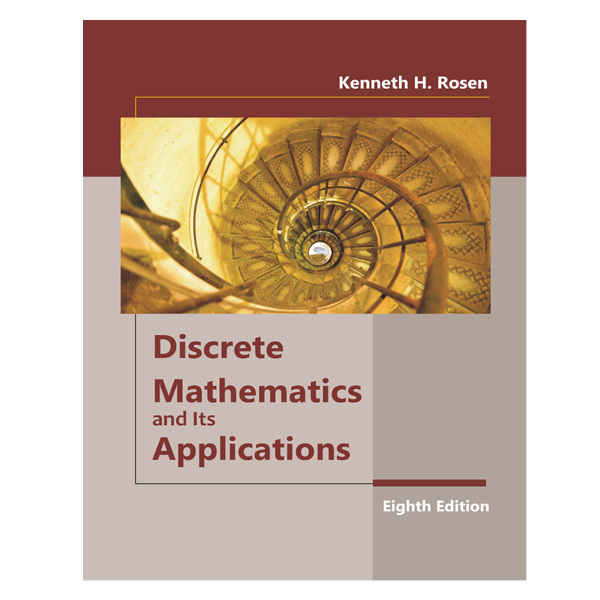
Alright folks, gather 'round, because I'm about to tell you the epic tale of a book. Not just any book, mind you, but the book. The one that separates the programmers from the… well, let's just say those who prefer interpretive dance. I'm talking about Kenneth Rosen's "Discrete Mathematics and Its Applications, 6th Edition."
Now, I know what you’re thinking. “Discrete Mathematics? Sounds about as exciting as watching paint dry... in binary.” But hold your horses! Before you reach for your Netflix and chill, hear me out. This book, surprisingly, is kind of a superhero in disguise.
Think of it this way: behind every sleek app, every groundbreaking algorithm, every cat video that inexplicably goes viral (thanks, internet!), lies the unsung hero of Discrete Math. And Rosen's book? It's like their origin story. It's the Batman Begins of computer science.
Must Read
What's the Deal with "Discrete"?
Okay, let’s break it down. "Discrete" just means "not continuous." So, instead of dealing with smooth, flowing curves like you might in calculus (shudder), we're talking about distinct, separate things. Think integers, graphs (the node and edge kind, not the pie chart kind, thank goodness!), and logical statements.
Imagine you're trying to figure out the most efficient route for delivering pizzas. You're not going to use calculus for that, right? You need to consider individual houses (discrete locations!) and the connections between them. That, my friends, is Discrete Math in action. Rosen's book is like your pizza-delivery optimization manual.

The Applications (and Why You Should Care)
"Okay, okay," you say, "but what can I actually do with this stuff?" Oh, the possibilities! Let me count the ways (using, of course, principles from Discrete Math!).
Firstly, it's essential for computer science. Seriously. Databases, algorithms, cryptography, artificial intelligence… they all rely heavily on the concepts covered in Rosen’s book. It’s the foundation. Forget the fancy coding bootcamps if you don't have a solid grasp of Discrete Math. It’s like building a skyscraper on quicksand.
Secondly, it sharpens your logical reasoning skills. Think of it as mental weightlifting. You'll learn to construct airtight arguments, spot fallacies, and think critically. You'll be able to win arguments with your friends, impress your boss, and finally understand what your parents are really saying (okay, maybe not that last one).
Thirdly, it's surprisingly relevant to everyday life. Planning a road trip? Discrete Math can help you find the shortest route (thanks, Dijkstra's algorithm!). Scheduling meetings? Discrete Math can help you avoid conflicts. Deciding what to binge-watch on Netflix? Okay, maybe not directly, but it might help you understand the recommendation algorithms! It's like having a superpower for problem-solving.
Rosen: The Name You Can Trust (Probably)
So, why Rosen's book and not some other dusty tome? Well, for starters, it's comprehensive. It covers a lot of ground, from set theory and logic to graph theory and number theory. It’s like the encyclopedia of Discrete Math.
More importantly, it's (relatively) accessible. Rosen does a decent job of explaining complex concepts in a way that (most) people can understand. The examples are plentiful, the exercises are challenging (but not too challenging), and the explanations are, well, not boring. Okay, some might be, but hey, even Batman has his off days!
Think of Rosen as that slightly eccentric, but ultimately brilliant, professor who genuinely wants you to succeed. He's not going to spoon-feed you the answers, but he will guide you through the labyrinthine world of Discrete Math with a steady hand (and maybe a few cheesy jokes along the way).
![[PDF] Discrete Mathematics And Its Applications - Kenneth H. Rosen](https://elsolucionario.net/wp-content/archivos/2022/10/discrete-mathematics-and-its-applications-kenneth-h-rosen-5th-edition.jpg)
The 6th Edition: Is It Worth It?
Alright, the elephant in the room: why the 6th edition specifically? Well, each edition usually adds some updated examples, clarifications, and maybe a new chapter or two. Think of it like upgrading your phone. The core functionality is still the same, but you get some nicer features and bug fixes. If you can find a cheaper, earlier edition that still covers the topics you need, go for it! But the 6th edition is generally considered the gold standard.
Final Thoughts (and a Warning)
Look, I'm not going to lie. Discrete Mathematics isn't always a walk in the park. There will be times when you want to throw the book across the room and declare that you're going to become a shepherd instead. But stick with it! The rewards are worth the effort. You'll develop valuable skills, gain a deeper understanding of the world around you, and maybe even impress your friends with your newfound knowledge of graph theory (just try not to be too annoying about it).
So, go forth, brave adventurer, and conquer the world of Discrete Math! And remember, with Kenneth Rosen's "Discrete Mathematics and Its Applications, 6th Edition," you'll have a powerful ally by your side (or, you know, on your desk). Just don’t blame me if you start seeing graphs and sets in your dreams.