
Junior Software Developer Salary

So, you're thinking about becoming a junior software developer? Awesome! (High five!) One of the first things everyone wonders about, right after "Will I spend all day debugging?" is: What's the salary gonna be?
Let's be real, money matters. We all gotta eat. And maybe, just maybe, you wanna afford that fancy coffee machine. (I get it. I really get it.) So, let's dive into the murky waters of junior software developer salaries.
The Big Question: How Much Dough?
Okay, okay, I hear you! Cut to the chase! The truth is, there's no one-size-fits-all answer. (Isn't that always the way?) Several things can affect your starting salary. Location, skills, company size... it's a whole ecosystem!
Must Read
But! (Don't you love a good "but"?) Generally, you can expect somewhere in the range of $60,000 to $90,000 in the US. That's a pretty wide range, I know. (Sorry!) And some people, especially in super high-demand areas like Silicon Valley, might even start higher. Lucky ducks!
Think of it like this: $60k is "Hey, welcome aboard!" and $90k is "Wow, you're clearly awesome. Please don't leave us!". Somewhere in that spectrum is probably where you will land.
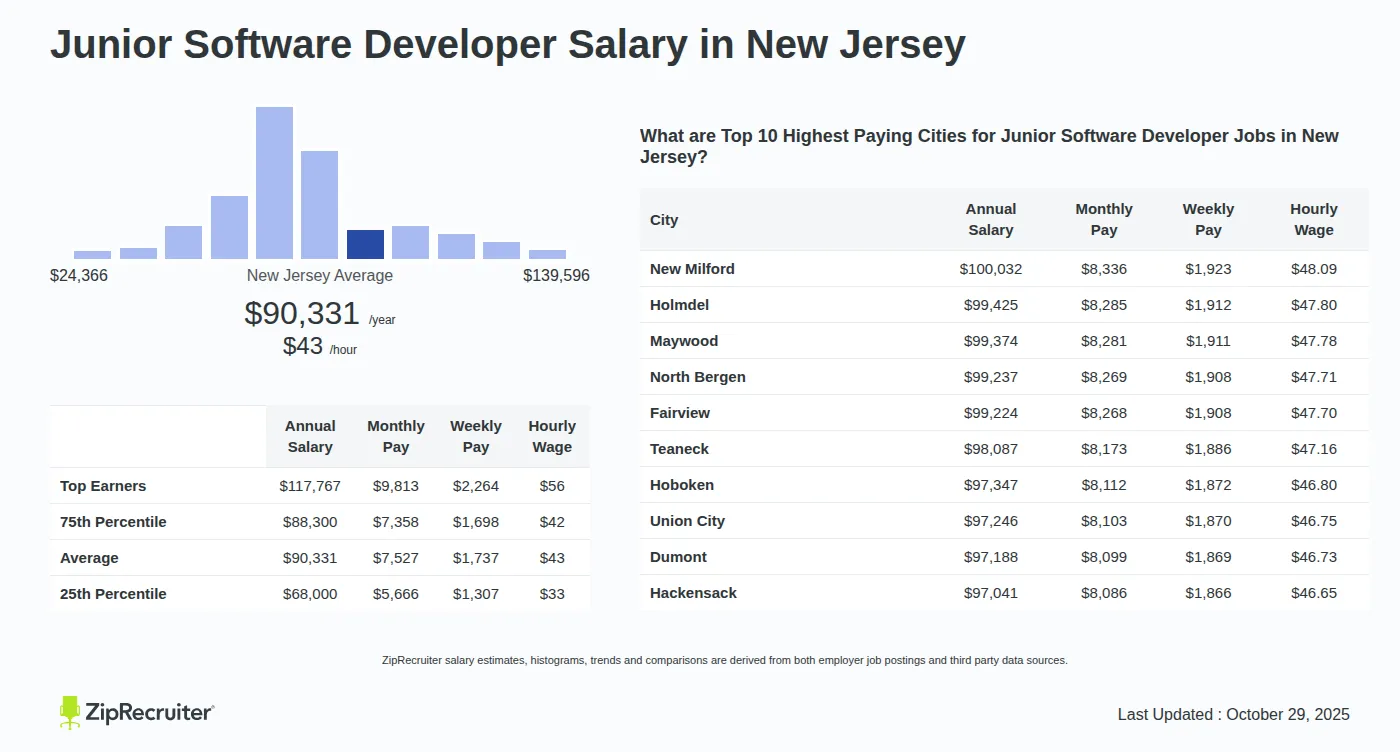
Location, Location, Location!
Seriously. This is HUGE. San Francisco? New York? Expect higher salaries because, well, everything's more expensive there. Think rent that makes you cry a little. Whereas, say, a smaller city in the Midwest? The cost of living is lower, so salaries tend to reflect that.
Basically, a $70,000 salary in San Francisco might feel like a $50,000 salary somewhere else. (Mind blown? Mine too.) Do your research! Use cost of living calculators to get a realistic picture.
Skills That Pay the Bills
What programming languages do you know? Are you a Python wizard? A JavaScript jedi? Do you even know what I'm talking about?! (Just kidding... mostly.)

Seriously though, in-demand skills can significantly bump up your salary. Knowing things like React, Node.js, or cloud technologies (AWS, Azure, Google Cloud) can make you a more attractive candidate and justify a higher starting salary. The more you know, the more you grow... in your bank account!
Company Size Matters (Sometimes)
Big companies often (but not always!) have deeper pockets and can offer more competitive salaries. Think FAANG (Facebook, Apple, Amazon, Netflix, Google) or other large tech corporations. They might also offer better benefits packages, which are worth considering. (Free lunches? Yes, please!)

Startups, on the other hand, might offer a lower starting salary, but they could also compensate with stock options or equity. Which, if the company takes off, could be a huge win. (Risky, but potentially rewarding!)
Negotiation: Don't Be Shy!
Once you get an offer, don't be afraid to negotiate! Do your homework. Research what other junior developers with similar skills are making in your area. Glassdoor and Levels.fyi are your friends here.
Practice your negotiation skills. (Maybe with a friend? Or your cat? No judgement.) Be confident, but also reasonable. Remember, they want you! (That's why they offered you the job!) Knowing your worth is key.

Beyond the Salary: The Perks!
Don't just focus on the money! Consider the whole package. Benefits like health insurance, paid time off, professional development opportunities, and company culture are also important. A lower salary with amazing benefits and a supportive environment might be better than a higher salary with a toxic boss and no vacation time. (Been there, done that. Trust me.)
Ask about opportunities for learning and growth. Can you attend conferences? Will the company pay for certifications? These things can significantly boost your career trajectory in the long run.
The Bottom Line
Junior software developer salaries can vary quite a bit. But with the right skills, location, and negotiation skills, you can land a job that not only pays the bills but also sets you up for a successful and fulfilling career. (And maybe even that fancy coffee machine!) Good luck! You got this!