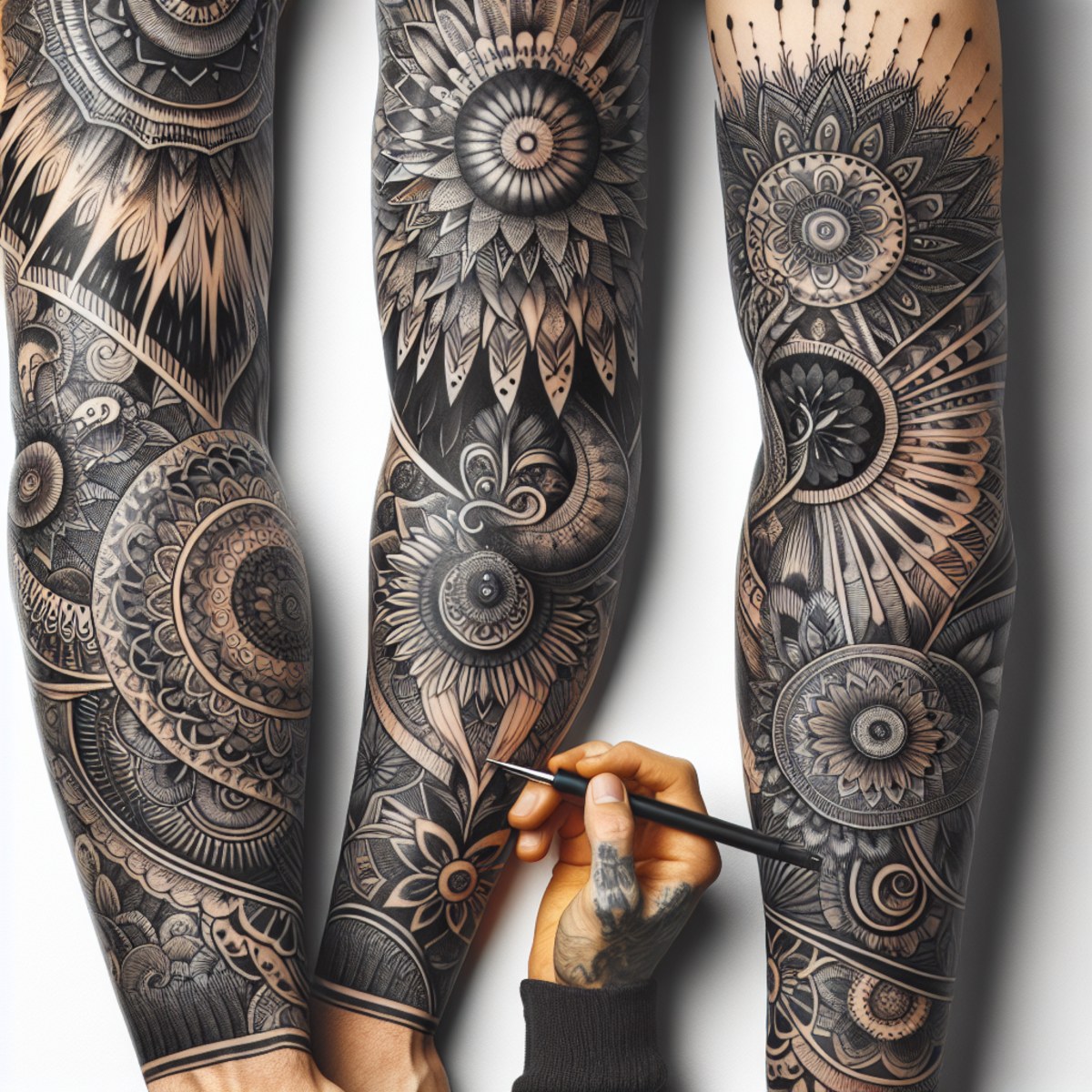
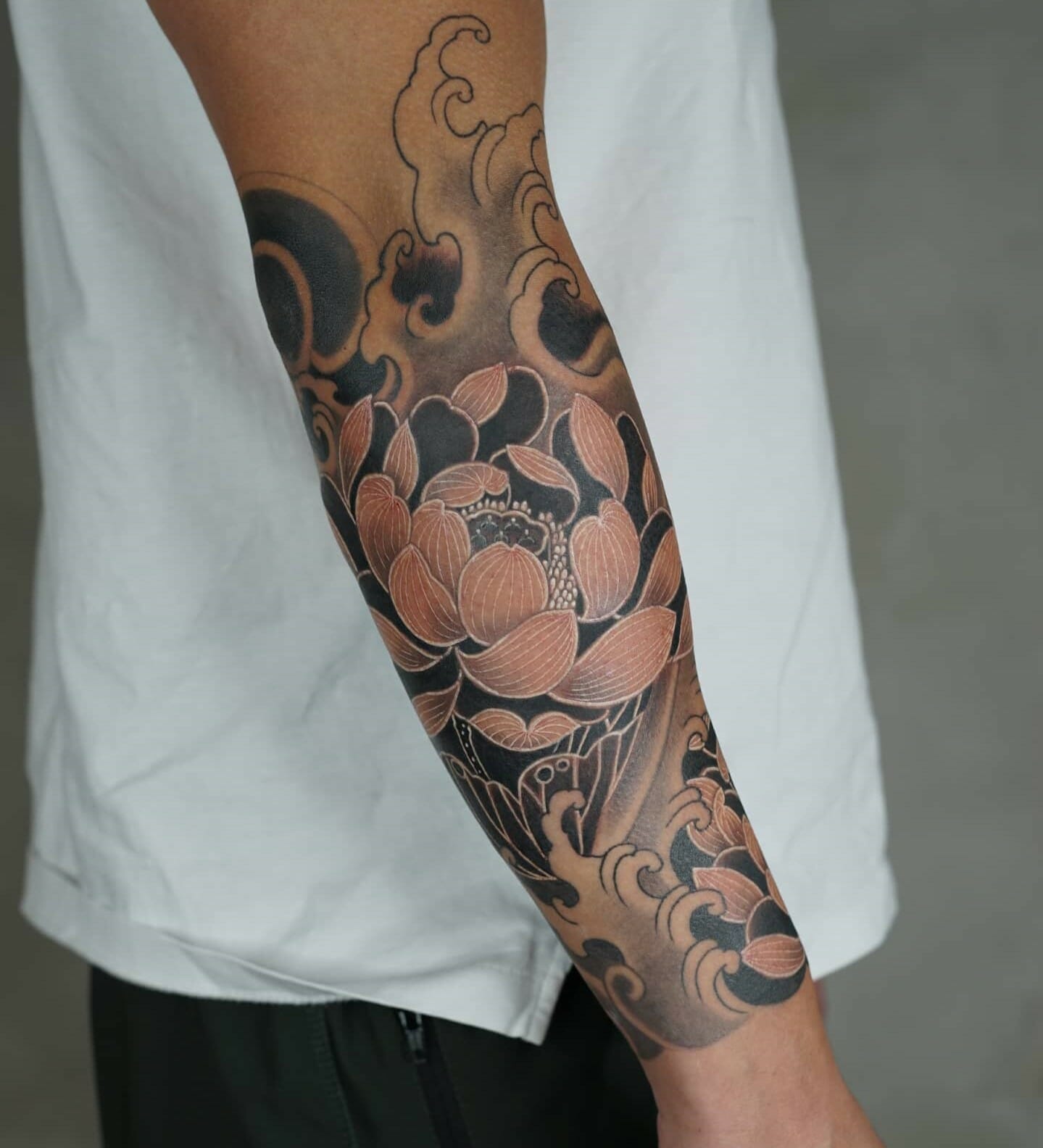
Japanese Full Sleeve Tattoo

Ever seen a tattoo that wraps entirely around someone's arm, a vibrant canvas of swirling colors and intricate designs? Chances are, you've encountered a Japanese full sleeve tattoo, often referred to as irezumi. More than just body art, these sleeves are steeped in history, symbolism, and artistry. Exploring them offers a fascinating peek into Japanese culture and the human desire for self-expression.
The purpose of a Japanese full sleeve goes far beyond simple aesthetics. Traditionally, these tattoos were associated with the Yakuza, the Japanese mafia, serving as a display of courage, loyalty, and affiliation. However, in modern times, they've evolved to become powerful statements of personal identity. They can represent one's beliefs, values, and life story, acting as a visual narrative etched onto the skin. The benefits are primarily personal: a sense of empowerment, a connection to heritage, or simply the joy of adorning oneself with beautiful and meaningful art.
While you might not find Japanese full sleeves directly in a classroom curriculum, understanding their symbolism can enrich studies in art history, sociology, and Japanese culture. For instance, learning about the koi fish in a tattoo can lead to discussions about perseverance and transformation. A dragon might spark a conversation about power and wisdom. Even in daily life, recognizing these motifs allows you to appreciate the depth and meaning behind what might initially appear as just a pretty picture. It encourages a more nuanced and respectful understanding of cultural differences.
Must Read
Consider this: you're browsing a museum exhibit featuring Japanese art. Spotting a similar motif to one you've seen in a full sleeve tattoo allows you to connect the piece to a broader cultural context. Suddenly, the artwork isn't just an object; it's a window into a complex system of symbols and beliefs. Or perhaps you're reading a novel set in Japan. Recognizing the significance of a character's tattoo can provide crucial insight into their personality and motivations.
So, how can you practically explore the world of Japanese full sleeve tattoos? A simple start is online research. Look up common motifs like the tiger, phoenix, or peony and delve into their traditional meanings. Many online resources offer detailed explanations and visual examples. Documentaries about tattooing in Japan can provide invaluable insights into the artistry and cultural significance. Visiting art museums with collections of Japanese prints (ukiyo-e) can also be helpful, as these prints often feature similar imagery. Furthermore, be mindful and respectful when encountering someone with a Japanese full sleeve. Remember that it's a deeply personal expression, and approaching them with curiosity and respect is key. Avoid making assumptions or generalizations based solely on their appearance. The most important thing is to approach the topic with an open mind and a willingness to learn.