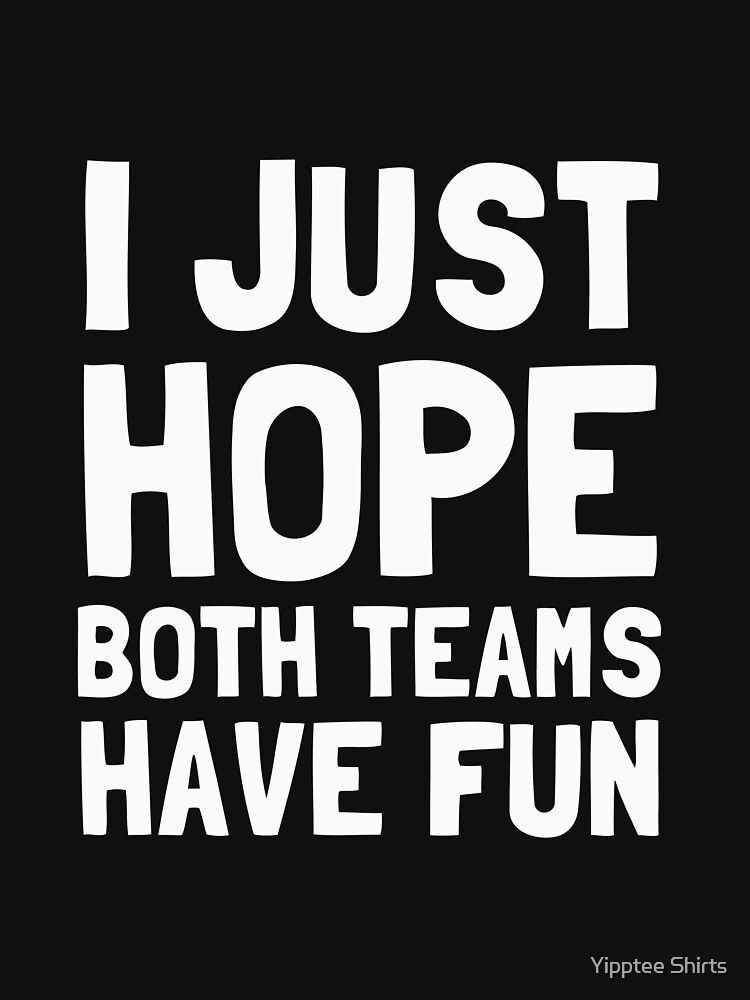
I Just Hope Both Teams Have Fun The Office

We've all been there, staring down the barrel of a tense situation, a looming deadline, or just a particularly awkward social interaction. Wouldn't it be great to diffuse the tension with a little bit of well-placed… neutrality? That’s where “I just hope both teams have fun” comes in. It's a seemingly innocuous phrase, but within the context of the beloved TV show The Office, it's loaded with irony, social commentary, and a whole lot of Michael Scott's signature obliviousness. Why explore this seemingly simple sentence? Because understanding its comedic function unlocks a deeper appreciation for how humor works, how we navigate uncomfortable situations, and how easily intentions can be misinterpreted.
The purpose of this phrase, as used by Michael Scott, is often to appear supportive and even-handed. He believes he's fostering a sense of camaraderie and good sportsmanship. However, the benefit, or rather the comedic effect, lies in the disconnection between his intention and the reality of the situation. It highlights his lack of awareness of the true stakes involved, the competitive spirit already present, and his general inability to read the room. He's trying to be a good boss, a fair leader, but he ends up being a source of unintentional humor.
Think about real-life scenarios where you might encounter a similar dynamic. In education, imagine a student presentation where the teacher, trying to be encouraging, says "Just do your best, and I hope everyone enjoys it!" While the intention is good, it can sometimes downplay the significance of the assignment or the student's effort. In daily life, perhaps you're witnessing a friendly but heated debate between friends. Someone might jump in with "Let's just all get along!" While well-meaning, it can feel dismissive of the participants' passionate engagement with the topic. These moments, like Michael Scott's pronouncements, highlight the sometimes-tricky balance between neutrality, genuine support, and actually understanding the complexities of the situation.
Must Read
So, how can we explore this concept further? One simple way is to pay closer attention to the context in which people express similar sentiments. Ask yourself: What's really going on beneath the surface? What are the power dynamics at play? Is the person saying this genuinely trying to be helpful, or are they unconsciously masking something else? Try to identify instances in TV shows, movies, or even your own life where someone uses a seemingly neutral phrase to navigate a potentially confrontational or awkward moment.
Another practical tip is to consider alternatives. Instead of saying "I just hope both teams have fun," perhaps offer specific encouragement to the participants or acknowledge the effort involved. For example, you could say, "I admire your dedication to this project," or "I appreciate your willingness to share your ideas." These responses are more direct and demonstrate a deeper level of understanding. Ultimately, exploring the comedic use of “I just hope both teams have fun” from The Office isn't just about laughing at Michael Scott; it's about developing a sharper awareness of social cues, the power of language, and the importance of understanding context. It’s a journey into the delightful world of awkwardness, unintentional humor, and the very human struggle to connect with others.