
How To Unlock A Bedroom Door From Outside

You know that heart-stopping moment? The one where you’re just minding your own business, maybe getting a fresh pair of socks, or grabbing a forgotten book, and then bam! – the door swings shut. You hear the click. And then, the cold, hard truth sinks in: you're outside your bedroom, and the door is
I swear this happened to my buddy Dave just last week. He was reaching for his phone charger, door half-open, when his cat, a fluffy fiend named Chairman Meow, decided the doorframe was the perfect scratching post. Next thing he knows, the door's shut, locked, and Chairman Meow is staring at him through the crack underneath, looking utterly smug. Dave, being Dave, immediately started contemplating the structural integrity of his window.
Before you start channeling your inner action hero or considering a costly call to a locksmith for a non-emergency, let's talk about the common ways these things usually work. Because, trust me, most bedroom doors aren't Fort Knox.
Must Read
The Classic Privacy Lock Trick (aka, The Paperclip Heroics)
This is probably the most common scenario for a standard bedroom door. Look closely at the doorknob on the outside. Do you see a small hole in the center of the knob or handle? Ah, the plot thickens!
That little hole isn't for decoration. It's an emergency keyhole for a specific type of privacy lock. Most interior doors have these, designed so you can have privacy, but not get

- A paperclip (unbent, obviously)
- A bobby pin (straightened out)
- A tiny, flat-head screwdriver (like the ones for eyeglasses)
- The tip of a pen (sometimes, if it's sturdy enough!)
Once you have your chosen hero, here's the mission:
- Insert your tool into the hole.
- Feel around inside. You're looking for a small button, slot, or tab. It might be a little tricky to find, but it's in there.
- Once you feel it, either push it in (if it's a button) or twist it (if it's a slot or tab). You'll usually hear a satisfying "click" as the lock disengages.
- Voila! The door should now open. Congratulations, you just outsmarted a door!
This method is surprisingly effective for the majority of standard bedroom locks. It's designed to be simple, remember?
When It's Just a Latch (The Credit Card Maneuver)
Okay, so maybe your door doesn't have that handy little hole. Or maybe it's just
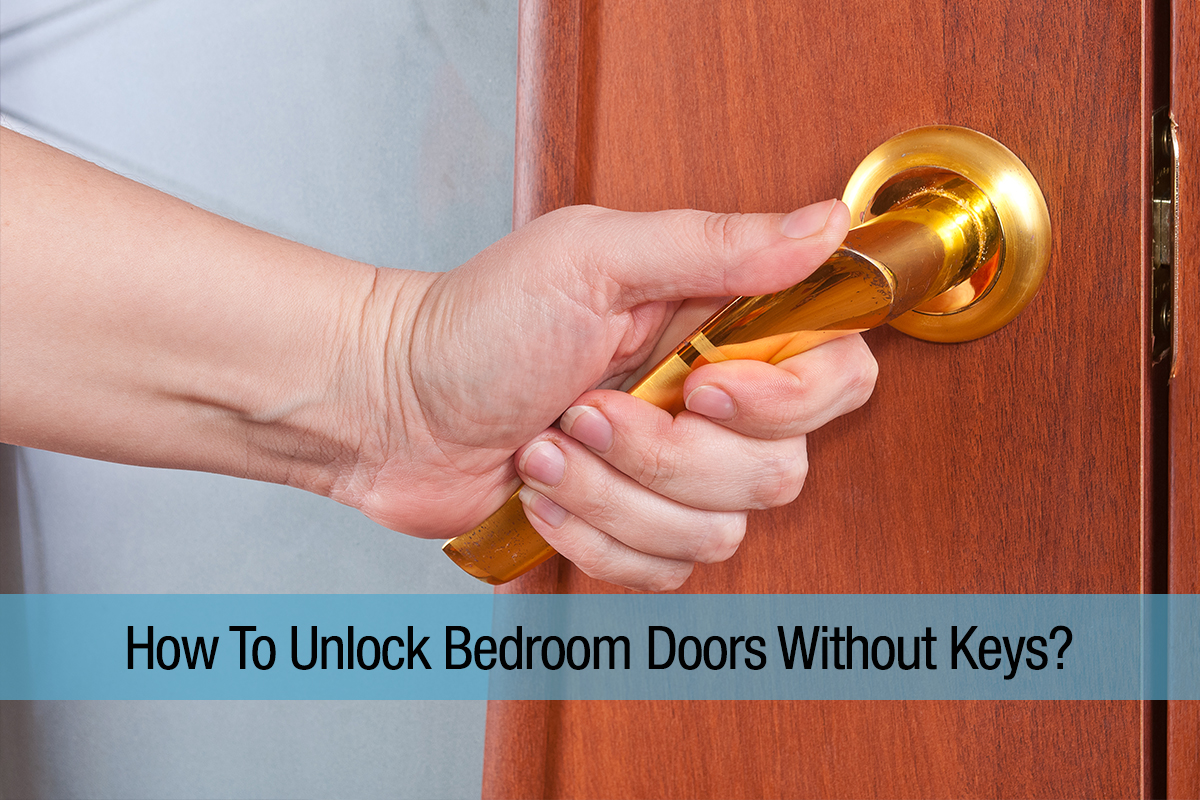
Grab a sturdy, flexible card – an old loyalty card, a gym membership card, or yes, a credit card if you're feeling brave (just be careful not to bend it permanently). The goal here is to slide the latch bolt back into the door.
- Position the card between the door and the frame, right above the doorknob where the latch is.
- Angle the card towards the doorknob. The idea is to use the ramped edge of the latch bolt (the part that slides into the strike plate) and force it back into the door as you push the card in.
- Wiggle and push firmly, while also pushing or pulling the doorknob. You're essentially trying to "wedge" the latch back. It can take a few tries, and some doors are just too snug for this to work. But when it does, it feels like magic!
The "Is There a Spare Key Anywhere?" Interrogation
Alright, this one feels almost too obvious, right? But seriously, how many times do we overlook the simplest solutions in a moment of mild panic? Does anyone in the house have a spare key? Is there one hidden away in a "secret" spot that's not-so-secret? Maybe under a plant pot outside the room (if it's on the ground floor)?

Sometimes, the solution to being locked out is embarrassingly simple, and involves asking a housemate or recalling where you last saw that tiny, often forgotten, key.
The Child Factor (When Tiny Hands Are Involved)
This is a different beast. If a child is locked inside, and especially if they're too young to understand instructions or help unlock it from their side, the urgency shifts. Try the paperclip method immediately. If that fails, and there's genuine concern for the child's safety or distress, you might need to consider a more forceful, but still controlled, entry (like removing the doorknob screws if visible and accessible, or in extreme cases, calling emergency services).
But for a standard "oops, I locked myself out" moment, we're talking about the low-stress solutions above.
When All Else Fails (Don't Panic, Call a Pro)
If you've tried everything mentioned, and your door remains stubbornly shut, then it might be time to admit defeat to a truly unique or malfunctioning lock. At this point, a professional locksmith is your best friend. They have the tools and expertise to get you in without damaging the door or frame, which is always the goal.
Also, if you find yourself doing this often, maybe it’s time to consider a doorknob without a lock, or at least one with a less finicky mechanism. Or, you know, just always grab your keys
So, next time your bedroom door decides to play hard to get, don't despair. You've got options. And remember, it’s just a door. You've got this!