
How To Get Battery Out Of Smoke Alarm

Alright, settle in, grab a cuppa. We need to talk about one of life’s most infuriating, yet utterly essential, household battles: the ceaseless, high-pitched BEEP of a dying smoke alarm. You know the one. It usually starts at 3 AM, right when you’ve finally drifted off into a dream involving unlimited pizza and a lifetime supply of clean socks. It’s not a full-blown siren, oh no. That would be too merciful. It’s a chirp. A persistent, passive-aggressive, two-second warning that feels less like a fire alert and more like a tiny, electronic bird mocking your very existence.
And then the panic sets in. Where is it coming from? Is it the kitchen? The hall? Is it my alarm or is the neighbor just really bad at adulting? You stumble around, half-asleep, swatting at the ceiling like a deranged conductor, desperately trying to silence the tiny terror. But fear not, my friend. For today, we embark on a noble quest: How To Get That Infernal Battery Out Of Your Smoke Alarm.
Phase 1: The Reconnaissance (and Mental Preparation)
First things first, take a deep breath. This isn’t rocket science, though sometimes it feels like it’s designed by former escape room architects. The most crucial step is to identify the culprit. Smoke alarms come in many shapes and sizes, but they all share one common trait: a profound ability to blend in until they decide to unleash their auditory assault. Follow the sound. Is it mounted on the ceiling? On the wall? Is it the one that looks suspiciously like a UFO trying to make contact with your potted plant?
Must Read
Once you’ve pinpointed the offending noisemaker, let's talk safety. Most battery-powered smoke alarms are pretty straightforward. If yours is hardwired (meaning it’s connected directly to your home’s electrical system, often with a backup battery), it’s wise to flip the breaker switch for that circuit first. You don't want a shocking surprise, literally. Look for the little label on the alarm itself – it usually tells you if it’s hardwired. If it just says "battery operated," you’re probably good to go without flipping switches.
Now, gather your tools. You’ll probably need a sturdy stepladder or chair (one that doesn’t wobble suspiciously, please). Maybe a small flathead screwdriver if you’re unlucky, or even a broomstick if you’re particularly tall and adventurous (and don’t mind a few ceiling scuffs).
Phase 2: The Ascent and Disarmament
Alright, ladder up! Climb confidently, but not so confidently that you end up in a viral TikTok fail compilation. Position yourself so you can comfortably reach the alarm without stretching precariously. This isn't a yoga pose, it's a mission.
Most smoke alarms attach to the ceiling or wall via a mounting bracket. Your primary goal here is to detach the alarm body from its base. This is where things get interesting, because manufacturers love to make this a unique little puzzle. Common methods include:

- Twist and Shout (but maybe just twist): Many alarms require a gentle counter-clockwise twist. Imagine you’re opening a particularly stubborn jar of pickles. Give it a firm but not violent turn, and it should unlatch from the mounting plate.
- Slide and Conquer: Some have small tabs or clips that you need to push or slide to release. Look for arrows or subtle indicators on the side.
- The "Secret Button" Gambit: Occasionally, there’s a tiny release tab or button you need to press with your finger or a screwdriver. It’s often recessed, because, well, why make it easy?
Whichever method, the goal is to free the main unit. Once it's off its base, the chirping might get louder for a second because it’s no longer muffled by the ceiling. Don't panic. You're almost there!
Phase 3: The Battery Liberation!
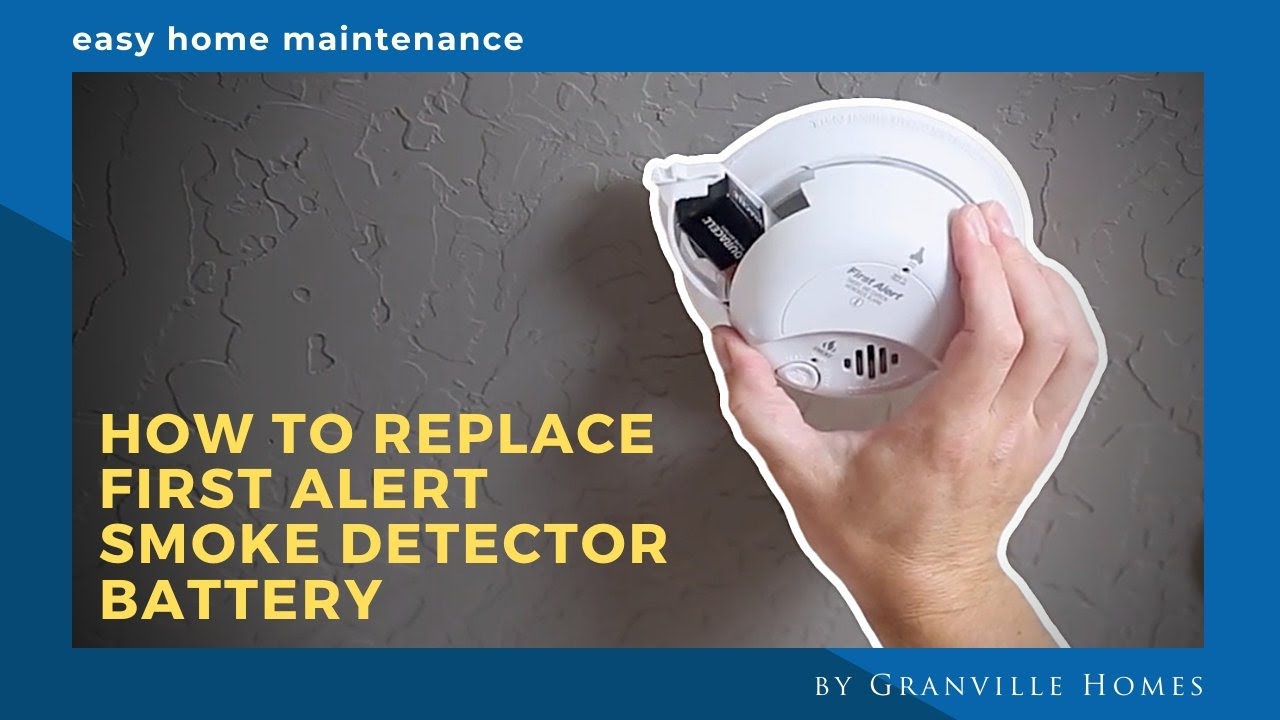
With the alarm in your hand, you'll need to find the battery compartment. This is usually on the back or side. Look for a small door or panel, often marked with an arrow or a little battery symbol. It might require a tiny tab to be pressed, or even that pesky flathead screwdriver to gently pry it open.
And now, the moment of truth. Inside, you’ll likely find a 9-volt battery (the rectangular one with two terminals on top, looking a bit like a tiny robot head) or a couple of AA or AAA batteries. Sometimes, it’s a sealed lithium battery that’s not meant to be replaced, in which case you might be looking at replacing the whole unit (boo!). But let's assume it's a standard replaceable battery. Pop it out!

This might be easier said than done. The battery cradle can sometimes be a tight fit, designed to prevent it from rattling loose. A firm tug, wiggling it gently, or using that small screwdriver to pry it from one end should do the trick. Finally! Sweet silence! You might want to let out a triumphant roar, or at least a relieved sigh. This is the sound of victory.
Phase 4: The Aftermath (and Why We Do This)
Now, here's the kicker: don't just leave it be! That old battery chirped because it was dying, reminding you it's time for a new one. Smoke alarms are literally lifesavers. They give you crucial minutes to escape a fire. So, grab a fresh battery (check the type – 9V, AA, AAA) and install it promptly. Make sure to put it in the correct orientation (plus to plus, minus to minus).

Once the new battery is in, snap the compartment shut, reattach the alarm to its mounting base (usually a reverse twist or slide), and give the "test" button a push. It should let out a loud, confident BEEEEEEEP! This confirms it’s working. It’s a good idea to do this monthly, just to be sure.
Fun fact: The reason smoke alarms chirp when their battery is low isn't just to annoy you. It's a deliberate design to ensure you replace the battery before it dies completely, leaving you unprotected. They're basically tiny, shrill guardians of your safety, albeit incredibly irritating ones.
So, there you have it. You’ve faced the chirp, climbed the ladder, wrestled the plastic, and liberated the battery. You are now a certified Smoke Alarm Whisperer, a champion of peace and quiet. Go forth, and enjoy your silent home – until the next 3 AM, that is.