
How To Become An English Language Teacher

So, you wanna be an English teacher, huh? That’s awesome! It’s like, the coolest job (okay, maybe I'm biased). But seriously, if you love words, helping people, and maybe even traveling the world, it's a pretty sweet gig.
First Things First: Credentials, Baby!
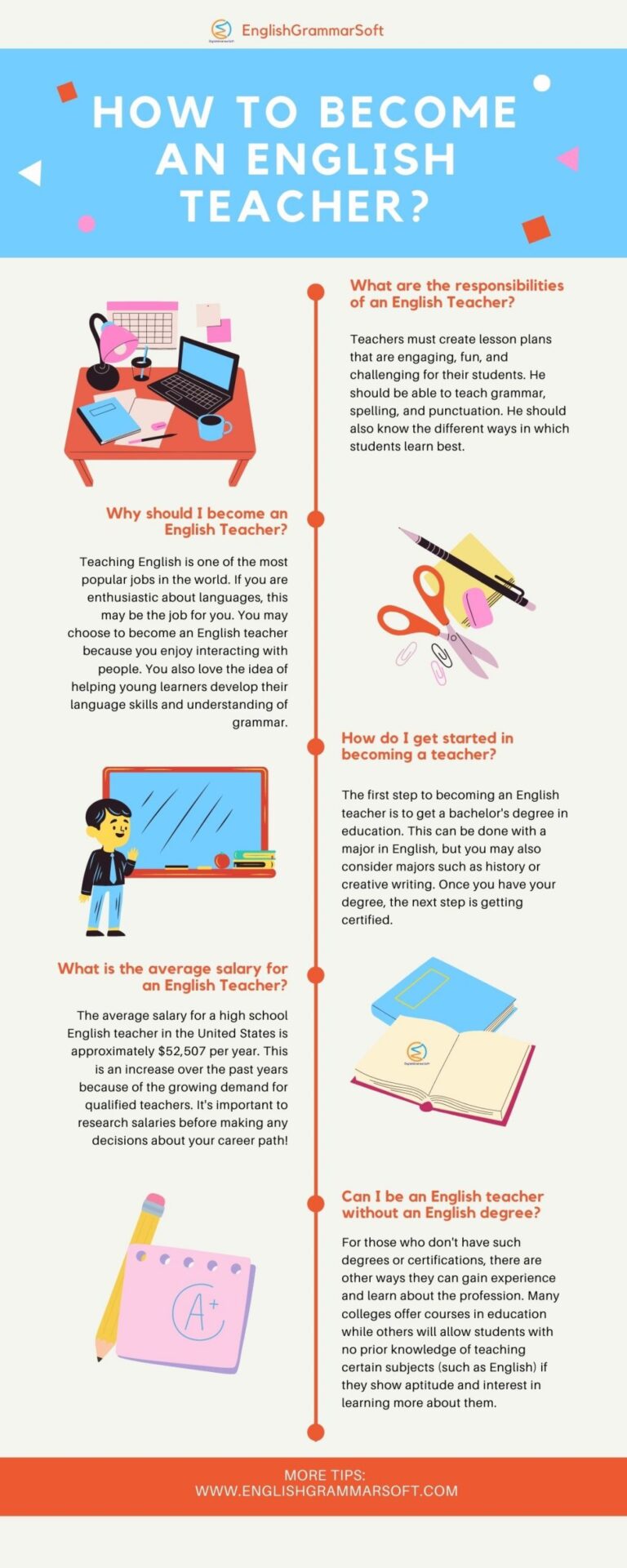
Alright, let's talk about the nitty-gritty. You can’t just waltz in and start correcting grammar with a marker, unfortunately (though that would be a funny reality show!). You need some credentials. Think of it as your teaching superpower starter pack.
The most common one you'll hear about is a TEFL (Teaching English as a Foreign Language) certification. It's basically the industry standard. There are tons of different TEFL courses out there, from weekend workshops to full-blown, intensive programs. Do your research! You'll want to find one that's accredited and reputable. Trust me, you don't want to end up with a certificate that's only good for lining your birdcage (no offense to birdcage enthusiasts, of course).
Must Read
Another option is a CELTA (Certificate in English Language Teaching to Adults) – considered a bit more prestigious and intensive, especially for teaching adults (go figure!). It's offered by Cambridge and is highly respected. It involves more observed teaching practice, which can be terrifying, but also incredibly beneficial. Think of it as boot camp for English teachers!
And hey, if you already have a teaching degree, or even a degree in English, well, hot dog! You’re already halfway there! You might still need a TEFL or CELTA depending on where you want to teach, but you’ve got a solid head start.

Where Do You Wanna Teach? (Seriously, It Matters!)
This is a HUGE question! Are you dreaming of teaching in bustling Tokyo? Sun-drenched Spain? Maybe even your own hometown? Where you want to teach dramatically impacts what kind of qualifications you need. Different countries (and even different schools within the same country!) have different requirements. Some want native speakers only (that's us!), others are more flexible. Some require a bachelor's degree, some don't.
Do your homework! Research the specific requirements for the places that pique your interest. Websites like Dave's ESL Cafe (yes, it still exists!) and various international job boards can be incredibly helpful. Don't just assume anything! Assuming makes an...well, you know the rest.
Skills That Pay the Bills (Besides Grammar!)
Okay, so you’ve got the paper. But teaching is about way more than just knowing the difference between "there," "their," and "they're" (although that's definitely important!). You'll need some serious people skills.
Patience. Like, monk-level patience. You'll be explaining the same things over and over again. But hey, repetition is key to learning, right? (At least, that's what I keep telling myself).
Adaptability. Things will go wrong. Lessons will bomb. Students will ask unexpected questions. You need to be able to roll with the punches and think on your feet. Improv skills are surprisingly useful in the classroom!

Enthusiasm. If you're bored, your students will be even more bored. Bring the energy! Make learning fun! (Easier said than done, I know. But fake it 'til you make it, right?)
Cultural sensitivity. You'll be working with people from all sorts of different backgrounds. Be respectful, open-minded, and willing to learn about their cultures. This isn't just good teaching; it's good humaning! (Yeah, I made that word up).

Getting the Gig (The Job Search!)
Alright, you’re certified, you’re skilled, you’re ready to rock! Now comes the job search. Update that resume! Polish that cover letter! Practice your interview skills! And most importantly, network! Tell everyone you know that you're looking for a teaching job. You never know who might have a connection. Online job boards are a goldmine. Tailor your resume and cover letter to each specific job. Generic applications are a one-way ticket to the "rejected" pile.
Don't be afraid to start small! You might not land your dream job right away. Consider volunteering or tutoring to gain experience. Every little bit helps!
Final Thoughts (You Got This!)
Becoming an English teacher isn't always easy. There's work, sacrifice, and maybe even a few moments of existential dread (we've all been there!). But it's also incredibly rewarding. You get to make a real difference in people's lives, see them grow, and help them unlock new opportunities. And who knows, you might even learn a thing or two yourself! So go out there, embrace the challenge, and make some linguistic magic happen!