How Often Should My Septic Tank Be Pumped
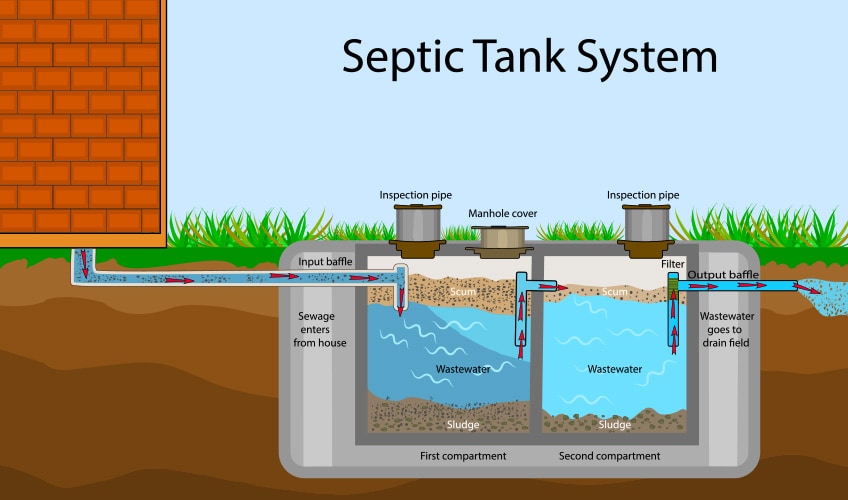
Alright, settle in, grab your beverage of choice – maybe not a smoothie, given the topic – because we're about to delve into the glamorous, oft-ignored, and profoundly important world of your septic tank. Yes, that silent, subterranean hero beneath your lawn, diligently processing your... well, you know. It's not the kind of thing you discuss at dinner parties, but neglect it, and suddenly it's the only thing anyone can smell. So, let's talk about how often this unsung champion needs a little TLC, or more accurately, a good old-fashioned vacuuming.
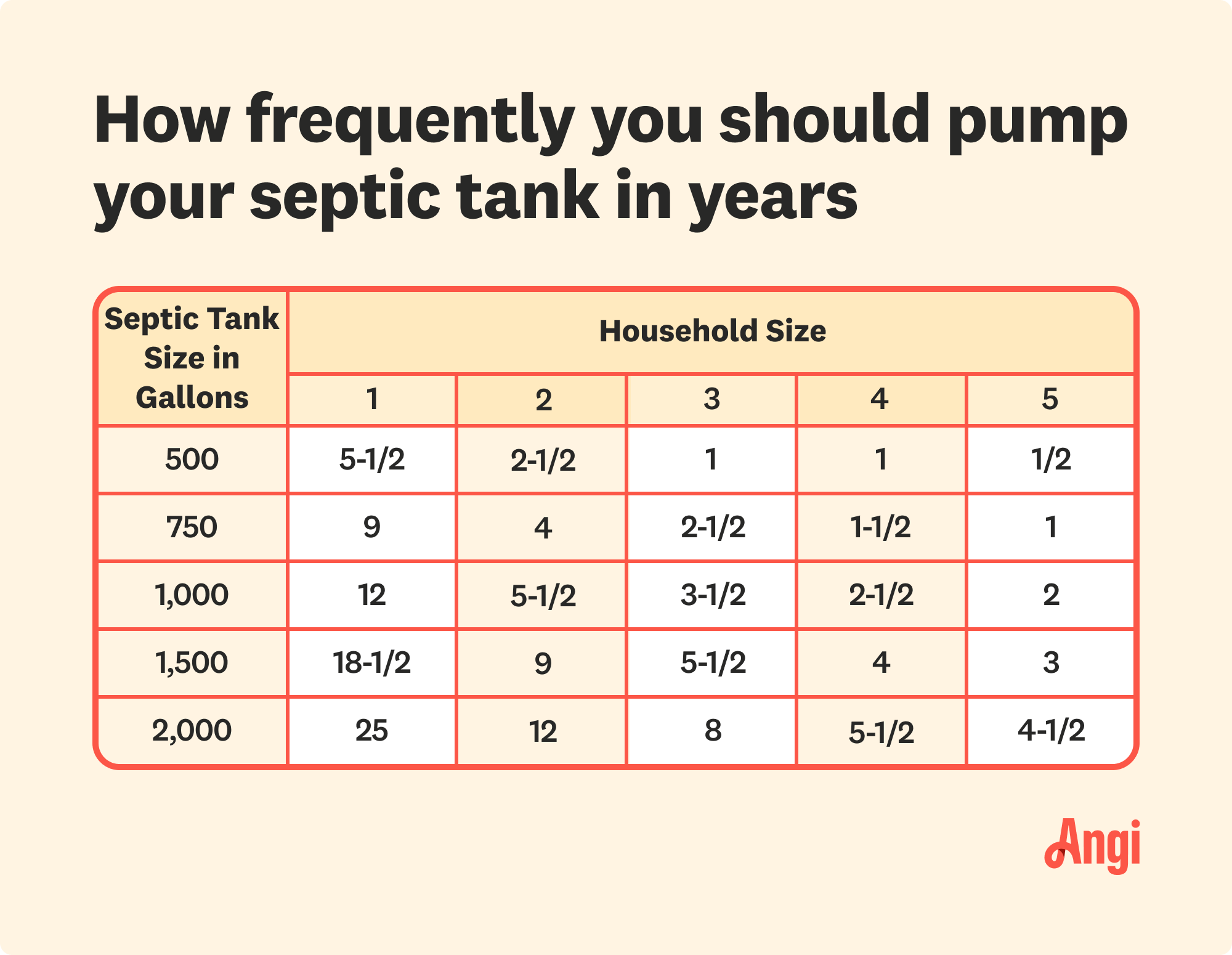
First off, let me disarm you with a shocking truth: there's no single, one-size-fits-all answer. I know, I know, you came here for a definitive "every X years!" and I'm already letting you down. But bear with me, because understanding the "why" is half the battle, and the other half involves a big truck with a really long hose. Generally speaking, most experts will tell you that a septic tank should be pumped every three to five years. But that's like saying "eat healthy" – it’s good advice, but the devil (and the sludge) is in the details!
The More the Merrier… and the Poopier
Think of your septic tank as a very, very patient stomach. The more people living in your house, the more "food" that stomach has to process. A single person living alone might stretch those three to five years into something closer to five or even beyond, assuming they're not hosting weekly rave parties in their bathroom. On the other hand, a family of six, complete with teenagers who believe "showering" means draining the hot water heater twice a day, will definitely need more frequent pumping, perhaps every two to three years. It's simply a matter of volume, folks. More butts, more... output.
Must Read
Size Matters, Right?
Just like a tiny teacup fills up faster than a giant bathtub, a smaller septic tank will reach its capacity quicker than a larger one. If you're living in an older home, you might have a smaller tank by modern standards, which means you'll lean towards the more frequent end of that pumping spectrum. If you've got a grand old 1,500-gallon beast down there, you might buy yourself a little extra time. Knowing your tank’s size is like knowing your shoe size – pretty fundamental, though hopefully less smelly.
Are You a Water-Savant or a Shower-Hog?
This is where things get interesting. Your septic tank isn't just dealing with solid waste; it's also handling all the wastewater from your showers, sinks, washing machine, and dishwasher. The more water you send down the drain, the faster the tank fills, and the more quickly the solids accumulate. So, if you're rocking low-flow fixtures, doing laundry only when absolutely necessary, and generally being mindful of your H2O consumption, your septic system will thank you with longer intervals between pumping. If, however, your daily routine involves a 30-minute power shower followed by simultaneously running the dishwasher and two loads of laundry, well, your septic tank is probably giving you the stink-eye right now.

Here’s a fun fact: Did you know a running toilet can waste hundreds of gallons of water a day? That's not just money down the drain; it's also a fast-track ticket to a premature septic tank pumping!
The Kitchen Culprit: Your Garbage Disposal
Oh, the humble garbage disposal. Convenient, right? Wrong! At least, not for your septic system. If you have a septic tank, your garbage disposal is like that one guest who brings a fruitcake to every party – nobody wants it, and it just clogs things up. Disposals introduce a significant amount of extra solids (food waste that isn't fully broken down) and grease into your tank, greatly increasing the rate at which sludge and scum layers build up. If you're using a garbage disposal regularly, you should be pumping your tank far more often – think every one to three years. Honestly, for the love of your wallet and your nose, just compost or trash your food scraps. Your septic system is not a black hole for potato peels.
The Sinister Signs: When Your Tank is Yelling for Help
Sometimes, your septic tank won't wait for your scheduled appointment; it'll throw a full-blown tantrum. Here are the red flags, the warning flares, the unmistakable whispers from the underworld:
- Slow Drains: Your toilet flushes like it's taking a leisurely stroll, or your shower basin fills up while you're still rinsing. This isn't just old pipes; it's often a tank struggling to keep up.
- Nasty Odors: The distinct, unmistakable smell of sewage wafting around your property, especially near the tank or drain field. This is not a new perfume; it's a plea for help.
- Gurgling Pipes: Sounds coming from your drains or toilets that resemble an angry monster in the basement. Your pipes shouldn't sound like a haunted house.
- Lush, Green Patches: This is an ironic one. If you have unusually green, spongy grass over your drain field, even during a drought, it might not be a miracle. It’s often effluent surfacing, providing an unintended, nutrient-rich fertilizer. Gross.
- Sewage Backups: The absolute worst-case scenario. When the sewage comes back up into your house. If this happens, stop reading, call a professional, and start praying.
These signs mean your tank isn't just full; it's overflowing and potentially causing damage to your drain field, which is a much more expensive problem than a simple pump-out. Don't wait for these dramatics!

So, What's the Takeaway?
My friend, the golden rule of septic tank maintenance is this: be proactive, not reactive. Don't wait for the gurgling, the stench, or the inevitable backup before you call for a pump-out. It’s far cheaper (and less traumatic) to get it pumped regularly than to replace an entire drain field. Call a local, reputable septic service. They can inspect your system, tell you its size, assess your household's usage, and give you a personalized recommendation for pumping frequency.
Think of it as a regularly scheduled detox for your underground workhorse. It might not be glamorous, it certainly won't smell of roses, but a happy septic tank means a happy home. And trust me, nobody wants to be the neighbor whose house smells like regret and human waste. Your septic system might be out of sight, but it definitely shouldn't be out of mind!