
How Much Kwh Does A Ac Use

Hey there, cooling comrade! Ever sat there, perfectly chilled, maybe scrolling through your phone, when suddenly – BAM! – a thought hits you faster than an ice cube down your back? You start wondering, "Just how much juice is this glorious, life-saving machine actually sucking down?" You’re not alone, friend. It’s a classic summer ponderance, right up there with "Is it too hot for soup?" and "Did I remember to put on sunscreen?"
Well, grab another iced coffee (or whatever your preferred cooling beverage is), because we’re about to dive into the wonderful, slightly confusing world of AC power usage, measured in kilowatt-hours (kWh). And trust me, we're going to keep it super casual, like we're just chatting over the fence.
So, What's the Deal with AC and kWh?
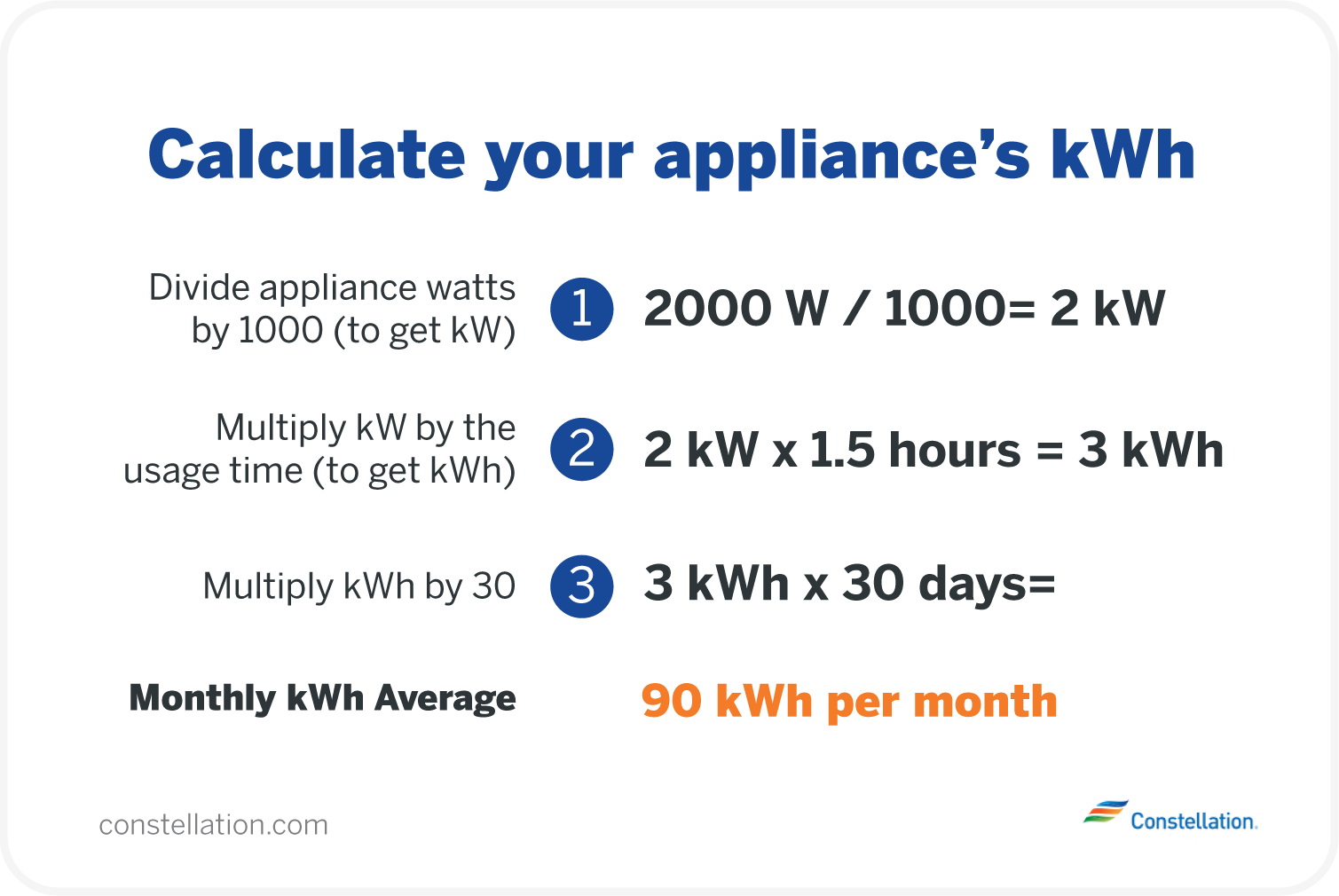
Okay, let’s get the nerdy bit out of the way first, but in a totally un-nerdy way. kWh. Sounds like something a mad scientist would shout, doesn't it? But really, it's just how the electric company measures how much electricity you've used. Think of it like this: if your car's speedometer tells you how fast you're going right now (Watts!), then the odometer tells you how far you've traveled in total (that's your kWh). It’s the total energy consumed over a period, usually an hour. So, if your AC uses 1,000 Watts for an hour, that's 1 kilowatt-hour, or 1 kWh. Easy peasy, right?
Must Read
Understanding this little number is key because that’s what shows up on your dreaded utility bill. And when your AC is blasting away like a personal arctic hurricane, those kWh numbers can stack up faster than empty ice cream tubs on a hot day.
The Big Question: How Much Exactly? (Spoiler: It Varies!)
Now, if you came here looking for a nice, neat, single number, well, buckle up, buttercup, because it's not quite that simple. Asking "how much kWh does an AC use?" is a bit like asking "how much food does a person eat?" It totally depends! On a bunch of stuff, actually. Like, a surprising number of things. But don't worry, we'll break it down without needing a whiteboard or a calculus degree.
.png)
The main culprits influencing your AC's appetite for electricity are its size, its efficiency rating, the outside temperature (duh!), your home's insulation, and even your personal thermostat habits. Let’s peek behind the curtain at each of these.
Factor 1: Your AC's Size (Bigger Isn't Always Better, Right?)
When we talk about AC size, we’re usually talking about its cooling capacity, measured in BTUs (British Thermal Units) or "tons." A 12,000 BTU unit is a 1-ton unit, a 24,000 BTU unit is a 2-ton unit, and so on. Naturally, a bigger AC (more BTUs/tons) means it has more power to cool a larger space. And more power generally means more kWh used per hour. Makes sense, right?
But here’s a fun little quirk: an AC that’s too big for your space can actually use more energy than necessary! It'll blast cold air, hit your set temperature super quickly, and then shut off. This constant on-off cycle, called "short cycling," isn't efficient and it doesn't dehumidify your space properly, leaving you feeling sticky even when it's cool. So, finding the right-sized AC is actually a big deal for efficiency.
Factor 2: The AC's Efficiency (SEER Rating, Your New Best Friend)
This is where your AC's SEER rating struts onto the stage. SEER stands for Seasonal Energy Efficiency Ratio, and yeah, it's a mouthful. But here's the skinny: a higher SEER number means your AC is a rockstar at cooling without hogging all the electricity. Think of it as MPG for your car, but for coolness!
Newer units often have much higher SEER ratings (15-20+) than older clunkers (which might be down in the single digits). So, if your AC unit looks like it could've fought in the Cold War, it's probably slurping down way more kWh than a sleek, modern model. An older, less efficient unit might use twice as much power as a newer, high-SEER model to achieve the same cooling.

Factor 3: What's Happening Outside (and Inside!)
This one is a no-brainer. Is it a scorching, sweat-inducing 100°F outside, or a pleasantly warm 80°F? The hotter it is, the harder your AC has to work, and the more kWh it devours. Period. It's like asking a marathon runner to sprint vs. jog – same goal, but way more effort (and energy!) for the sprint.
And what about inside your house? Your home’s insulation is like a cozy blanket keeping the heat out (or in, during winter). Drafty windows, poor attic insulation, or even leaving curtains open on a sunny window means your AC has to fight a losing battle against incoming heat, pumping up those kWh numbers. Set your thermostat super low, say 68°F, when it’s 95°F outside, and prepare for sticker shock on your bill!
Let's Talk Numbers (Rough Estimates, Of Course!)
Okay, okay, I know you want some numbers! Let's get down to some super rough estimates. Please remember, these are like guessing how many jellybeans are in a jar – close, but not exact. Your mileage (or kWh-age!) will absolutely vary.

- A small window unit (say, 5,000 BTUs) might sip around 0.5 to 0.75 kWh per hour. That’s pretty chill for a single room.
- A medium window unit (around 10,000 BTUs) could be closer to 0.9 to 1.5 kWh per hour. Good for a larger room or small apartment.
- And for a big old central AC system (the kind that cools your whole house, maybe 3-ton/36,000 BTUs)? We're talking anywhere from 3 to 5 kWh per hour, sometimes more if it's really kicking into high gear on a scorching day with a low thermostat setting.
So, if your central AC is chugging along at 4 kWh per hour, and you run it for 8 hours a day, that's 32 kWh in just one day! Multiply that by your local electricity rate, and you can see why those summer bills make us sweat even more.
How to Be a kWh-Saving Ninja!
Want to be a kWh-saving ninja? Of course, you do! Who doesn't love lower bills and a happier planet? Here are some quick, friendly tips:
- Be a Thermostat Rebel (Sort Of): Seriously, try nudging that temperature up a degree or two. From 72°F to 75°F? You might not even notice the difference in comfort, but your wallet sure will! Every degree warmer can save you a surprising chunk of change.
- Filter Fun: Change your AC filter regularly! A clogged filter makes your AC work harder than a one-man band, sucking down more power. It’s like breathing through a dirty sock. Gross for your AC, expensive for you.
- Fan-tastic Friends: Use ceiling fans or portable fans! They don’t lower the temperature, but they create a wind-chill effect, making you feel cooler. This means you can often set your thermostat a few degrees higher. Genius!
- Block the Sun: Keep blinds and curtains closed during the hottest parts of the day. Seriously, direct sunlight through a window is like having a tiny, personal sunbeam oven trying to heat your house.
- Seal the Deal: Check for drafts around windows and doors. Seal them up! All that cool air escaping is literally money flying out the window.
- Maintenance Matters: Get your AC serviced annually. A well-maintained unit runs more efficiently. Think of it as a spa day for your AC.
So, there you have it, fellow comfort-seeker! While there's no single, magic number for how much kWh your AC uses, you're now armed with the knowledge (and some handy tips!) to understand your AC's appetite and maybe even curb its consumption a bit. Go forth and chill efficiently!