How Much Gasoline Is Made From A Barrel Of Oil
Hey there, friend! Ever found yourself at the gas station, watching the digits fly by, and wondered, "Just how much of this liquid gold actually comes from that murky stuff they dig out of the ground?" You're not alone! It's a fantastic question, and one we're going to tackle today, no boring textbooks required. Grab a coffee (or a non-petroleum-based beverage, if you prefer!) and let's unravel this mystery with a smile.
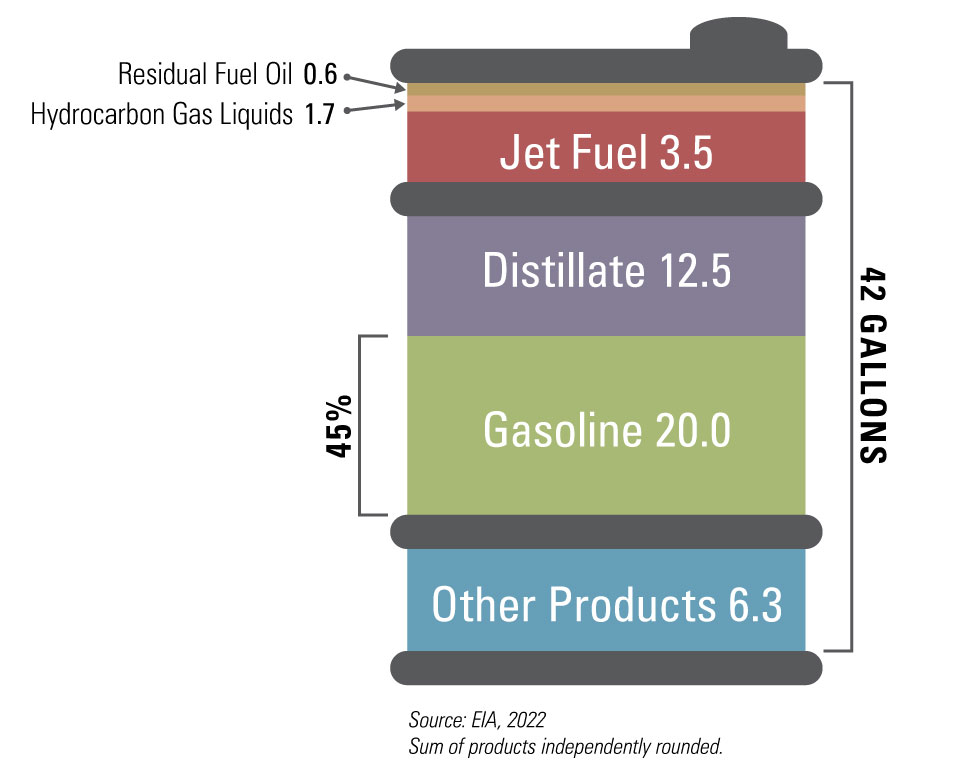
First things first, let's talk about the star of our show: the barrel of oil. Now, when we say "barrel," don't picture some rickety wooden cask from a pirate movie. While it used to be a physical container, it's now mostly a unit of measurement. Specifically, one barrel of crude oil equals 42 US gallons. Yep, that's a lot of liquid! Imagine trying to roll that into your garage – your neighbors would talk. 😉
So, we have 42 gallons of crude oil. The big question is: how much of that turns into the gasoline we pump into our cars? Drumroll, please...
Must Read
The Main Event: Gasoline!
On average, for every 42-gallon barrel of crude oil, refineries crank out about 19 to 20 gallons of gasoline. That's right, just under half! Isn't that wild? You might think it's a direct one-to-one conversion, but nope, crude oil is like a super-ingredient that's also used to make a whole buffet of other goodies.
Think of it this way: if a barrel of oil were a pizza, gasoline would be the biggest, most popular slice, but definitely not the whole pie. The exact amount can wobble a bit depending on the type of crude oil (some are "lighter" and yield more gasoline, others are "heavier") and what fancy equipment the refinery has. But generally, when you fill up your tank, you're getting a good chunk of that original barrel's potential.

But Wait, There's More! The Oil "By-Products" (They're Super Important!)
So, if only about 20 gallons become gasoline, what happens to the other 22-ish gallons? Well, that's where the magic, and a whole lot of other useful stuff, comes in! Crude oil is like the ultimate multi-tasker. Here’s a quick peek at its other fantastic transformations:
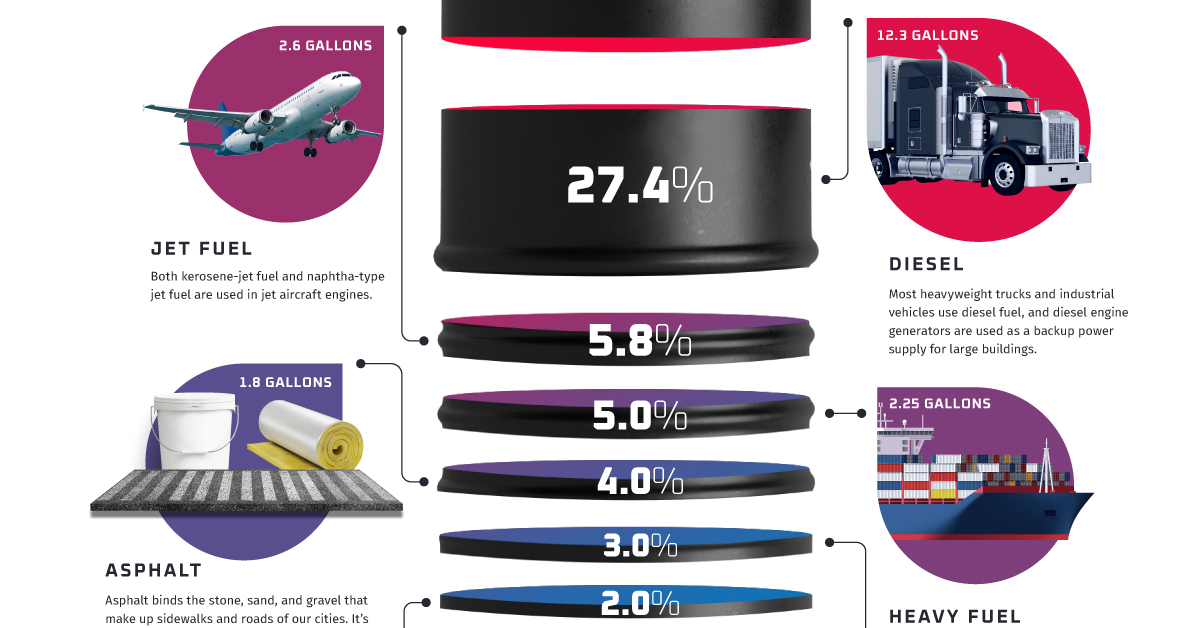
- Diesel Fuel: This is the second-biggest slice of our oil pizza! You get about 11 to 12 gallons of diesel from that same barrel. Trucks, buses, and even some cars rely heavily on this. So, while you're zooming around, a big rig might be getting its power from the same barrel of oil!
- Jet Fuel (Kerosene): Fancy flying? A barrel gives us roughly 4 gallons of jet fuel. That's what keeps those jumbo jets soaring high above. So, the next time you're flying to a fabulous vacation spot, remember the humble barrel that made it possible.
- Heating Oil: Especially in colder climates, some homes use heating oil. This also comes from the same family as diesel and jet fuel, adding another couple of gallons to the mix. Brrr!
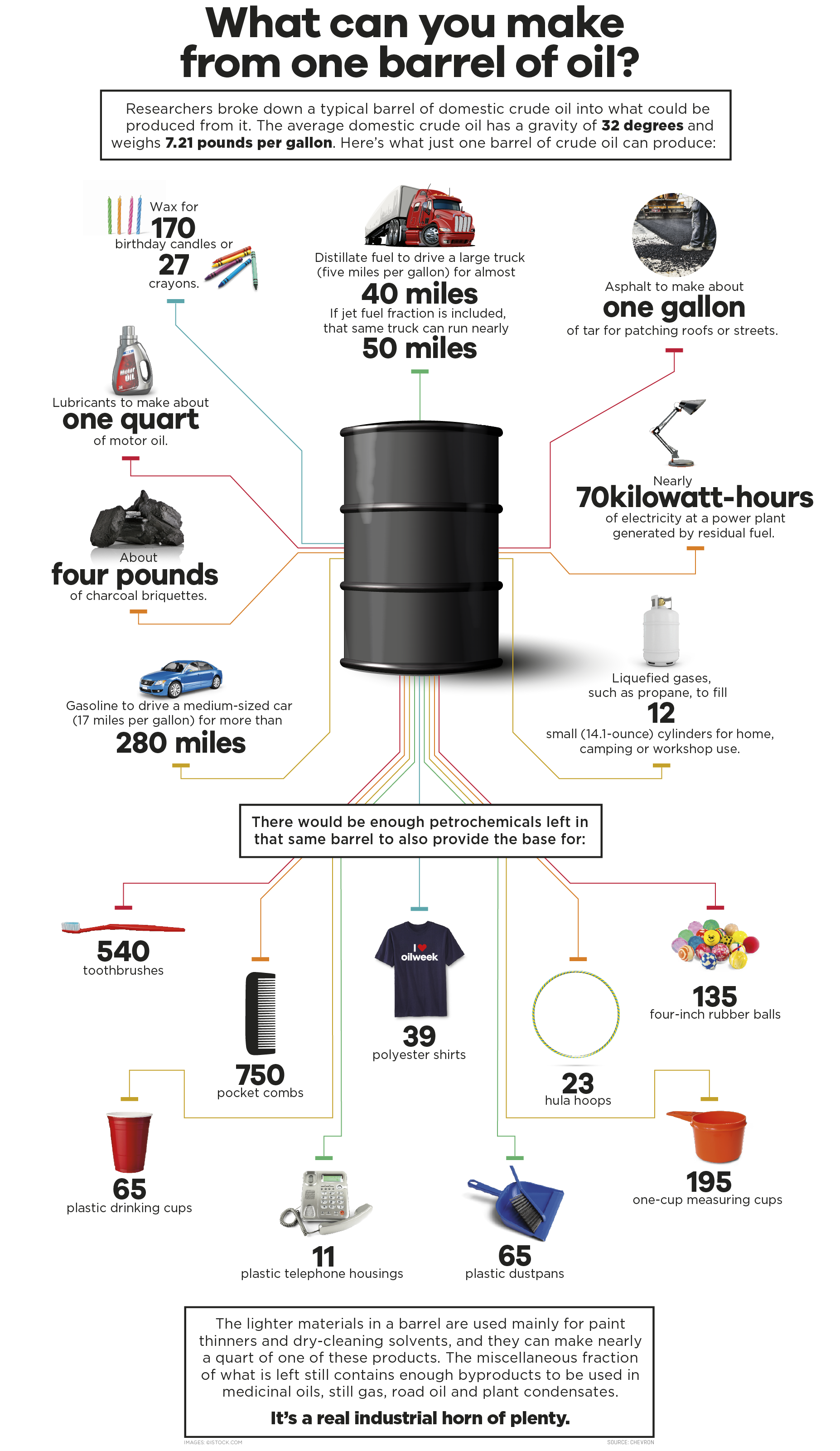
- Liquid Petroleum Gas (LPG): Think propane for your BBQ or heating, or even some vehicles. About 1 to 2 gallons come from our versatile barrel. Grill masters, rejoice!
- Asphalt: Yep, the roads we drive on? A good portion of the sticky black stuff comes from the heaviest parts of that crude oil. Roughly 1 gallon per barrel helps pave our way.
- Lubricants, Waxes, and Petrochemicals: This is where things get truly wild! The remaining few gallons contribute to a massive array of products. We're talking motor oil, crayons (hello childhood!), plastics (from your phone case to your shampoo bottle), fertilizers, synthetic fibers for clothes, medicines, tires, paints... the list is practically endless! Crude oil literally touches almost every part of our modern lives. It’s like the Swiss Army knife of natural resources.
The Refining Razzle-Dazzle
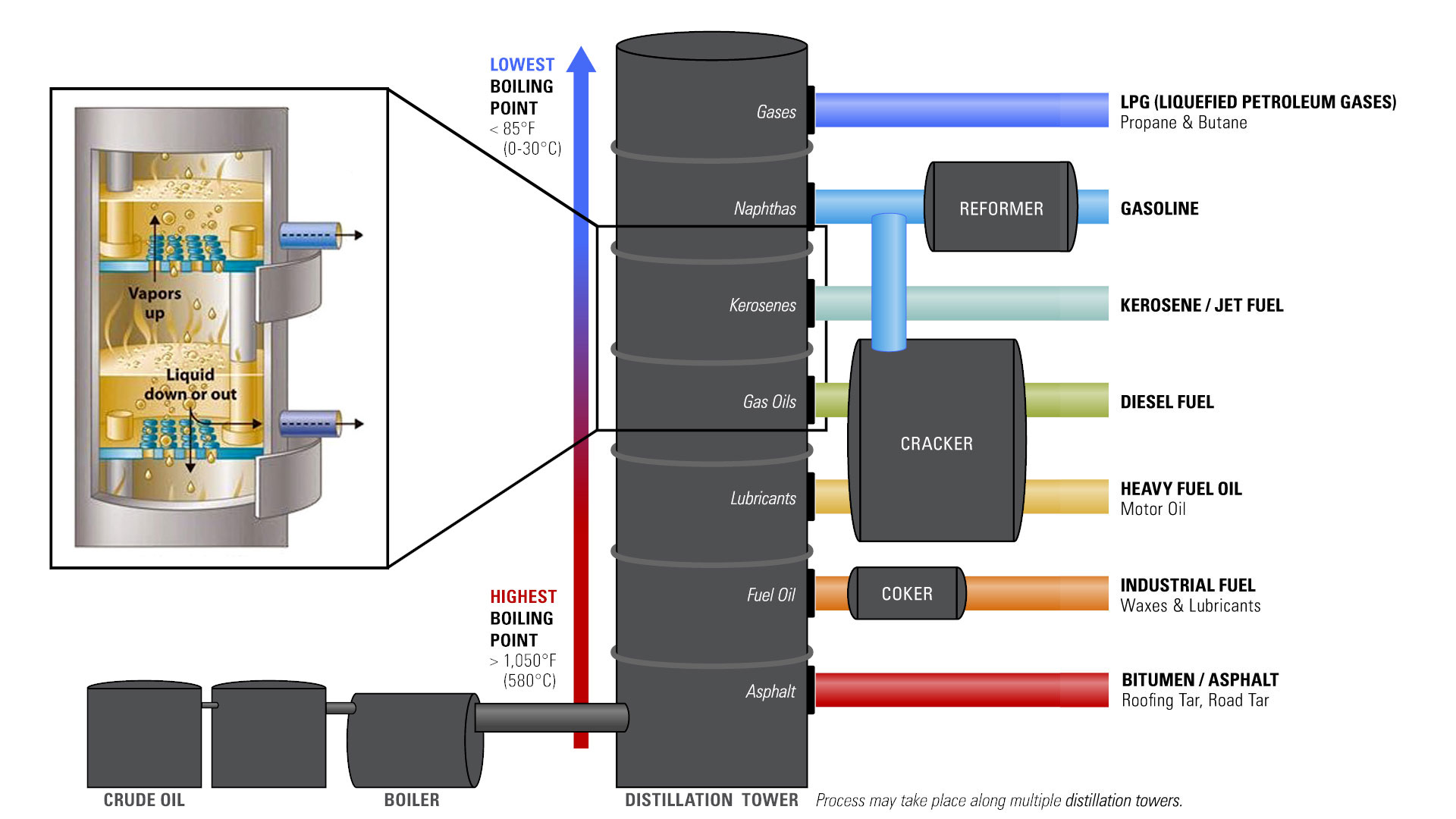
How does crude oil get separated into all these different things? It’s all thanks to something called a refinery. Imagine a giant, super-sophisticated kitchen. They heat the crude oil to crazy high temperatures, and as it vaporizes and then cools, different components condense at different levels because they have different boiling points. It's like separating water from alcohol by boiling – but way more complex, with a whole lot more "ingredients" involved! They then use other processes, like "cracking" (which sounds like something you'd do to an egg, not oil!), to break down heavier molecules into lighter, more valuable ones like gasoline.
So, the next time you're at the pump, take a moment to appreciate the journey that crude oil has made. It's not just about filling up your tank; it's about powering planes, heating homes, paving roads, and making countless products that shape our world. From one humble barrel, a whole universe of possibilities unfolds!
Isn't it fascinating how something so seemingly simple can be transformed into so many vital parts of our daily existence? It’s a testament to human ingenuity and the incredible resources our planet provides. So, go forth and enjoy your day, knowing a little more about the amazing alchemy behind that fuel in your car. Keep exploring, keep questioning, and keep that curious spirit alive!