How Many Volts Does A Aa Battery Have

Alright, gather 'round, folks, because we're about to dive into one of life's great mysteries, or at least, one of its great practical questions that pops up when your TV remote suddenly decides to take an unscheduled nap. We're talking about the humble, mighty, and often taken-for-granted AA battery.
You know the drill. You're chilling, trying to change the channel, and poof, nothing. Or your kid's favorite noisy toy suddenly sounds like it's gargling marbles. What's the first suspect? Yep, the AA battery. And in those moments of mild panic, you might wonder, "How much oomph is this little guy supposed to have anyway?"
The Big Reveal: The AA Battery's Secret Power
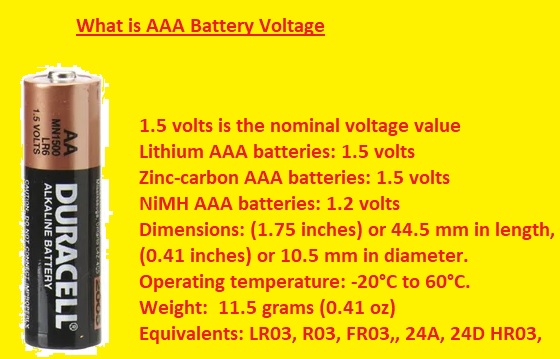
Let's get straight to it, no suspense needed. A standard, fresh, alkaline AA battery rolls out of the pack packing a solid 1.5 volts. Yep, just a cool one and a half.
Must Read
Think of a volt as a sort of electrical "push." It's not about how much electricity there is, but how hard it's being pushed along. Imagine it like a tiny, invisible muscle flex, or the water pressure coming out of a tap. A fresh AA battery has enough pressure to get things moving smoothly.
It’s not some mind-blowing, lightning-bolt kind of number, right? Just 1.5. But don't let that small figure fool you; it's the perfect amount for a gazillion gadgets in our lives. From those remotes and toys to flashlights, wall clocks, and even some wireless mice – they all rely on that consistent 1.5V.
The "Dying Battery" Saga: A Universal Experience
Now, here's where the real-life connection kicks in. You know that feeling when a device isn't quite dead, but it's clearly on its last legs? The TV remote needs five presses to register one click, or your electric toothbrush sounds like it's whispering sweet nothings instead of scrubbing.
That's not because the battery suddenly dropped to 0 volts. Oh no, it's far more dramatic than that. It's because its voltage has dipped below that optimal 1.5V, often somewhere around 1.1 or 1.0 volts. It's like your car running on fumes – it's still moving, but it's definitely not winning any races.
Your gadget, bless its circuits, is designed to run happily at 1.5V. When that push drops, it's like asking a marathon runner to finish the race after they've already run three. They're trying, bless their heart, but they're struggling. That little LED on your device might still flicker, but it's flickering with a sigh of exhaustion.

Rechargeables: The Slightly Different Kid on the Block
And then we have the rebels: rechargeable AA batteries. These clever chaps, often NiMH (Nickel-Metal Hydride), typically start their journey at 1.2 volts. "Wait, what?!" you might exclaim, "That's less than 1.5!"
You're right, it is! But here's the cool part about rechargeables: they tend to maintain that 1.2V push much more consistently throughout their life cycle, whereas alkalines start at 1.5V and gradually decline. Some super-sensitive devices might get a little confused by the 1.2V initial nudge and think the battery is already half-dead, but for most gadgets, they work perfectly fine. It’s like a slightly less powerful, but incredibly consistent, friend.

Why Does It Matter? (Beyond Just Turning Things On)
Understanding this little 1.5V factoid isn't just for pub quizzes. It helps you understand why some batteries seem to die quicker in certain devices. A device that needs a strong, steady push will complain louder and sooner if the voltage starts to sag.
And here's a fun little tidbit: ever wondered why some flashlights or toys take two or four AA batteries? They're often wired in a series, meaning their voltages add up. Two AAs give you 3 volts (1.5V + 1.5V), four give you a mighty 6 volts! It’s like building a little electrical pyramid to get more power for brighter lights or faster motors. Each 1.5V battery adds its push to the chain.
So, the next time your trusty gadget sputters, give a nod to that unsung hero, the AA battery. It's not trying to be fancy with huge voltage numbers; it's just consistently delivering that perfect 1.5 volts (or 1.2V if it's a rechargeable go-getter) to keep our daily lives humming along. And maybe, just maybe, you'll replace it with a fresh one before it starts singing its electrical swan song.