
How Many Valence Electrons Does Phosphorus Have
Hey there, chemistry curious! Ever wondered what makes elements tick? Like, really tick? Let's talk phosphorus. It's not just that stuff on match heads. It’s way cooler than that!
Phosphorus: More Than Just Matches!
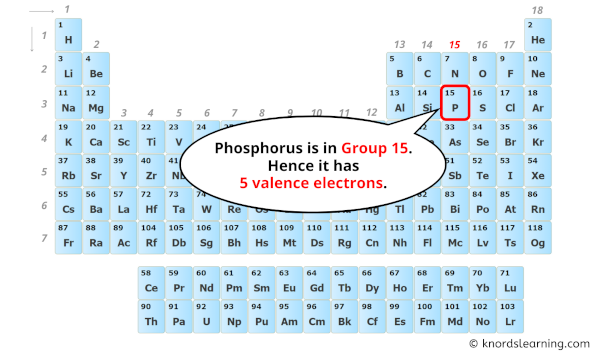
So, phosphorus (symbol P) is a nonmetal. You’ve probably seen it in the periodic table. It's in Group 15 (also sometimes called Group 5A). This is super important, BTW. Remember that group number.
But first, a quick detour. Think of elements as social butterflies. They want to mingle and make friends (aka form bonds). But they need the right "outfit" – their valence electrons – to make it happen. It's like showing up to a party in your pajamas. Awkward!
Must Read
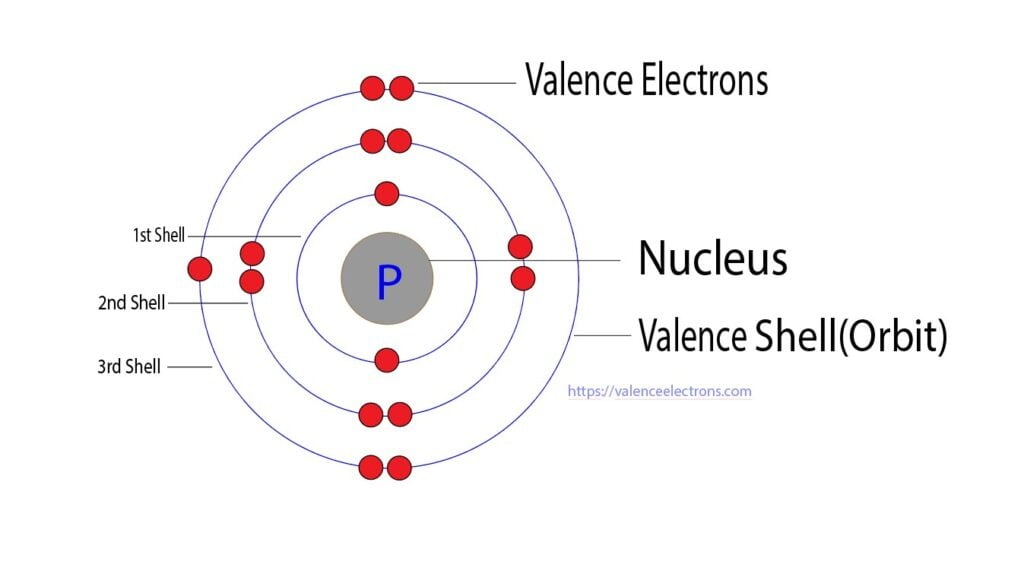
Valence electrons are the electrons in the outermost shell of an atom. They're the ones involved in chemical bonding. They’re the key players in making molecules happen. Think of them as the atom’s networking tools.
So, How Many Does Phosphorus Have? The Big Reveal!
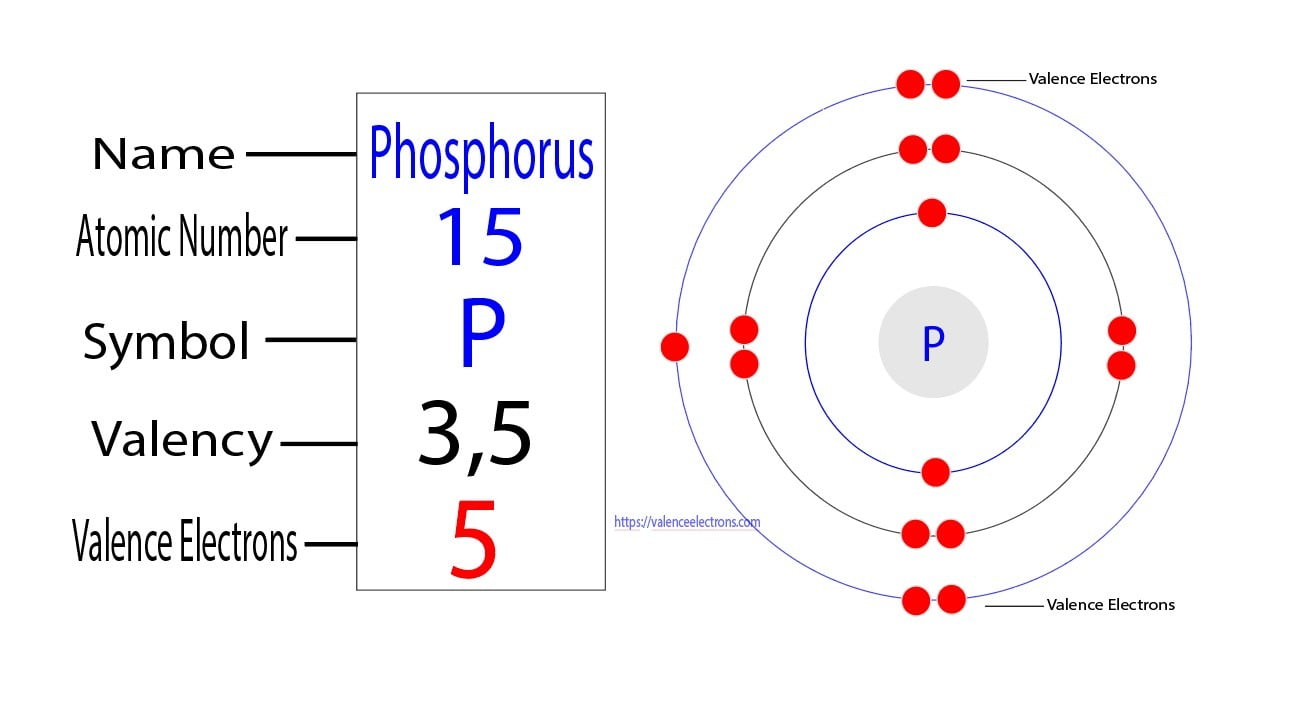
Drumroll, please! Phosphorus has five valence electrons. Ta-da!
Remember that group number thing? Here's the cheat code: for main group elements (those tall columns in the periodic table), the group number tells you how many valence electrons there are! Mind. Blown.

Because phosphorus is in Group 15 (or 5A), it has 5 valence electrons. Boom. Simple, right?
Now, why is this so crucial? Well, these five electrons determine how phosphorus interacts with other elements. They dictate what kind of bonds it can form.
Why Five is Fine: The Octet Rule
Atoms are lazy (in a chemical sense, anyway!). They want to achieve the most stable configuration possible. Many atoms aim to have eight valence electrons, fulfilling the octet rule. Think of it like having a full hand in poker – a winning situation!
Phosphorus, with its five valence electrons, needs three more to complete its octet. This explains why it often forms three covalent bonds, like in the infamous phosphorus trichloride (PCl3). It shares three electrons with three chlorine atoms, each chlorine also needing one more electron to complete its octet.
But phosphorus isn't always a rule-follower. It can sometimes break the octet rule. It's a bit of a rebel. Don't tell the other elements!
For instance, it can form phosphorus pentachloride (PCl5). Gasp! That's ten electrons around the phosphorus atom. How scandalous! This is possible because phosphorus is in the third row of the periodic table and can utilize its d orbitals to accommodate extra electrons.
The Many Faces of Phosphorus: Allotropes!
Hold on, there's more! Phosphorus exists in different forms, called allotropes. These are different structural modifications of the same element.
The most common allotropes are white phosphorus, red phosphorus, and black phosphorus. White phosphorus is highly reactive and spontaneously ignites in air! It’s stored underwater for safety. Imagine accidentally leaving that out on the counter! Whoops!
Red phosphorus is much more stable. It's what you find on the striking surface of matchboxes. It needs friction to ignite.

Black phosphorus is the most stable form. It has a layered structure, similar to graphite.
Phosphorus: Essential for Life (and Matches!)
Phosphorus isn't just about matches. It's a vital element for life. It's a key component of DNA and RNA, the molecules that carry our genetic information. It’s also essential for ATP, the energy currency of cells.
So, next time you strike a match, remember the fascinating chemistry of phosphorus. From its five valence electrons to its rebellious tendencies and its crucial role in life, it's one element that's definitely worth knowing. Who knew that something so small could be so impactful?
Now you're armed with some phosphorus knowledge! Go impress your friends! Tell them all about those valence electrons and the octet rule. They’ll think you’re a chemistry whiz!