
How Many No Call No Shows Before Termination
Okay, let's talk about something super important, but in a way that won't make your eyes glaze over: no call no shows at work! It's like ghosting your job – showing up is half the battle, right?
We've all been there. That one morning where the snooze button becomes your arch-nemesis. You wake up in a cold sweat, realize you're late, and... panic sets in!
But what happens if this becomes a habit? How many times can you poof disappear before your boss starts wondering if you've been abducted by aliens (and starts looking for a replacement)? Let's dive in, shall we?
Must Read
The "One Strike and You're Out!" Myth (Busted!)
You might have heard horror stories of people getting fired after just one no call no show. While that's theoretically possible (especially in certain high-stakes jobs), it's usually not the case.
Think of it like this: everyone deserves a chance. Maybe your car spontaneously combusted. Maybe your cat decided to hold you hostage. Life happens!
Generally, most employers are understanding of a single, isolated incident. However, the circumstances definitely matter.
But... Context is King (or Queen!)
Let's say you're a brain surgeon. "Sorry I missed that brain surgery, traffic was bad!" probably won't fly. There are some jobs where being absent, even once, has serious consequences.
Or, imagine you no-call-no-show on the day of the biggest presentation of the year. Ouch. Your employer will be significantly less forgiving than if you missed your shift stocking shelves.
Similarly, consider if you have a perfect attendance record. One slip-up is much more understandable than if you've been consistently late or absent in the past.
The "Three Strikes" Rule: Is It Real?
You've probably heard of the "three strikes" rule in baseball. Is there a similar rule for no call no shows?

Well, not exactly. There's no official, universally-accepted "three strikes" policy. However, it's a good general guideline.
Many companies operate under the assumption that multiple instances of unexcused absences demonstrate a pattern of unreliable behavior. Nobody wants to hire someone they cannot depend on.
The Dreaded "Pattern of Behavior"
That's the key phrase, folks: "pattern of behavior." One no call no show might be an accident. Two might be a coincidence. Three? Now it looks like a deliberate choice.
Employers want people they can rely on, people who are committed to the job. Showing up (and letting them know if you can't) is a pretty basic requirement.
Think of it like dating. If you bail on your date once, they might give you another chance. If you bail three times in a row? Good luck getting a fourth!
Company Policy: The Ultimate Guide
Forget all the general guidelines. The most important thing is your company's specific policy.
Read your employee handbook! Twice! Highlight the section on attendance and absenteeism. Understand the rules of the game.
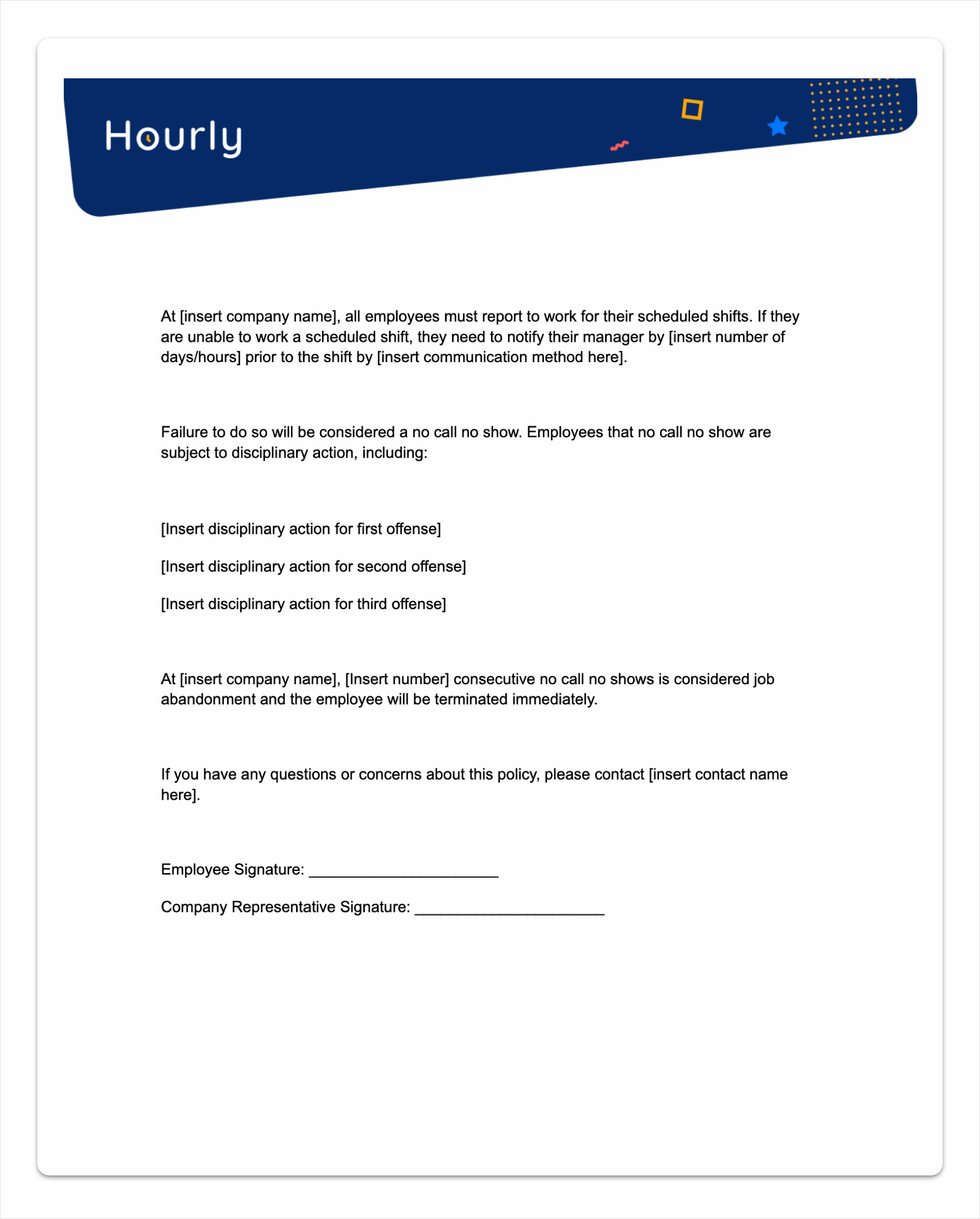
Some companies might have a zero-tolerance policy for certain offenses. Others might have a more lenient approach with verbal warnings, written warnings, and finally, termination.
Where to Find This Magical Document
Your employee handbook should be readily available. Check your company's website, intranet, or ask your HR department.
Don't be shy! It's better to know the rules before you break them. Ignorance is not an excuse.
And if you can't find it, ask! It shows initiative and a willingness to learn. A little bit of proactive communication goes a long way.
Document, Document, Document! (Seriously!)
Whether you're an employee or an employer, documentation is your best friend. Keep a record of everything.
For employees: Keep track of your attendance. Note any explanations you provided for absences. Save any emails or texts related to your attendance.
For employers: Document every instance of a no call no show. Record any warnings given. Keep track of the employee's overall attendance record. Clear documentation is key if you ever need to terminate someone.
Why Documentation Matters
Documentation protects everyone. It provides a clear and objective record of events. If there's ever a dispute, you'll have evidence to back up your claims.
It also helps ensure fairness. A well-documented record prevents accusations of bias or favoritism.
Consider it like having a video recording of a disagreement. It eliminates the "he said, she said" and provides a clear picture of what actually happened.
Communication is Key (Seriously, Communicate!)
Life throws curveballs. Sometimes, you simply can't make it to work. That's okay. The most important thing is to communicate.
Call your boss! Send an email! Text your manager! Just let someone know as soon as possible that you won't be able to make it.
A little bit of communication can make all the difference. It shows respect for your employer and your colleagues.
The Art of the Professional Excuse
While honesty is usually the best policy, there's a fine line between being honest and being TMI (Too Much Information). Your boss doesn't need to know every gory detail of your personal life.

Keep it professional and concise. "I'm experiencing a personal emergency and won't be able to come to work today" is usually sufficient.
If you do need to be more specific, be mindful of your audience. Use your best judgement.
So, What's the Magic Number?
Alright, let's get down to brass tacks. How many no call no shows before you're likely to be fired?
As we've established, there's no magic number. It depends on your company's policy, the context of the absences, and your overall work history. However...
... Generally, more than two no call no shows within a relatively short period (e.g., a few months) is a red flag. Three or more significantly increases your risk of termination. Always check your company policy!
The Bottom Line
Don't push your luck. Be reliable. Communicate effectively.
Treat your job like you'd treat a good friend: with respect, consideration, and open communication.
Showing up is half the battle. Let your boss know you are not unreliable by showing up!