
How Many Lines Of Symmetry Does A Rectangle Have

Ever stopped to admire the simple elegance of a rectangle? Maybe you’ve glanced at your smartphone screen, noticed the perfect alignment of a picture frame, or even savored a delicious chocolate bar neatly divided into rectangular segments. But have you ever considered the hidden symmetry lurking within this ubiquitous shape?
Let’s dive into the surprisingly intriguing world of lines of symmetry, and uncover just how many a rectangle boasts. Get ready to view this everyday shape in a whole new light!
Cracking the Symmetry Code
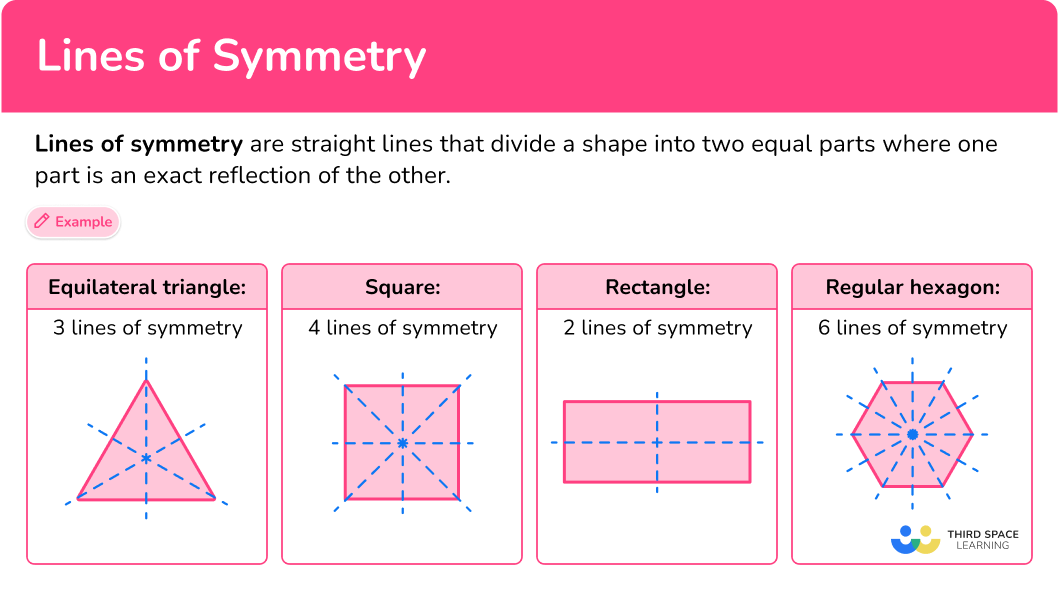
First, a quick refresher. A line of symmetry (also sometimes called an axis of symmetry) is an imaginary line that you can draw through a shape so that if you were to fold the shape along that line, the two halves would match up perfectly. Think of it like a mirror image. If you see yourself perfectly reflected, that's symmetry in action!
Must Read
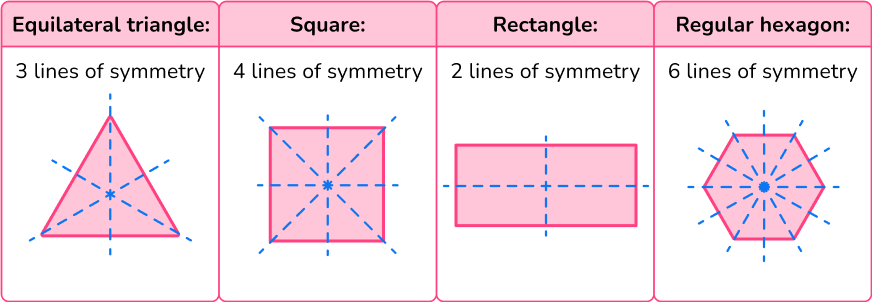
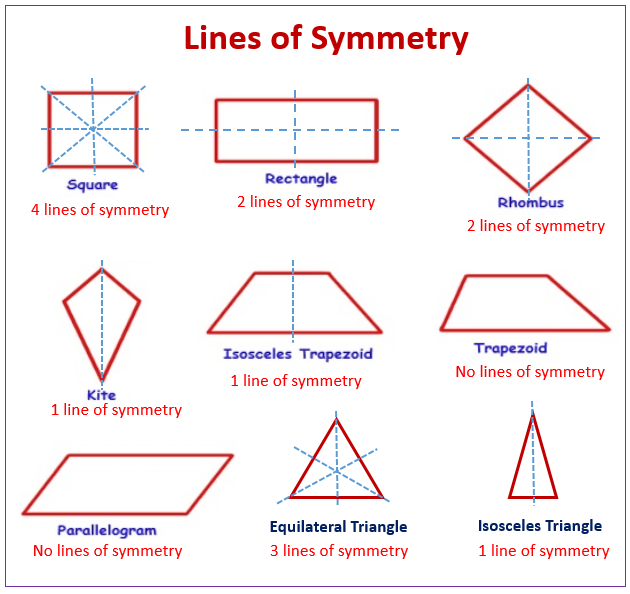
Now, picture a standard rectangle. It has two pairs of equal sides and four right angles. So, how many lines of symmetry does it have?
The answer: Two.
Yep, just two! You can draw one line down the middle, lengthwise, and another across the middle, widthwise. Folding along either of these lines results in perfectly overlapping halves. Easy peasy, right?
Not All Rectangles Are Created Equal: A Square Exception
Hold on! There's a slight twist. What about a square? A square, being a special type of rectangle with all four sides equal, actually has four lines of symmetry. Think about it: it has the two lines like a regular rectangle, plus two diagonal lines cutting corner to corner.
So, remember, while the general rule for rectangles is two lines of symmetry, the square gets to break the mold with its four.
Symmetry in Action: From Art to Architecture
Symmetry isn’t just some abstract mathematical concept; it’s a fundamental principle that influences art, architecture, design, and even nature itself. Think of the perfectly symmetrical wings of a butterfly, the carefully balanced composition of a Renaissance painting, or the grand, symmetrical facades of classical buildings.
Consider the Parthenon in Athens, a prime example of architectural symmetry. Its rectangular structure and balanced proportions create a sense of harmony and stability. Or, consider the famous Rothko paintings, where rectangular color fields interact to create powerful visual experiences. Symmetry, even subtle variations of it, is a key ingredient in these masterpieces.
Tip: Next time you’re browsing an art museum or admiring a building, take a moment to identify the lines of symmetry (or lack thereof) and see how they contribute to the overall aesthetic.
Beyond the Basics: Practical Applications
Understanding symmetry can be surprisingly useful in everyday life.
DIY Decor: When hanging pictures or arranging furniture, thinking about symmetry can help you create a more balanced and visually appealing space.
Baking: Even slicing a cake or brownie benefits from a little symmetrical thinking! Even slices ensure everyone gets a fair share (and prevents arguments!).
Crafting: From origami to paper cutting, symmetry plays a crucial role in creating intricate and beautiful designs.

Fun Fact: Did you know that some studies suggest that humans are naturally drawn to symmetrical faces? It's believed to be associated with health and genetic fitness.
Symmetry and the Art of Balance
Ultimately, the concept of lines of symmetry transcends geometry and extends into a broader metaphor for balance and harmony in our lives. Just as a rectangle finds its stability through its symmetrical structure, we, too, strive for balance in our relationships, work, and personal well-being. Understanding the underlying principles of symmetry, even in something as simple as a rectangle, can help us appreciate the beauty and order that exists all around us.
So, the next time you encounter a rectangle, take a moment to appreciate its understated elegance and the two (or four, if it’s a square!) lines of symmetry that define it. It’s a reminder that even the simplest shapes can hold hidden depths and surprising beauty.