
How Many Kw Are In A Watt
Alright, friend, pull up a chair! You’ve hit me with a question that’s just begging for a playful unraveling: “How many kW are in a Watt?”
And guess what? That’s a super fun question because it’s a bit of a linguistic brain-teaser! You almost got me with that one, but we’re going to flip it on its head and have a blast doing it.
The Great Kilo-Confession!
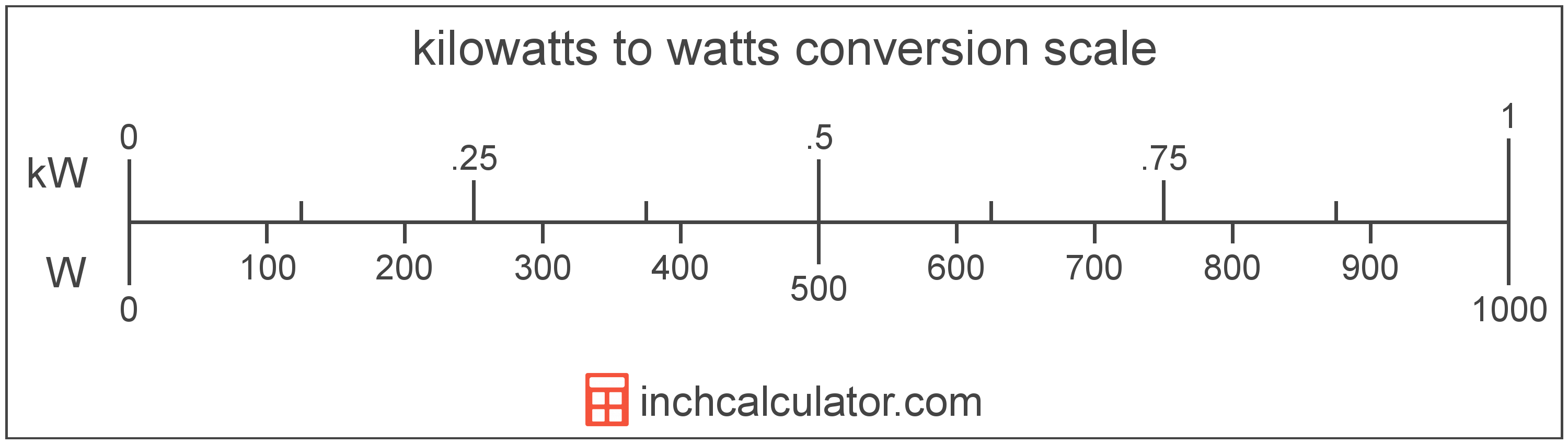
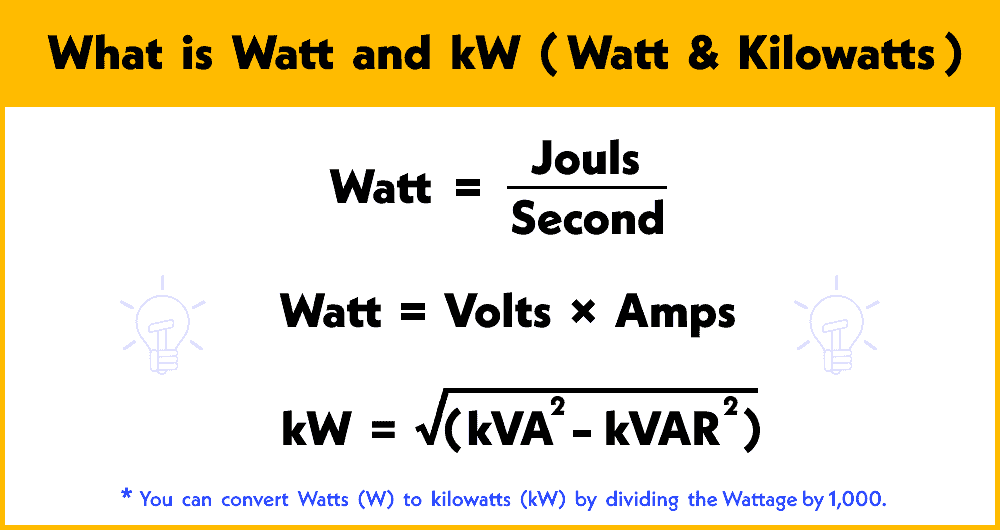
Here’s the deal: a Watt (W) is the basic unit of electrical power. Think of it as the individual brick in your electrical wall. Now, a kilowatt (kW)? That’s like a whole pallet of those bricks. So, it's actually the other way around!
Must Read
You see, the little "k" in "kW" stands for "kilo." And in the metric system, kilo always means one thousand. Always. No exceptions. It’s like a secret handshake among scientists, engineers, and anyone who's ever bought a kilogram of bananas.
So, to answer your question directly, there aren't a certain number of kW in a Watt. Instead, there are 1000 Watts in a single kilowatt. Poof! Mind blown, right?
Meet the Watt: Your Everyday Power Pal
Let’s get cozy with the Watt for a moment. What exactly is a Watt? In simple terms, it's the rate at which electrical energy is used or generated. Imagine it like how fast a car is moving, but for electricity.
Your tiny LED light bulb? It might sip a mere 5 to 10 Watts. Your phone charger? Probably around 10 to 20 Watts. These are the small players, the quiet achievers of your daily electrical life.
The Watt itself is named after the brilliant Scottish inventor James Watt, who supercharged the steam engine during the Industrial Revolution. Basically, he was so powerful, they named power after him! Pretty cool legacy, if you ask me.
Hello, Kilowatt: The Powerhouse!
Now, when you gather a thousand of those little Watts together, voilà! You've got yourself a kilowatt (kW). This is where things start to get a bit beefier, more substantial.
Your toaster, for example, often gobbles up around 1000 to 1500 Watts. That’s 1 to 1.5 kW of power, just to give your bread that perfect golden crunch. Your microwave? Easily 1000 to 1200 Watts (1 to 1.2 kW) zapping your leftovers.
And your mighty electric kettle? Oh, that’s a power hog! We’re talking 2000 to 3000 Watts, or 2 to 3 kW, just to boil water for your afternoon cuppa. See how those numbers jump when you switch to kilowatts?
Why the Confusion, Anyway?
It’s totally natural to get these mixed up! We often hear "kW" thrown around in big contexts – like when talking about how much power a solar panel generates, or the output of an electric car engine (which might be hundreds of kW!). These feel like the base units, but they’re actually just a convenient way to talk about large numbers of Watts without listing a gazillion zeros.
Think of it like money. You can talk about cents, but when you're buying a car, you talk about thousands of dollars. It’s just easier! Watts are cents, kilowatts are thousands of dollars.

Fun Fact Time! Horsepower vs. Kilowatts!
Ever heard a car enthusiast brag about their engine's "horsepower"? Well, that's another unit of power, and it's directly related to Watts and kilowatts! One mechanical horsepower is roughly equivalent to 746 Watts.
So, if a car has 100 horsepower, its engine can churn out about 74,600 Watts, or 74.6 kilowatts. It means a horse is basically a 0.746 kW furry power machine. Imagine strapping a team of 100 horses to your car – that’s 74.6 kW of raw, organic power! Who knew science could be so... equestrian?
Kilowatt-Hours: The Real Bill Payer!
Here’s where this little tidbit actually affects your life and your wallet. When you get your electricity bill, you're not paying for Watts or even just kilowatts. You’re paying for kilowatt-hours (kWh).
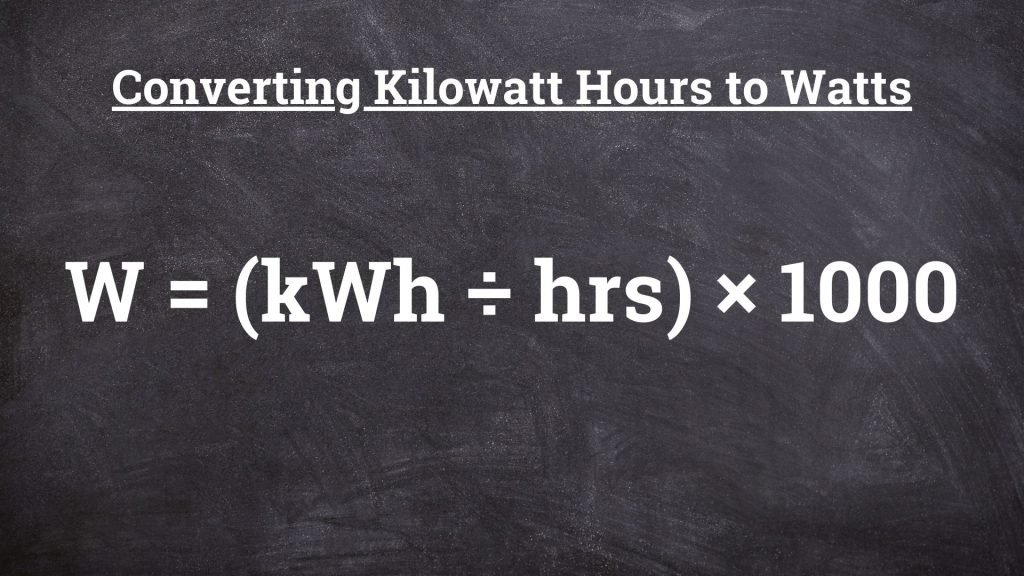
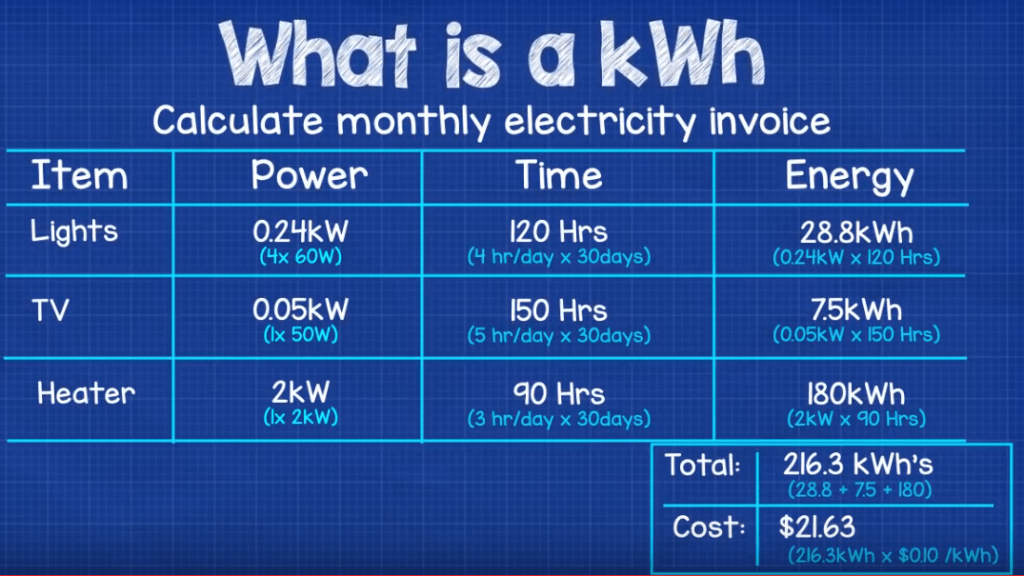
A kilowatt-hour is the total amount of energy you've used. It's like saying, "I used 1 kilowatt of power for 1 hour." If you leave that 1000-Watt toaster on for an hour (don't do that!), it would consume 1 kWh of electricity. And your electricity company sends you a bill based on how many kWh you've consumed.
So, understanding the difference between Watts and kilowatts isn't just about sounding smart at parties (though you totally will!). It helps you understand your gadgets, your energy consumption, and even how to make smarter choices about saving money on your electricity bill.
The Takeaway: It’s All About Scale!
So, the next time someone asks, "How many kW in a Watt?" you can flash them a knowing smile. Gently correct them by saying, "Ah, you mean how many Watts in a kilowatt! And the answer, my friend, is a neat, tidy, and very useful one thousand!"
It’s all about understanding those prefixes and appreciating how different units help us talk about power on vastly different scales, from a tiny LED to an entire power plant churning out gigawatts (that’s billions of Watts!).
Stay curious, my friend, and keep those awesome questions coming!