How Many Joules Is A Good Surge Protector

Okay, so picture this: you’re chilling at a café, latte in hand, eavesdropping on a conversation about… surge protectors. Riveting, right? But hold on, before you tune out completely, let me tell you, knowing your joules could save your precious electronics from becoming expensive paperweights. We're diving into the world of surge protectors, and trust me, it's less boring than it sounds. I promise some laughs along the way.
First off, what in the world is a joule? In the electrifying language of science, it’s a unit of energy. Think of it like a tiny, invisible fist-bump from electricity. Now, a surge protector's job is to absorb those unwanted, potentially device-frying fist-bumps before they reach your beloved gadgets. It's like a bodyguard for your PlayStation, a bouncer for your blender, a… well, you get the idea.
So, how many joules do you need in your surge protector? This is where things get interesting. It's not like ordering pizza – you can't just pick a random number and hope for the best. You need to consider what you're protecting.
Must Read
The "Meh, It's Just a Lamp" Zone
For something low-stakes, like a lamp or a phone charger, you can probably get away with a surge protector offering around 200-400 joules. Think of it as a polite little pat on the back, enough to handle minor power hiccups. But let's be honest, a power surge frying your lamp is probably not going to keep you up at night. Unless it's a really cool lamp. Then we're talking revenge.
The "Okay, This is Getting Serious" Territory
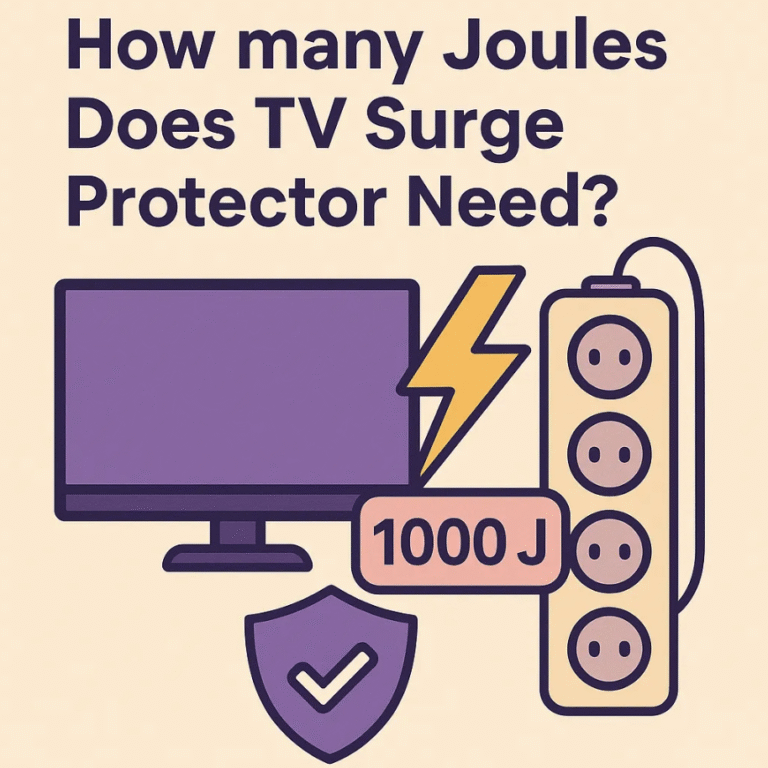
Now, we’re entering the land of electronics you actually care about. Things like your computer, your TV, and your gaming console fall into this category. For these guys, you want something beefier, something in the 600-1000 joule range. This is like hiring a semi-competent bodyguard. They might trip over their own feet sometimes, but they’ll probably stop a knife.
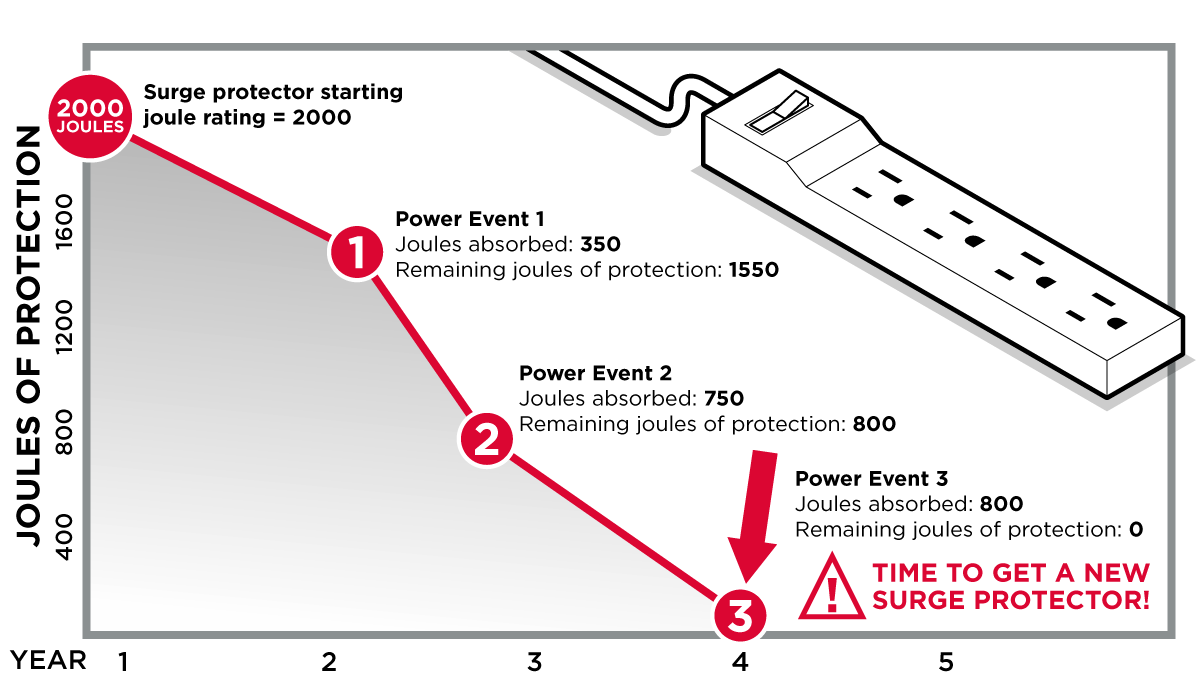
Just a quick side note: Surge protectors don't last forever. They're like superheroes; they eventually get tired and need to retire. The more surges they absorb, the weaker they become. Think of it as their joule-absorbing stamina slowly draining away. So, if you've had the same surge protector since the early 2000s, it might be time for an upgrade. It's probably more decorative than protective at this point.
The "Protect the Precious!" Citadel
This is where you unleash the heavy artillery. We're talking about your super-expensive gaming PC with the liquid cooling and RGB lighting, your massive OLED TV that cost more than your first car, and anything else that makes you clutch your pearls at the thought of it getting fried. For these prized possessions, you need a surge protector with over 1000 joules. Preferably closer to 2000 or even 3000. Think of this as hiring a team of highly trained ninjas armed with energy-absorbing shields. Nothing's getting past them.

And remember, more is generally better. It’s like having extra sprinkles on your ice cream; you're never going to complain about having too many. Though, maybe 3000 joules for a desk lamp is overkill. Unless you're really, really attached to that lamp.
Don't Forget the Extras!
Beyond the joules, consider other features. Some surge protectors have indicator lights that tell you if they're still working (a helpful feature, unless you enjoy playing surge protector roulette). Others offer phone and network line protection, which can be useful if you’re still rocking a landline or want to protect your router from power surges coming through the Ethernet cable. Yes, that's a thing! Electricity is sneaky like that.
Also, pay attention to the clamping voltage. This is the voltage level at which the surge protector starts diverting excess electricity. A lower clamping voltage is generally better. Think of it as the ninja's reflexes; the faster they react, the better protected your stuff is.
One last thing to consider: surge protectors are not the same as power strips. A power strip simply gives you more outlets. A surge protector actually protects against power surges. Using a power strip as a surge protector is like using a butter knife to fight a dragon. It's not going to end well.
So, there you have it. A hopefully-not-too-boring guide to joules, surge protectors, and keeping your electronics safe from the unpredictable wrath of electricity. Now go forth and protect your precious gadgets! And maybe buy a slightly less expensive latte. All this talk about electronics has probably drained your wallet.