Picture this: you’re at a movie set, or maybe just watching an old cartoon. What do you see?
Big, robust wooden barrels, often rolling with delightful abandon.
Or perhaps you're driving past an industrial park, and there they are: neat rows of blue, cylindrical metal drums.
These are our everyday mental images of a barrel. A container. Something that holds a liquid, usually in a generous quantity.
And when we think about what a typical, industrial-sized drum might hold, a number often springs to mind.
A nice, round, common number like 55 gallons, right? That’s what many modern drums are designed for.
Now, let’s pivot to the world of economics, news headlines, and global energy.
We constantly hear about the price of crude oil. It’s almost always quoted "per barrel."
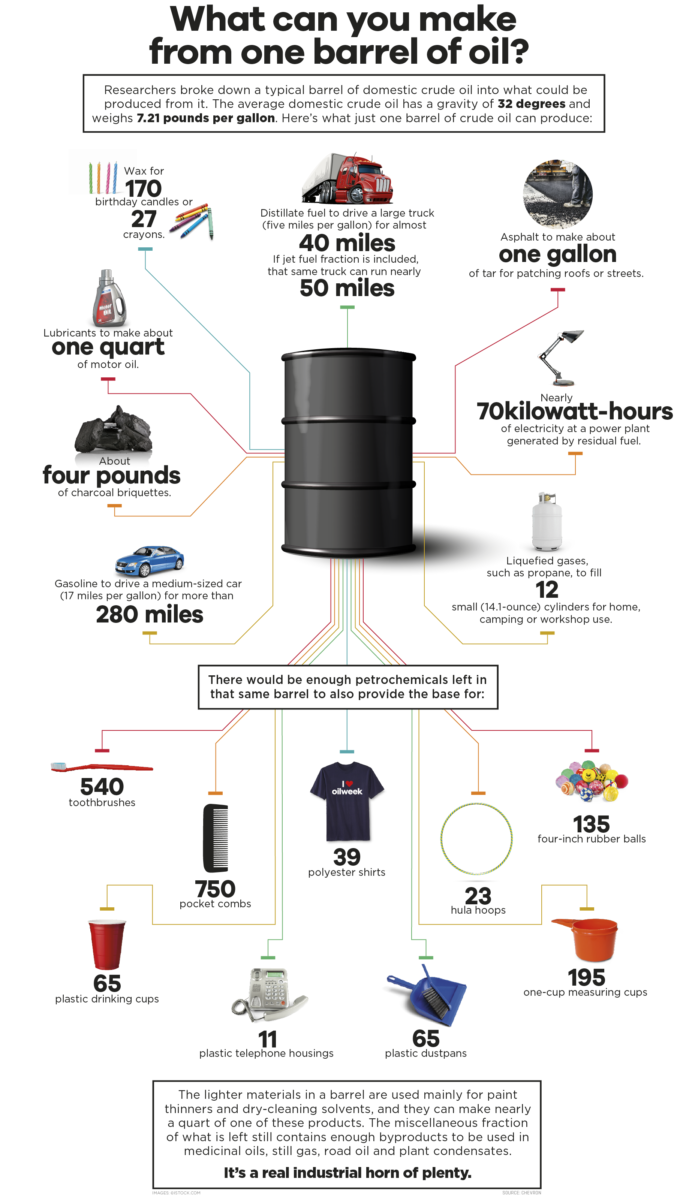
This mysterious unit underpins so much of our daily lives, influencing everything from gas prices to the cost of your plastic toothbrush.
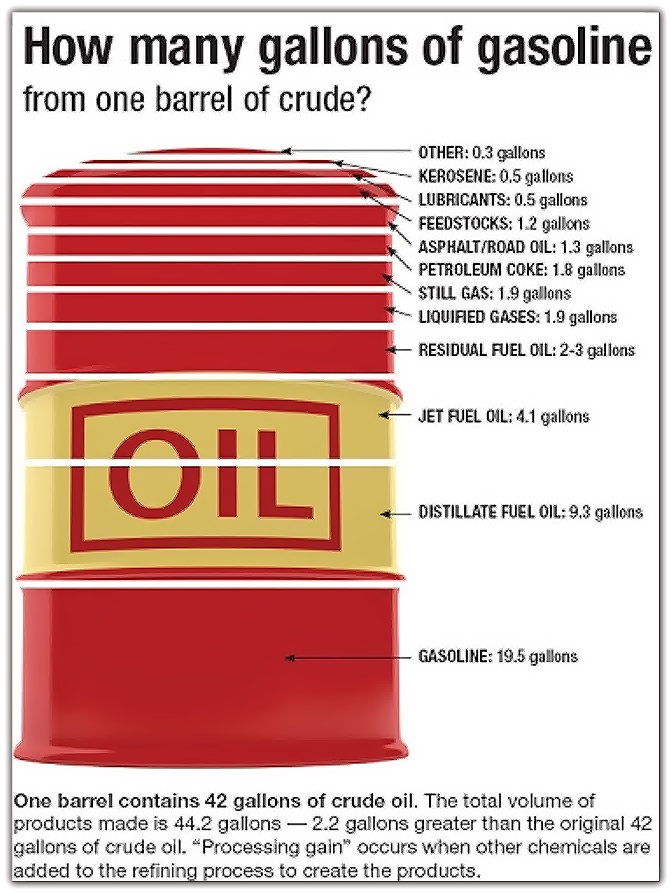
But how much oil, in terms of good old American gallons, is actually in that all-important barrel of crude oil?
If you’re thinking 55 gallons, based on those common drums, you’re in for a delightful little surprise.
It's one of those charming quirks of history that continues to shape our present.
The Big Reveal: A Number That Defies Expectation!
Are you ready for it? Have you locked in your guess? Fifty-five? Maybe a neat 50 for simplicity?
Well, prepare for a gentle tilt of your head, a slight furrowing of your brow, and perhaps a quiet chuckle.
Because the answer is none of those perfectly logical, aesthetically pleasing numbers.
The official, globally recognized, standard measure for a barrel of crude oil is a truly specific figure:
42 gallons.
Yes, forty-two. Not a round number. Not a common drum size. Just a steadfast, historical, 42 gallons.
"It’s like finding out the 'dozen' eggs your grandmother sells is actually thirteen.
Except with billions of dollars on the line. The 42-gallon barrel is truly a marvel of historical sticking power."
Crude Oil Barrel Size
This isn't just a fun fact for trivia night. This 42-gallon standard is the very foundation upon which the world's most valuable commodity is traded.
Every price chart, every economic forecast, every news report about oil futures refers back to this distinct measurement.
It's quite peculiar when you think about it.
Why Such an Odd Number? A Journey to the Past!
So, who decreed this slightly eccentric measurement? Was it a wise old wizard? A committee of particularly specific accountants?
Actually, the story is far more gritty and much more interesting, taking us to the birth of the modern oil industry.
Imagine yourself transported back to the mid-19th century.
The place: the bustling, muddy, and wildly speculative oil fields of Pennsylvania, specifically around Titusville.
This was ground zero for America's first oil boom. Drills were striking black gold, and suddenly, everyone needed to transport it.
But how? There were no dedicated oil containers yet.
The enterprising pioneers, often rough-and-tumble characters, grabbed whatever barrels they could find.
These were mostly repurposed barrels that had previously held whiskey, molasses, or salted fish.
A common size for these wooden barrels, especially whiskey barrels, was approximately 40 gallons.
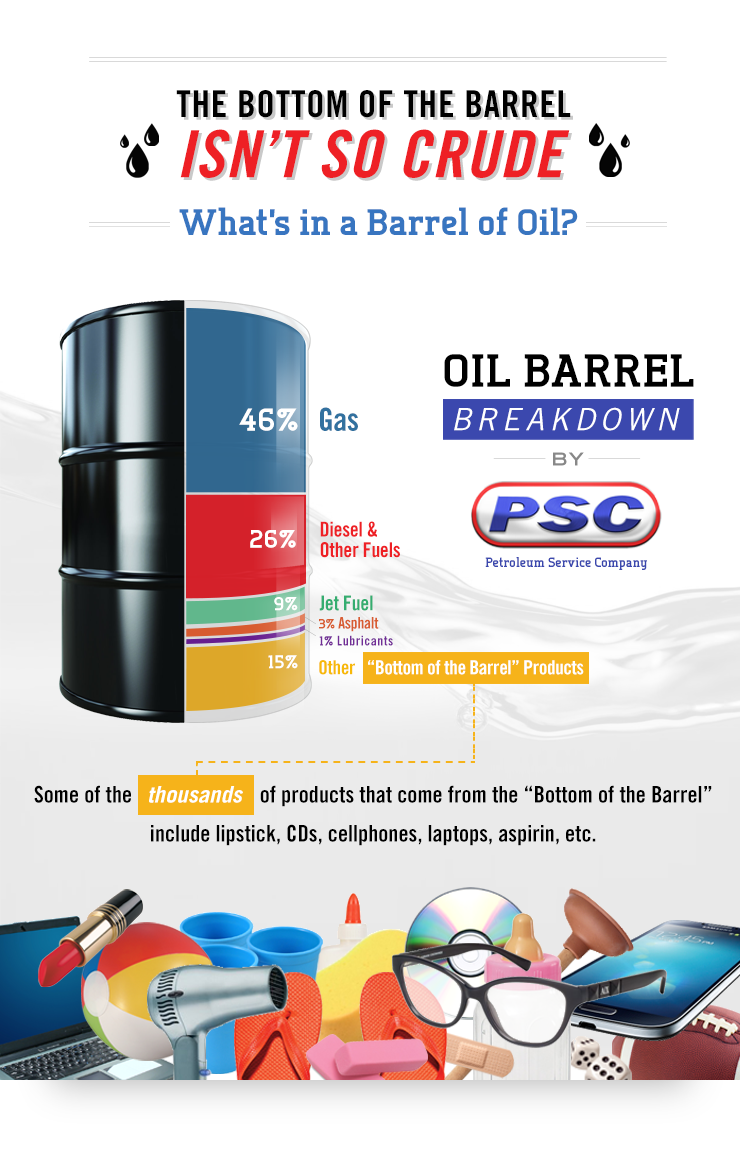
What's in a Barrel of Oil? The 42-Gallon Breakdown - Petroleum Service
However, crude oil was a messy, volatile product. It expanded in the sun, contracted in the cold, and inevitably, there was always some spillage during transport by wagon or barge.
To keep customers happy and ensure they received a full measure, oil producers started a clever practice.
They would put a little extra oil into each barrel.
Just enough to cover any expected losses or expansion. That "little extra" turned out to be two more gallons.
So, a 40-gallon barrel plus a 2-gallon allowance equaled a guaranteed 42-gallon delivery.
This practical solution quickly became the industry standard.
By 1866, the oil producers of Pennsylvania formally adopted the 42-gallon barrel as their official unit of trade.
It was a handshake agreement that brought order to the chaotic boom.
And from those humble, pragmatic beginnings, this specific number solidified its place in history, never to be dislodged.
The Modern Muddle: The Invisible Barrel
Now, here’s where the humor really kicks in.
Today, if you were to actually order a "barrel" of crude oil for, say, your very large art project, you likely wouldn't receive a physical 42-gallon container.
In fact, finding a physical barrel that holds precisely 42 gallons in a modern context is surprisingly difficult.
How Many Gallons Is in a Barrel of Oil
As we noted, most industrial drums are designed for 55 gallons, or sometimes smaller, more manageable sizes.
So, the "barrel" in "price per barrel" isn't a physical object that ships to you.
It is, almost entirely, a unit of account, a financial abstraction.
It’s a historical ghost, if you will, that haunts the spreadsheets and trading floors of the 21st century.
Imagine ordering a "dozen" roses and receiving eleven, because historically, a certain type of rose seller always included one for good luck, but then later removed it but kept the "dozen" name.
It's that level of delightful confusion!
So, when you hear about millions of barrels of oil being traded, picture not millions of 42-gallon containers, but rather just a vast, incomprehensible volume being quantified in these quirky 42-gallon chunks.
It’s a testament to the inertia of tradition, even when tradition requires mental gymnastics.
Our modern world, built on precision, still leans on this charming, slightly illogical relic.
My "Unpopular" Opinion: Time for a Change (or a Laugh!)
Alright, let's be honest. This whole 42-gallon barrel thing is pretty wild.
As a humble observer of the universe's oddities, I propose that it’s high time we playfully question this enduring standard.
Why cling to this specific, somewhat arbitrary unit when perfectly good, round numbers like 50 or 100 gallons exist?
Crude Oil Barrel Size
Or even simpler, why not just quote the price per single gallon? Or, for our metric-loving friends, per liter?
Imagine the clarity! The simplified calculations! The peace of mind for anyone trying to convert "barrels per day" into something relatable for their backyard oil rig fantasy.
No more dividing by 42, then multiplying by 1.6, or whatever complex formula is currently needed.
Every time a news anchor solemnly declares the price of a barrel of oil, I can't help but smile.
I picture those 19th-century Pennsylvanian pioneers, adding their two extra gallons, utterly unaware they were setting a global standard for centuries to come.
It’s a beautiful, messy, human story embedded in our global economy.
So, the next time you hear about oil prices, or see that iconic "barrel" symbol, remember the delightful truth.
It's not just any barrel. It's a very specific, historically rich, and wonderfully quirky 42-gallon barrel.
It’s a little secret you now share with the oil barons and economists of the world.
Perhaps the enduring nature of the 42-gallon barrel isn't just about tradition.
Maybe it’s a gentle reminder that even in the most serious of global markets, there’s room for a bit of historical oddity.
A nod to the past, a wink to the present, and definitely a reason to chuckle.
It teaches us that sometimes, the most important things are measured in the strangest of ways.
And knowing this little tidbit makes you just a tiny bit smarter, and definitely more amused, when you consider the vast, fascinating world of crude oil.
Embrace the 42; it's here to stay, confusingly charming as ever.