
How High Should Carbon Monoxide Detectors Be Placed
.jpg)
There are some things in life we just sort of... set and forget. Our trusty toaster, that wobbly dining chair, or perhaps the curious little puck-shaped device on our ceiling that beeps every time we burn the toast. We know these gadgets are important, but sometimes, the how and why behind them can feel a bit like trying to solve a Rubik's Cube blindfolded.
The Great Detector Mystery
Take your carbon monoxide detector, for instance. It's a silent guardian, a miniature superhero working tirelessly to protect your home from an invisible, odorless villain. But unlike its cousin, the smoke detector, which proudly announces its ceiling-bound dwelling, the CO detector often sparks a little debate. "Does it go high like smoke?" you might wonder, or "Should it be low, near the floor, where gasses usually sink?" It’s a common puzzler, often leading to head-scratching moments and sometimes, a placement that's well-intentioned but a little... off.
Many of us picture CO as a helium balloon, eager to soar to the highest point. But here's the delightful little secret: CO isn't a helium balloon; it's more like that friendly, unassuming guest at a party who just blends in with everyone else.
We often get CO detectors mixed up with smoke detectors, naturally assuming they follow the same rulebook. After all, smoke rises, right? It’s hot, buoyant, and makes a bee-line for the ceiling. So it stands to reason that any other dangerous gas would do the same. But carbon monoxide, our sneaky little friend, plays by its own rules. It's roughly the same weight as the air we breathe. This means it doesn't stubbornly rise to the ceiling, nor does it dramatically plunge to the floor. Instead, it mixes with the air, floating around like a perfectly integrated partygoer.
Where's the Invisible Menace Hiding?
So, if CO is such a social mixer, not a high-flier or a floor-hugger, where on earth should your trusty detector stand guard? The answer is surprisingly simple, almost laughably obvious once you hear it: place it where you breathe. Think about it. If you're going to detect a gas that affects you, you want the detector to be right there in your personal breathing space, ready to sound the alarm if things go awry.

This means no more wrestling with ladders to reach the tippy-top of your vaulted ceilings for your CO detector. And no more crouching down to install it by the baseboard, hoping to catch a stray molecule. Instead, imagine where you, your kids, or even your beloved four-legged companions spend most of their time. That’s your sweet spot!
A Little Story of Placement Perfection
My friend, Sarah, once proudly showed off her new CO detector, mounted meticulously on the ceiling right next to her smoke alarm. She beamed, convinced she was the picture of home safety. "Two birds, one stone!" she declared. It wasn't until a neighbor, a very kind and gentle soul, delicately explained the nuances of CO placement that Sarah had her "Aha!" moment. She laughed, a hearty, good-natured laugh at her own well-meaning mistake. She imagined the tiny CO molecules just shrugging, floating around her living room, completely oblivious to the ceiling-mounted guardian above them.
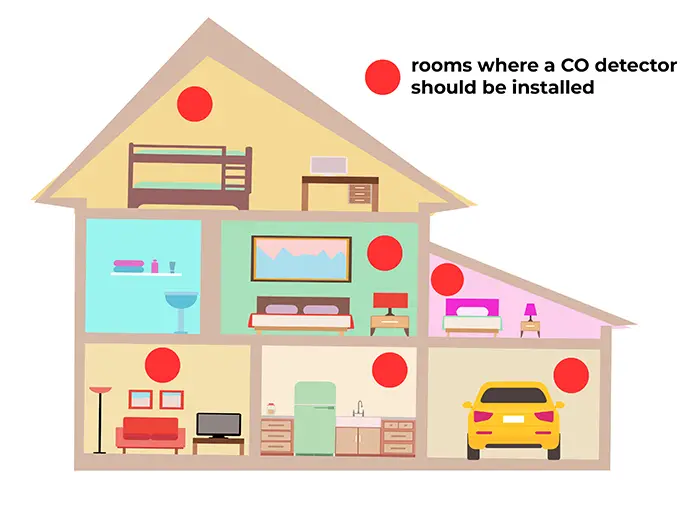
The lesson for Sarah, and for all of us, was clear: your CO detector is most effective when it's at a height that mirrors your own presence. This usually means somewhere between knee-level and eye-level. In bedrooms, that might be on a nightstand, or mounted on the wall a few feet off the floor. In living areas, it could be on a bookshelf or a cabinet. The goal isn't to catch CO as it performs an acrobatic feat; it's to detect it right where you're inhaling it.
Think of it as setting up a tiny sentry at your personal breathing zone. It's a remarkably easy adjustment that brings a whole new layer of peace of mind. Knowing your detector is placed just right, truly standing guard where it matters most, is a small but powerful comfort.
Your Home, Your Safe Haven
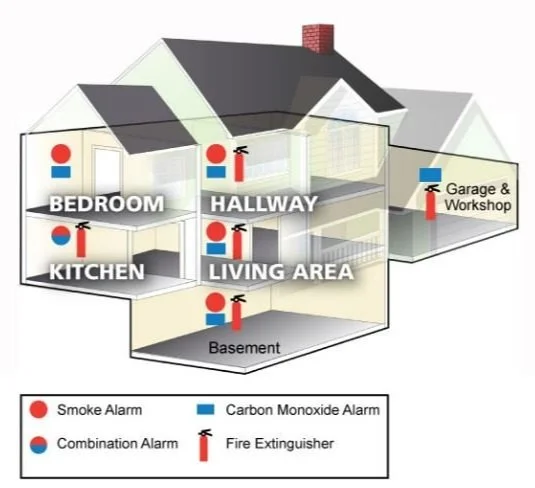
So, skip the ceiling tango and forget the floorboards when it comes to carbon monoxide detectors. Embrace the simple truth: CO mixes with the air you breathe. Place these guardians in your sleeping areas, on every level of your home, and near any fuel-burning appliances (but not right next to them to avoid false alarms). A quick, easy placement, a small act of awareness, and suddenly your home feels even more like the safe, cozy haven it’s meant to be. It’s not about complex science; it’s about simple, everyday care for yourself and your loved ones.

