
How Does The Carbon Monoxide Alarm Sound
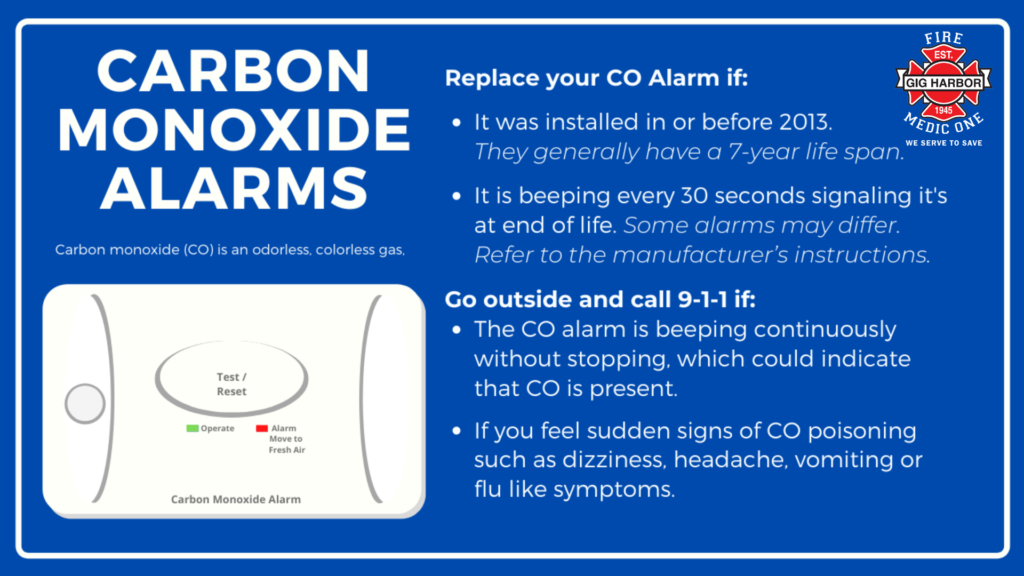
You know that feeling when your smoke alarm decides it's time for its bi-annual (or sometimes, bi-weekly, let's be honest) ear-shattering symphony? It's usually a short, sharp series of beeps, right? And your first thought is probably, "Did I leave something on the stove?" or "Oops, toast emergency!" Well, today, we're going to talk about a different kind of alarm, one that's equally, if not more, important, but often gets less airtime: the carbon monoxide (CO) alarm.
Carbon monoxide is often called the silent killer, and for good reason. You can't see it, smell it, or taste it. It's like that super stealthy ninja gas that slips into your home undetected, unless you've got a trusty CO alarm standing guard. So, knowing what that alarm sounds like isn't just a fun fact for your next trivia night; it could be a real lifesaver. Let's dive in, shall we?
The Main Event: What a Real CO Alarm Sounds Like
Okay, so your smoke alarm typically does a series of three loud, rapid beeps, then a pause, then three more. Think of it like a particularly insistent DJ saying, "Alarm! Alarm! Alarm! ... Alarm! Alarm! Alarm!" The carbon monoxide alarm, however, has its own distinctive beat. It's usually a series of four quick beeps, then a pause, then four more quick beeps. And repeat. And repeat. It’s like it’s saying, "Heads up! Heads up! Heads up! Heads up! ... Heads up! Heads up! Heads up! Heads up!"
Must Read
Imagine your doorbell. Most doorbells have a distinct chime, right? Maybe a "ding-dong" or a melodic tune. You know it's a visitor. Now, imagine if your doorbell suddenly started doing a rapid "ding-ding-ding-ding!" over and over. You'd know something was up! That's the kind of distinct urgency your CO alarm tries to convey. It's not subtle, and it's definitely not the kind of sound you want to snooze through. It's designed to grab your attention and tell you, with no uncertain terms, that something invisible and potentially dangerous is lurking.
The Annoying Little Chirp: Low Battery Warning
Just like their smoke-detecting cousins, CO alarms also have a low-battery warning. And yes, it's just as, if not more, annoying. Picture this: It's 3 AM, you're deep in dreamland, perhaps chasing butterflies through a field of marshmallows, when suddenly – CHIRP! Just a single, solitary, ear-splitting chirp. Then silence. Then, about 30 seconds to a minute later, CHIRP! again. It's like a tiny, insistent cricket with a serious case of FOMO, reminding you it's running on fumes.

This single chirp is your alarm's way of saying, "Hey! I'm doing my job, but my energy levels are dipping. A little help here?" It’s important to distinguish this from the actual CO alert. One chirp means change my batteries, please! Four beeps mean get out, now! Huge difference, right?
The "I'm Retiring" Sound: End-of-Life Warning
Did you know CO alarms don't last forever? They usually have a lifespan of 5-7 years, depending on the model. And when they're ready to retire from their vigilant duty, they often let you know with yet another distinct sound. This can vary more between brands, but it's often a series of multiple beeps that are different from the four-beep CO alert and the single chirp. Sometimes it's five rapid beeps, sometimes a more continuous string of beeps. It's kind of like your old car finally giving up the ghost, but in a metallic, electronic way. It’s saying, "My time is up! Replace me!"

So, you might have three different sounds to learn: four beeps for CO, one chirp for low battery, and a unique pattern for end-of-life. It’s like learning the secret handshake of your home's safety devices!
Why Should You Care, Anyway? (Besides The Obvious)
Alright, so we've talked about the sounds. But why should you really invest brainpower in remembering them? Well, CO is like that really sneaky guest at a party. You don't see it, you don't smell it, you don't taste it. But it can crash your party... and then crash you. It comes from everyday things we rely on: furnaces, gas stoves, fireplaces, water heaters, even your car in the garage.

Imagine waking up feeling like you had the worst hangover of your life, even though you didn't touch a drop. Or maybe you're just really tired, dizzy, or have a pounding headache. These are some of the initial symptoms of CO poisoning, and they can easily be mistaken for the flu or just a bad day. The danger is that CO reduces your blood's ability to carry oxygen, basically suffocating you slowly from the inside out. Not exactly a fun way to spend a Tuesday, is it?
This is where your CO alarm becomes your home's ultimate superhero! It's got super-hearing for the invisible villain. It’s your early warning system, your unsung hero, constantly sniffing out danger when you can’t. Knowing its alarm distinctively means you won't confuse a life-threatening situation with a dead battery. It means you can act quickly, get everyone out, and call for help before those subtle symptoms turn into something much more serious.
So, the next time you hear a mysterious beep or chirp in your home, take a moment to listen. Is it the four-beep dance of the CO alarm? Or the lone protest of a dying battery? Or the farewell tour of an old friend? Knowing the difference is a small piece of knowledge that carries a mighty punch when it comes to keeping you and your loved ones safe. Stay smart, stay safe, and give your CO alarm a silent nod of thanks!
