How Does Carbon Monoxide Get In The House

Ever wonder how carbon monoxide, that famously invisible, odorless party crasher, sneaks into your cozy abode? It’s not some stealthy ninja, folks. It’s more like that slightly clumsy relative who keeps bumping into things and accidentally leaves a trail. We often imagine it as this super-secret agent, but honestly, it’s usually just our everyday heroes having a bit of a bad day. Let’s playfully explore how this sneaky gas decides to pay you a visit.
The Furnace Fiasco
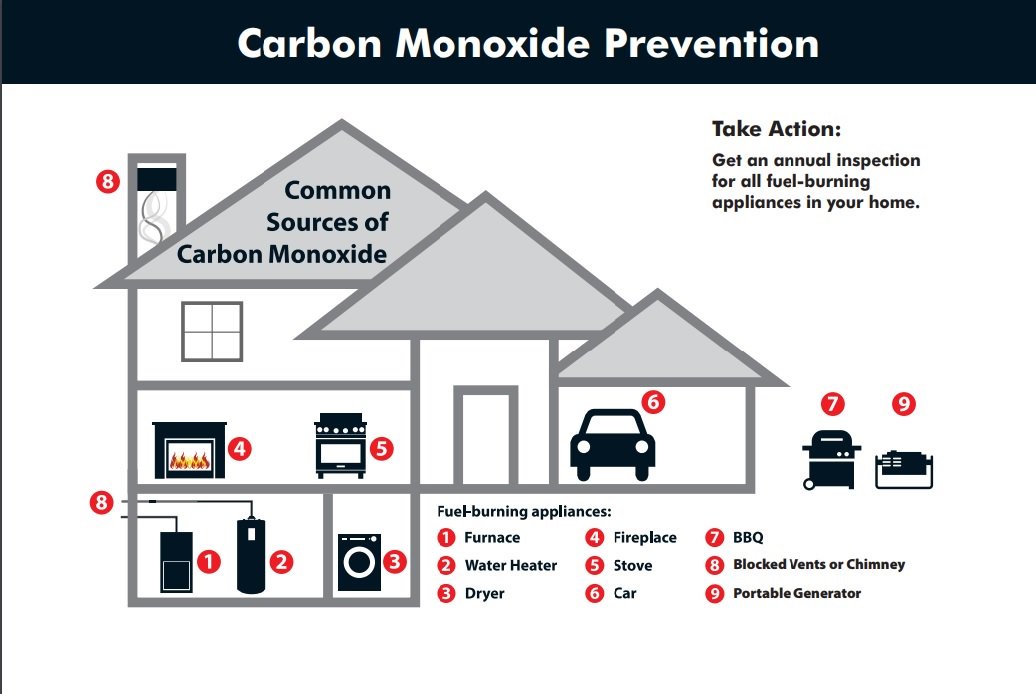
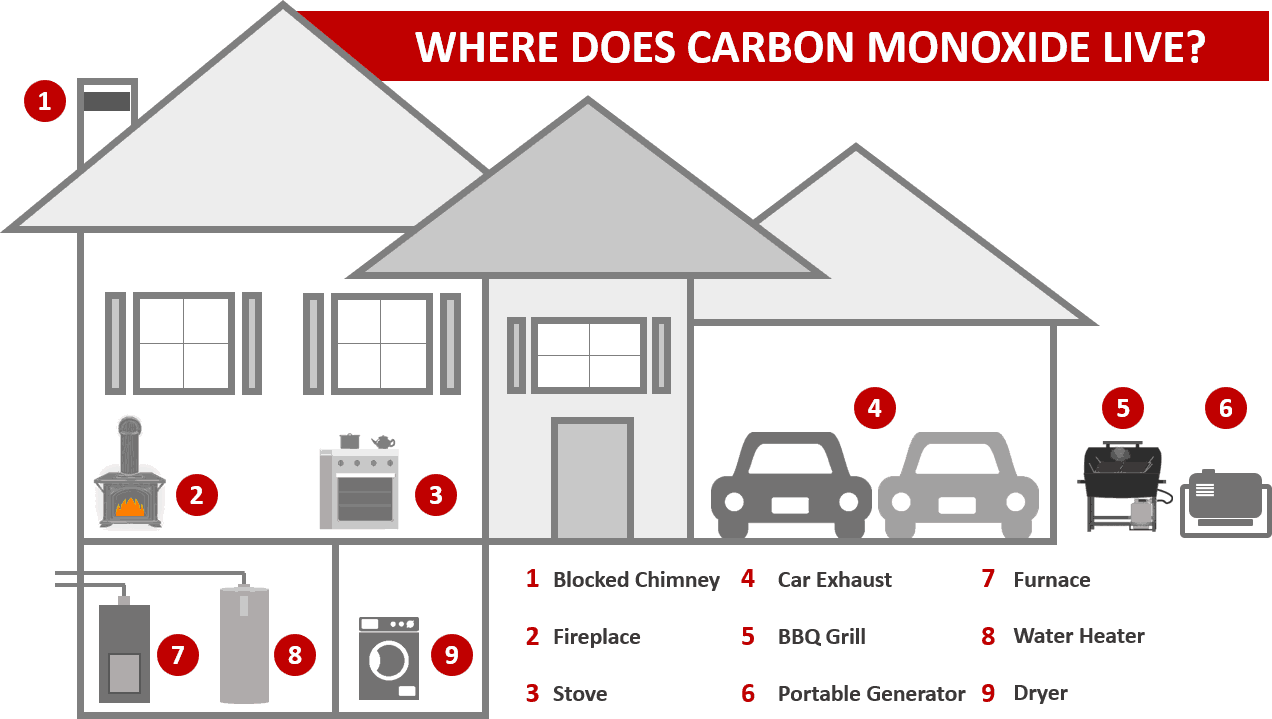
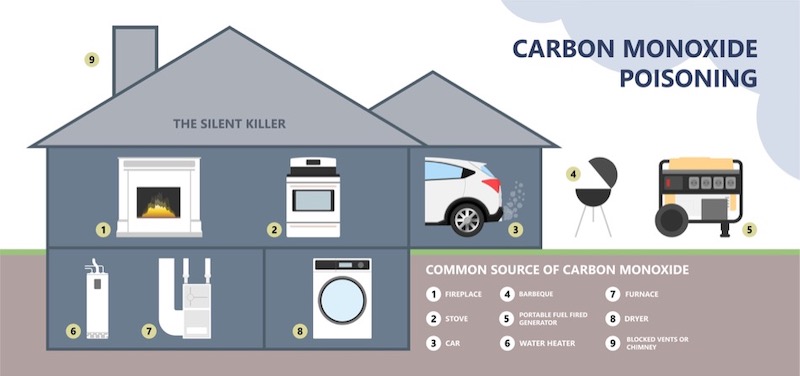
Your trusty furnace, bless its metallic heart, is usually just humming along, keeping you toasty. It’s working hard, converting natural gas or propane into lovely warm air. But sometimes, even the best of us have an off day. Maybe its vent pipe is clogged, or perhaps it’s just feeling a little overwhelmed. Think of it like this: your furnace is trying to burn fuel perfectly. If it can’t get enough fresh air, or if its exhaust system is a bit backed up, it starts producing carbon monoxide instead of just good old heat. It’s not malicious, just a bit inefficient when stressed.
The Water Heater’s Whimper
Next up: the humble water heater. Tucked away in the basement, silently warming your showers and dishwater. Who knew it had a rebellious streak? Much like the furnace, it burns fuel to do its job. If its exhaust vent is blocked by a bird's nest (they love those warm spots!) or just old age, that invisible gas can’t escape outside. Instead, it decides to mingle with your indoor air. It's not trying to cause trouble; it’s just looking for the path of least resistance. And sometimes, that path leads right into your living space. Poor thing, it just wants to vent.
Must Read
The Stove’s Secret
Your gas stove. A culinary wizard, right? Sautéing, simmering, making your kitchen smell divine. But every now and then, it might just be having a tiny tantrum. If the burners aren't burning with a clean blue flame, or if the ventilation isn't quite right (maybe you forgot to turn on the fan?), it can create a little carbon monoxide. Leaving a gas oven on for heat, well, that's practically an open invitation for trouble. It’s like inviting a bunch of friends over and then not opening the windows. Things get stuffy, and things get a bit… gassy.
The Garage Gremlin
Oh, and let’s not forget the garage. That magical place where cars sleep. And sometimes, cars fart out a little carbon monoxide if left running too long, even with the garage door open. If your garage is attached to your house (most are!), that invisible gas sees a warm, inviting doorway right into your home. It’s like a tiny, unwanted car exhaust cloud drifting indoors. This is probably the most famous culprit, and for good reason. Cars are great for getting around, not so great for indoor air quality.
The Cozy Culprits
Then there are the items we sometimes bring indoors for "coziness" or convenience. Using a charcoal grill inside, for instance? Or a portable generator during a power outage? Those are practically carbon monoxide factories! Even a crack in your fireplace chimney or a damper that’s not fully open can allow smoke and gas to back up into the room. These aren't sneaky visitors; they're more like big, flashing neon signs saying "Danger!" when used improperly. It’s like bringing a campfire into your living room – charming for a moment, then quite smoky.
My "Unpopular" Opinion
So, here’s my possibly unpopular opinion, but I truly believe it:
Carbon monoxide isn't some super spy or a phantom menace. It's often just a clumsy byproduct of our everyday appliances and habits, trying to find a loophole in your home's ventilation system. It’s not trying to be evil; it's simply trying to exist!
It's not actively seeking to get into your house; it's just following the laws of physics and finding the path of least resistance. It's a bit like a confused houseguest who keeps wandering into the wrong rooms because the doors are open. So, next time you think about this invisible gas, don’t imagine a villain. Imagine a slightly confused, exhaust-gas relative who just needs better directions (and proper venting!). Keep those carbon monoxide detectors happy and chirping, and everyone stays safe and sound!