
How Do You Say Blue In Spanish
Ever wondered how to say a color in another language? It can be surprisingly fun! Let's dive into the vibrant world of Spanish and discover the secret to saying blue.
Unveiling the Mystery: Azul!
The Spanish word for blue is... azul! It's short, sweet, and rolls right off the tongue. Isn't that a delightful little word?
Why is it so captivating?
Azul just sounds… cool. It's got a certain flair to it. Try saying it a few times. Feels good, right?
Must Read
Think about it. "My favorite color is azul." Sounds much more exotic than simply saying "blue." It adds a touch of international intrigue to your everyday conversations.
Imagine you're describing the ocean. Saying "the ocean is azul" paints a richer picture. It evokes images of sunny beaches and crystal-clear water, ¿no?
Beyond the Basics: Using Azul in Sentences
Now that you know the magic word, let's put it to use! It's easier than you think.
Want to say "the sky is blue?" You would say, "El cielo es azul." See? Simple and elegant.
What about "my car is blue?" It becomes, "Mi coche es azul." You're already fluent! (Almost!)

Exploring Gender Agreement
Spanish loves grammar, and grammar loves to agree! But don’t worry, with azul, it's a piece of cake. Azul doesn't change based on gender!
Whether you are describing a blue car (masculine) or a blue house (feminine), azul remains the same. That's one less thing to worry about!
El coche azul (the blue car). La casa azul (the blue house). See? No change needed!
Dive Deeper: Shades of Blue
The fun doesn't stop with just one word! Spanish, like any language, has many ways to describe different shades of blue.
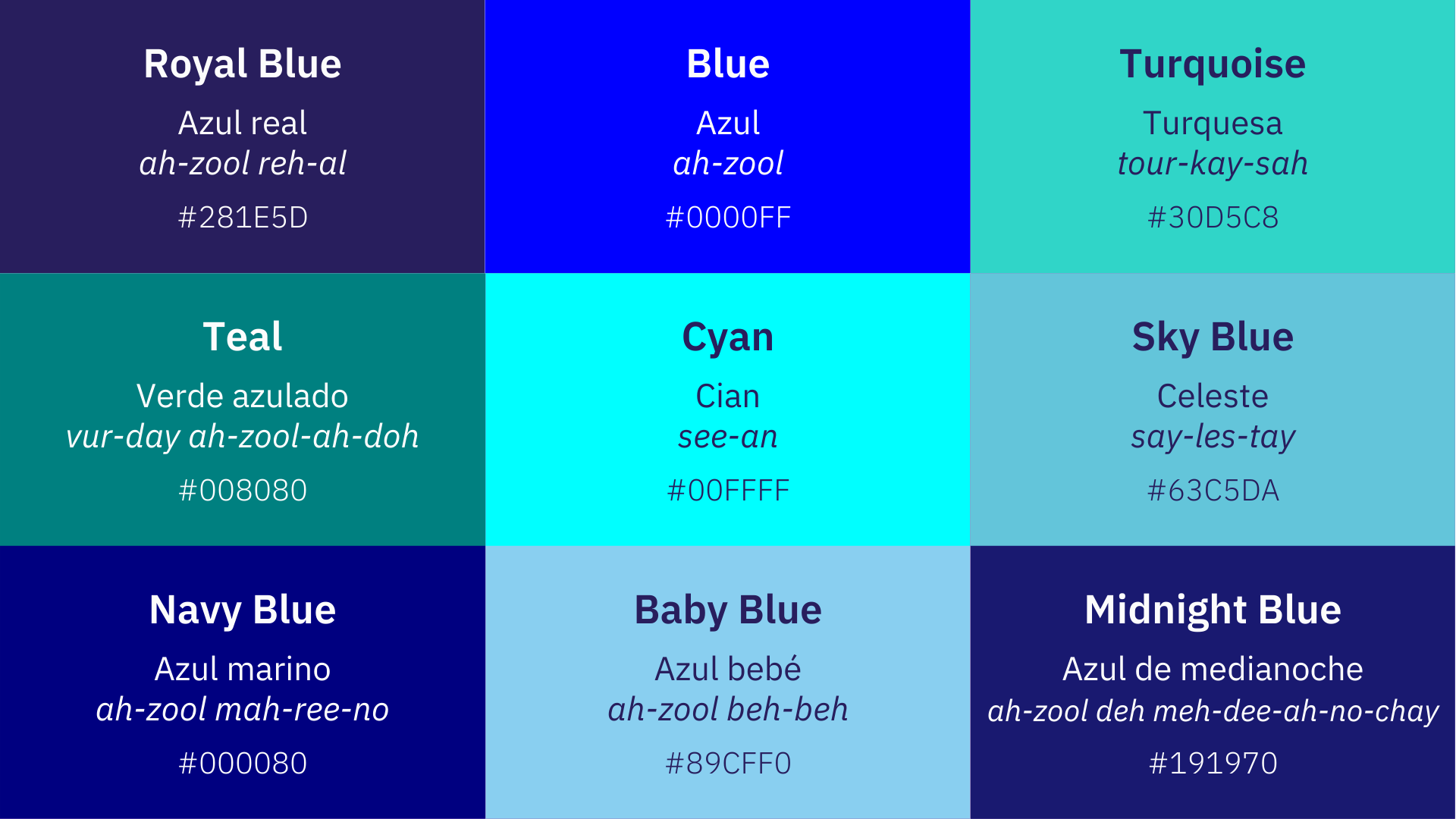
For a light blue, you might say celeste. It's reminiscent of the sky on a beautiful day.

For a dark blue, try azul oscuro. Simple and straightforward, it means "dark blue".
Feeling fancy? Use añil, which refers to indigo!
Blue in Culture: Azul's Significance
Colors often carry cultural meanings. Blue is no exception.
In many cultures, blue is associated with tranquility and peace. This holds true in the Spanish-speaking world as well.
You'll find azul used in art, literature, and everyday conversations to evoke feelings of calm and serenity. Soaking in the good vibes, right?
Why Learn Spanish Colors?
Learning colors is a fantastic entry point into a new language. It's practical and immediately useful.

Plus, knowing colors expands your descriptive vocabulary. You can paint more vivid pictures with your words.
It's a small step that can unlock a whole new world of communication and cultural understanding. You're not just learning words; you are unlocking connections!
Beyond Words: Experiencing Azul
The best way to learn is through experience! Immerse yourself in the language.
Watch Spanish-language movies or TV shows. Listen for the word azul in songs.
Surround yourself with the language and let it sink in organically. You'll be surprised how quickly you pick things up.
Next time you see something blue, try thinking of it as azul. Train your brain to make the connection.
The more you engage with the language, the more natural it will become. Before you know it, you'll be speaking Spanish like a pro!
Ready to Explore More?
Learning a new language is a journey, not a destination. Enjoy the process!
Start with simple words and phrases. Don't be afraid to make mistakes. That's how you learn!
And who knows? Maybe your newfound knowledge of azul will inspire you to learn even more Spanish. The possibilities are endless!
So, go forth and embrace the beauty of the Spanish language! And remember, blue is always azul!