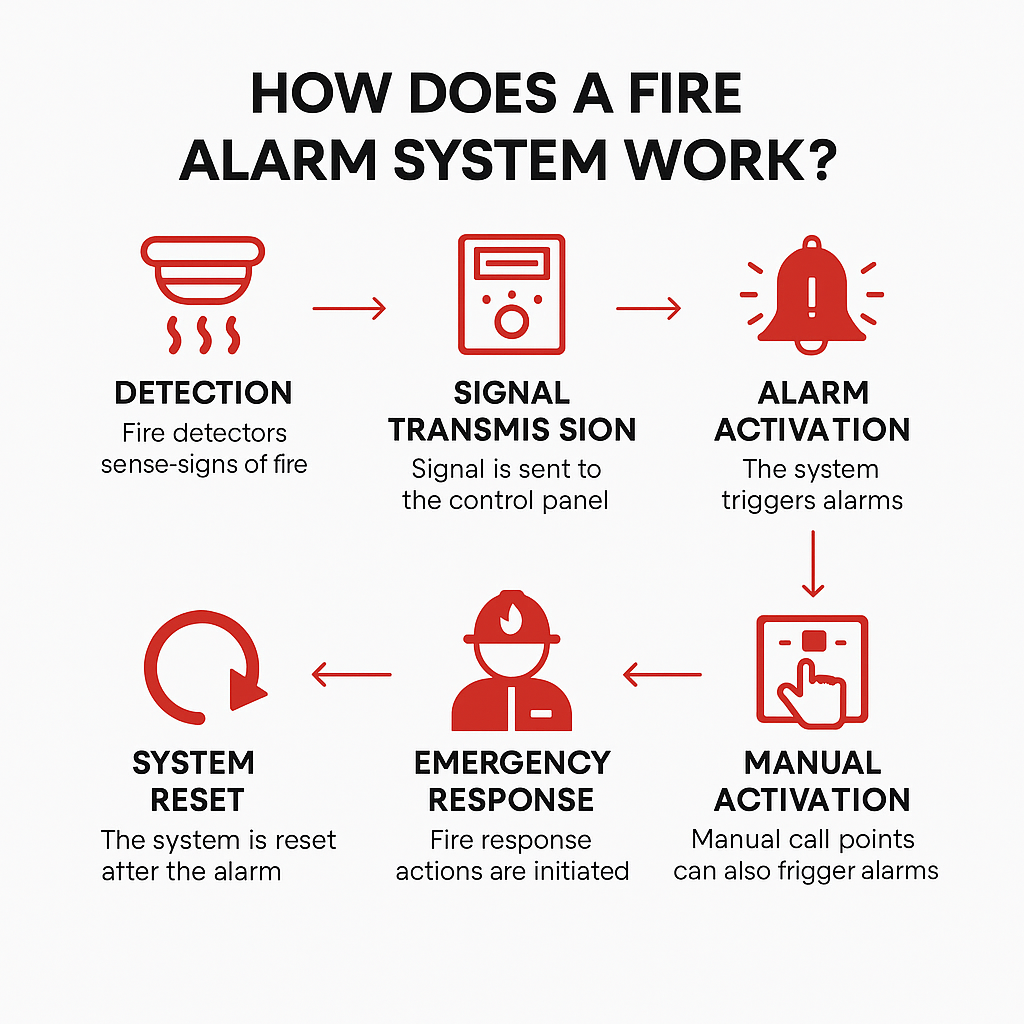
How Do Alarm Systems Work

Okay, picture this: You’re home alone, maybe binge-watching something truly questionable, when suddenly—BEEEP! BEEEP! BEEEP!—your smoke alarm decides it’s time for its bi-annual battery check. At 3 AM. Or worse, your neighbor’s car alarm goes off because a cat sneezed too loudly near it. Annoying, right? But also, a tiny part of your brain probably goes, "Huh, how does that thing even know to make that horrendous noise?"
You’ve seen them everywhere, lurking on doors, windows, and ceilings. Alarm systems. They're like silent guardians, just waiting for something amiss. But what’s actually going on behind those unassuming little boxes and sensors? How do they pull off their magic trick of detecting intruders and making a racket? Well, my friend, let's peel back the curtain, shall we? It’s actually pretty cool, if a little complex.
The Brain: Your Control Panel
Think of the control panel as the central nervous system of your entire alarm setup. This is usually that keypad by your front door or in your hallway. It’s where you punch in your code to arm or disarm the system, and it’s the hub where all the information from the various sensors comes together. It makes all the decisions: "Door opened? Intruder alert! Window shattered? Intruder alert!" It’s basically the boss, receiving signals and deciding what to do with them. Pretty important, wouldn't you say?
Must Read
The Senses: Those Sneaky Sensors
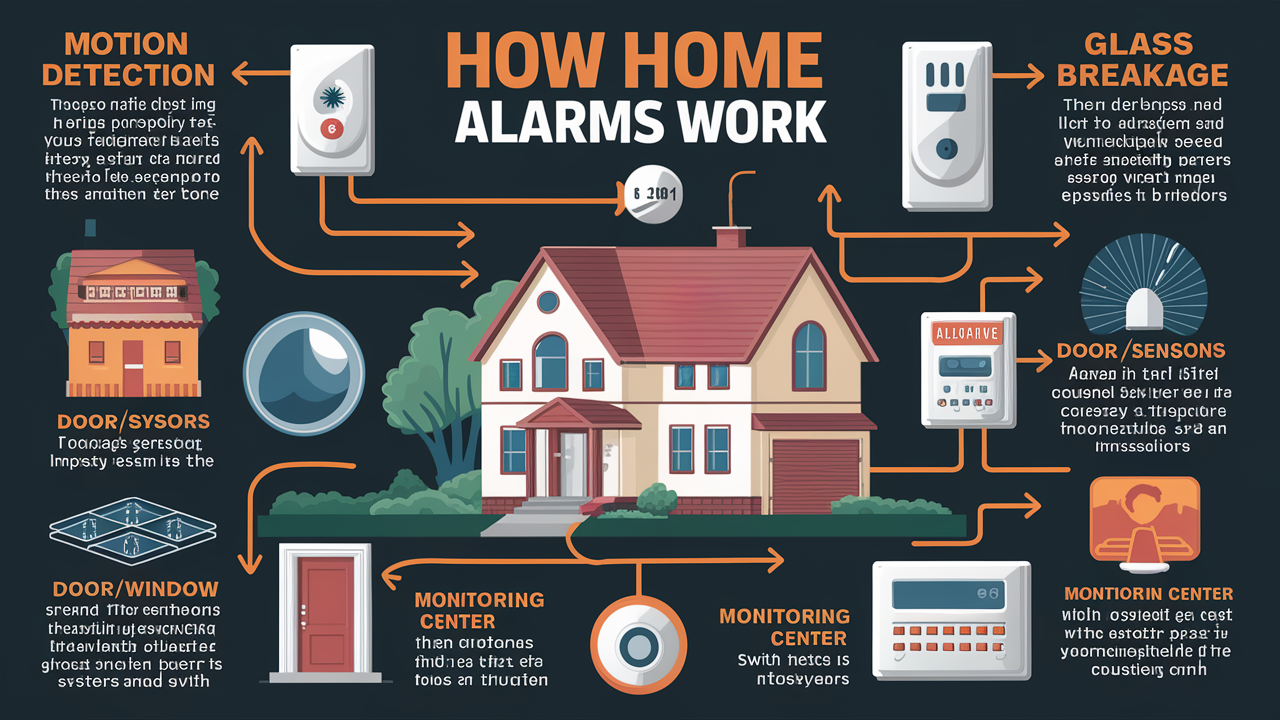
This is where the real spy-movie stuff happens! Your alarm system is basically a giant network of "eyes" and "ears" strategically placed around your home. Each type of sensor has a specific job:
Door and Window Contacts
These are the most common, and perhaps the simplest, but incredibly effective. They usually come in two parts: a magnet on one side of the door/window and a sensor on the frame. When the door or window is closed, the magnet and sensor are in contact, completing a circuit. Open the door or window, and poof, the circuit breaks. The sensor shouts (silently, of course) to the control panel, "Hey, something’s open that shouldn't be!" And if the system is armed, well, you know what happens next.
Motion Detectors (PIR)
These are those little white boxes usually placed in corners, keeping a watchful eye over a room. Most modern motion detectors use Passive Infrared (PIR) technology. What's that mean? Basically, they detect changes in heat. All living things emit some infrared energy (that’s you, me, and even your mischievous cat). The sensor has a special lens that can "see" this heat signature. If an armed PIR sensor detects a sudden shift in infrared energy – like a person walking into its field of view – it instantly sends a signal to the control panel. Many even have "pet immunity" settings, so Fido can still wander around without triggering a false alarm (most of the time!).
Glass Break Detectors
Ever wonder how an alarm knows if someone smashes a window? It’s not magic, it’s acoustics! Glass break detectors are designed to literally listen for the specific frequency and pattern of breaking glass. They're tiny microphones with smart brains, capable of distinguishing between a dropped plate and an actual window shattering. Pretty clever, huh?

The Voice: The Siren and Annunciator
Once a sensor triggers the system, and the control panel confirms it's a legitimate threat, it's time for the alarm to make its presence known. And boy, does it! The siren is the loud, obnoxious component designed to scare off intruders and alert anyone nearby. There are often indoor sirens (to make the intruder uncomfortable) and outdoor sirens (to draw attention from neighbors or passersby). Sometimes, there’s even a strobe light to make it extra obvious. It’s the alarm's way of saying, "You picked the wrong house, buddy!"
The Messenger: Communication Systems
Making noise is one thing, but getting help is another. This is where the communication system comes in. When your alarm goes off, the control panel needs to tell someone. In the old days, this often meant a dedicated landline, calling a monitoring center. But today, it's way more advanced:
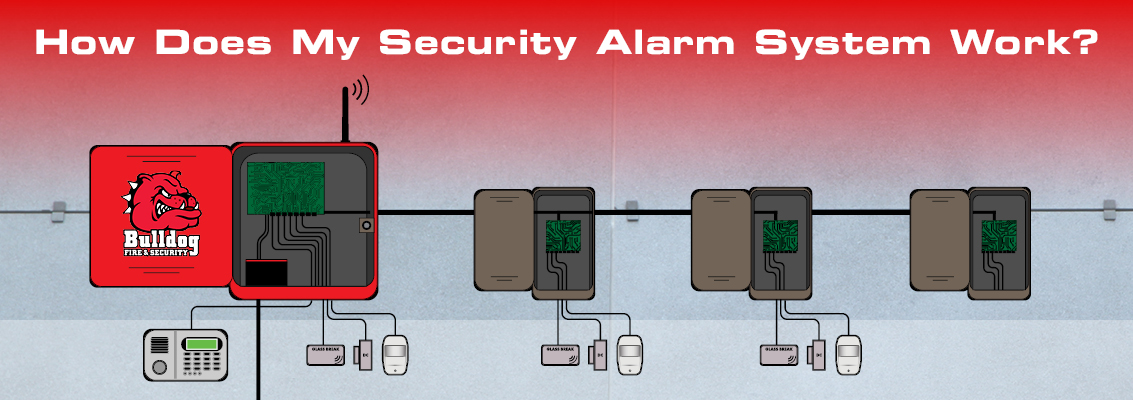
- Cellular (GSM): Many systems now use a cellular connection, similar to your phone, to communicate with a monitoring station. This is great because it can't be cut by an intruder snipping a phone line.
- Internet (IP): Your alarm system might also connect via your home's internet, sending signals to a monitoring center or even directly to your smartphone app.
And speaking of apps, modern systems often allow for self-monitoring. This means that when an alarm is triggered, you get an alert directly on your phone, complete with details about which sensor went off. You can then decide whether to call the authorities or check your security cameras.
The Grand Finale: Putting It All Together
So, an intruder tries to force a door. The door contact separates. ZAP! A signal flies to the control panel. The panel, knowing it’s armed, thinks, "Nope, not on my watch!" It instantly sets off the ear-splitting siren, flashing lights, and simultaneously sends a message via cellular or internet to the monitoring center or directly to your phone. All of this happens in a matter of seconds. Pretty impressive for a bunch of wires and sensors, right?
From simple magnetic contacts to clever infrared technology and smart communication, alarm systems are far more sophisticated than just a loud noise. They're a carefully orchestrated symphony of detection and deterrence, all designed to give you that precious peace of mind. So, next time you hear a car alarm, instead of just groaning, maybe you'll appreciate the silent sentinels working tirelessly to keep things safe. Or, you know, just groan. Your choice!