Hottest Temperature Ever Recorded In Usa
Ever found yourself complaining about a 'scorcher' of a day? We all have! But imagine a heat so intense it feels like you've stepped onto another planet. There's something undeniably fascinating about extremes, isn't there? Whether it's the fastest car, the highest mountain, or the deepest ocean, our human curiosity loves to push boundaries and discover the 'most' of everything. And when it comes to temperature, the USA holds a pretty astonishing record, a true testament to Mother Nature's wild side! It's a topic that sparks conversation, marvel, and perhaps a shiver of awe at our planet's immense power.
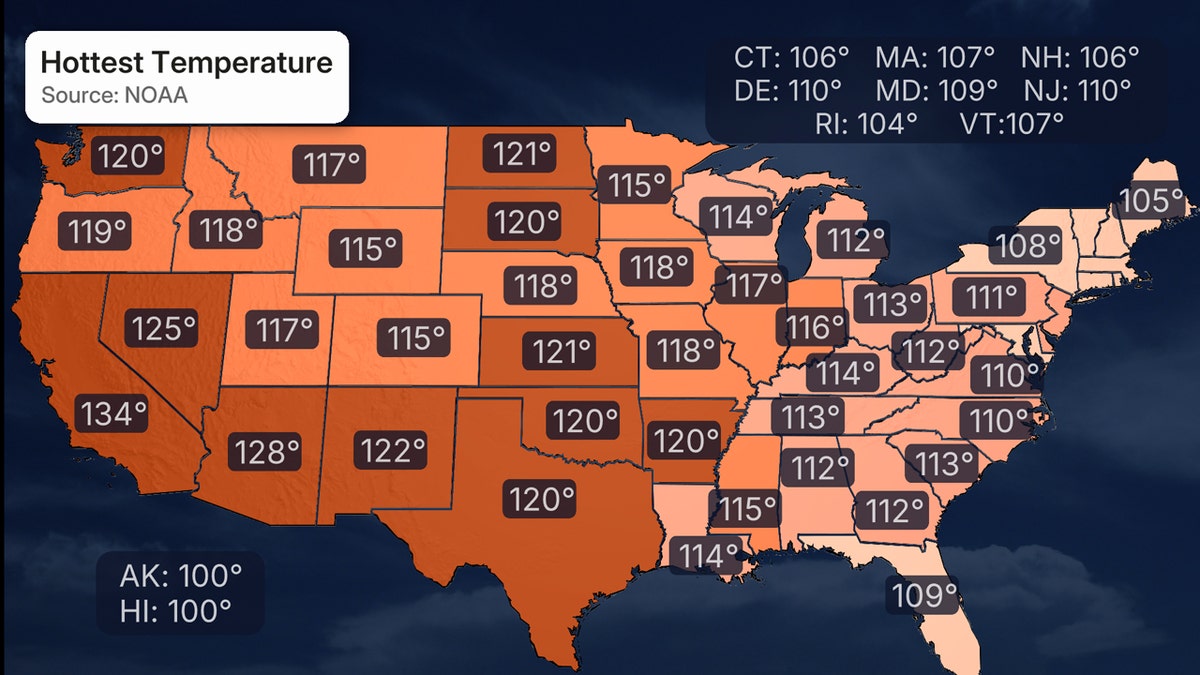
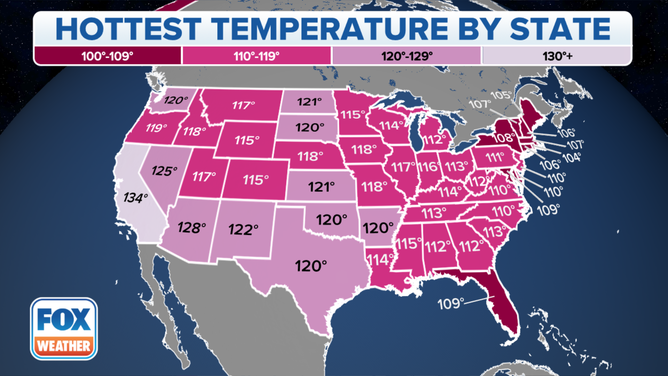
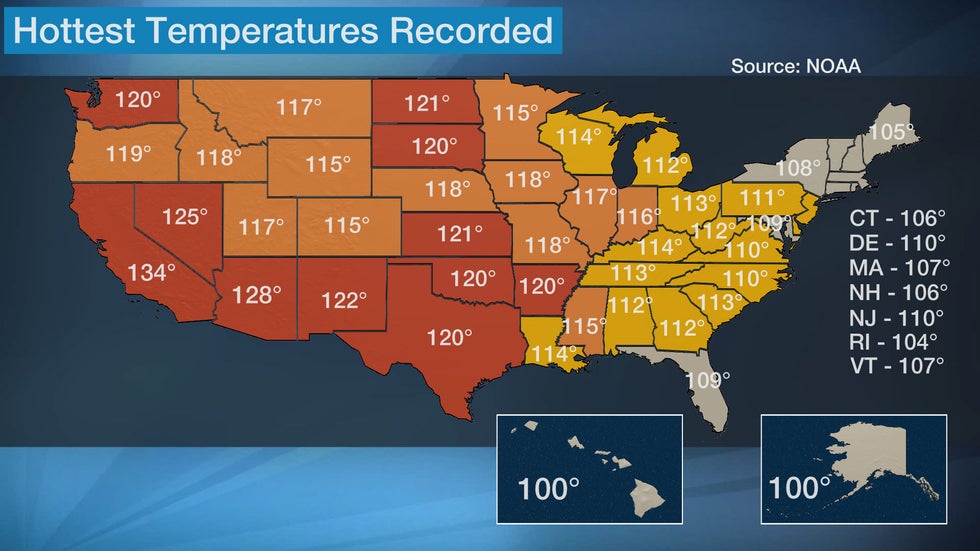
So, where in the U.S. does one find such incredible heat? The answer probably won't surprise you: it's the aptly named Death Valley, California. Specifically, at a place called Furnace Creek. On July 10, 1913, the mercury soared to an almost unbelievable 134 degrees Fahrenheit (56.7 degrees Celsius). Yes, you read that right – 134°F! That's not just the hottest temperature ever recorded in the USA; it's also recognized by the World Meteorological Organization as the hottest air temperature ever recorded on Earth! It's a record that has stood for over a century, a staggering benchmark of natural heat.
What makes Death Valley such a phenomenal hot spot? It's a perfect storm of geographical factors. It's a long, narrow basin, 282 feet below sea level, making it the lowest point in North America. The high, steep mountain ranges surrounding it trap hot air, preventing it from escaping. Add in incredibly dry air, minimal plant cover (which would otherwise provide shade and moisture), and dark, heat-absorbing rocks and soil, and you've got yourself a natural convection oven that bakes continuously under the desert sun.
Must Read
Why is knowing about this extreme temperature more than just a fun fact for your next trivia night? For one, it helps us truly grasp the sheer power and diversity of our planet's climates. It serves as a natural benchmark, a point of reference for what's meteorologically possible. For scientists, understanding how places like Death Valley reach such scorching temperatures is vital. It aids in climate research, helping them model and predict future weather patterns, especially in the context of global warming. It highlights the intricate dance of atmospheric pressure, topography, and solar radiation, allowing us to better understand the mechanisms behind extreme heat events, which are becoming increasingly important to study for their impacts on human health, agriculture, and infrastructure.
Beyond the scientific implications, this record is a testament to human resilience and our endless fascination with extremes. Imagine trying to merely exist, let alone thrive, in such conditions! It underscores the need for preparedness, respect for nature's immense power, and smart urban planning in warmer climates. So, the next time you're feeling the burn of a summer day, perhaps struggling with your AC, spare a thought for Furnace Creek and its incredible, record-breaking sizzle. It's a fascinating slice of meteorological history that continues to capture our imagination, reminding us just how wild and wonderful our world can be, even at its most sweltering!