
Greatest Common Factor 12 And 20
Ever played a game where you had to find something hidden? Well, get ready! We're about to embark on a similar adventure. This time, we're searching for a very special number. It's lurking between 12 and 20.
The Hunt Begins!
Think of 12 and 20 as two treasure chests. Each chest holds a collection of numbers. Our mission? Find the biggest number both chests have in common! It sounds like a detective story, right?
Imagine 12 has these coins: 1, 2, 3, 4, 6, and 12. That's all the numbers that divide evenly into 12. They're like its secret agents.
Must Read
Now, let's peek into 20's chest. Inside we find: 1, 2, 4, 5, 10, and 20. These are 20's loyal followers.
Spot the Shared Agent
Time for the big reveal! Look closely at the two sets of numbers. Which ones are present in both the 12 and 20 groups? It's like a "spot the difference" puzzle, but with numbers.
You'll quickly notice 1, 2, and 4 appear in both lists. They're the shared agents between 12 and 20. But we need the greatest one!
Out of 1, 2, and 4, which is the largest? Drumroll, please… It's 4! That's our winner!
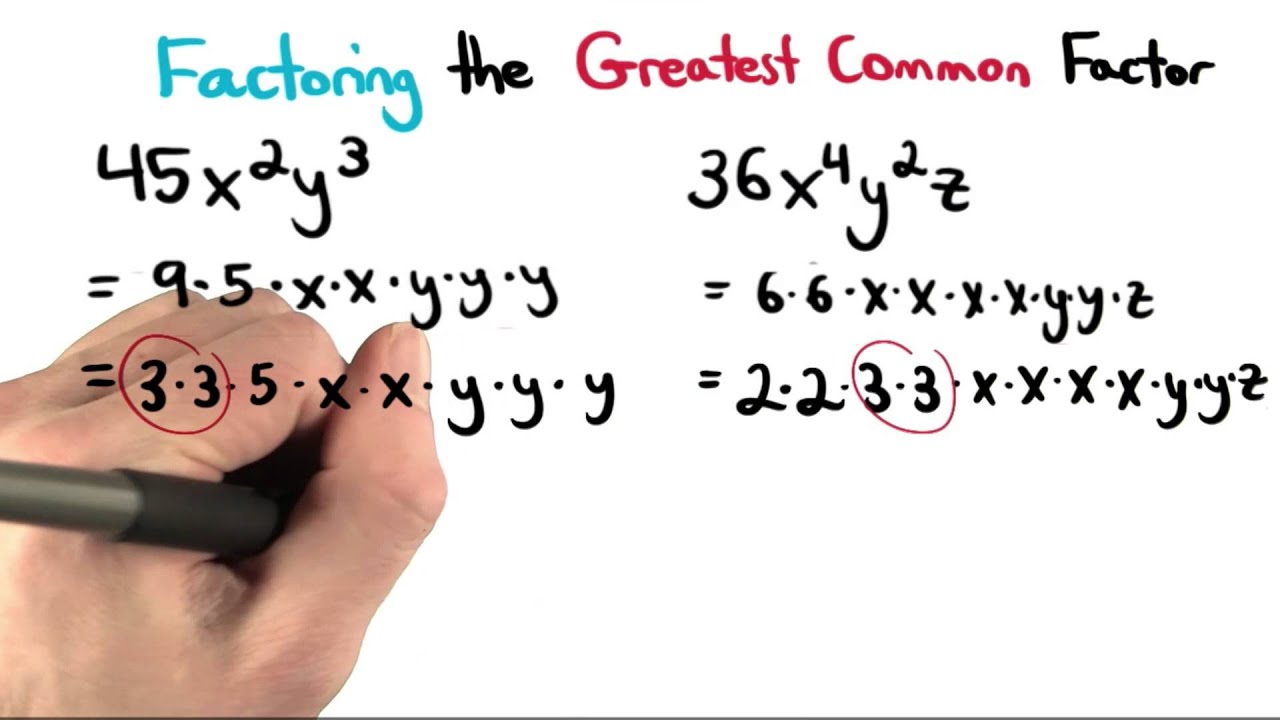
So, the Greatest Common Factor (GCF) of 12 and 20 is 4. Congratulations, detective! You cracked the case!
Why is This Fun?
You might be thinking, "Okay, I found a number. So what?" But finding the GCF is like unlocking a secret code. It helps simplify things in math and beyond.
Think of it as streamlining a recipe. If you need to double a recipe that calls for 12 teaspoons of sugar and 20 teaspoons of flour, finding the GCF can help you simplify the ratios.
Instead of dealing with awkward numbers, you can divide both amounts by 4. This gives you a simpler ratio of 3 teaspoons of sugar to 5 teaspoons of flour per serving.

It is useful in everyday life. Need to divide 12 cookies and 20 candies into identical goodie bags? GCF to the rescue! You can make 4 bags, each with 3 cookies and 5 candies.
Beyond the Numbers
The GCF isn't just about math problems. It's about finding common ground. It's about simplifying complexity. It's like finding the perfect puzzle piece that fits two different pictures.
It even has a cool name: The Greatest Common Factor! It sounds important, right? Because it is! It's a foundational concept. And even entertaining.
Think of it as a building block. Understanding it makes learning more complex math concepts easier. Like mastering the basic chords on a guitar before playing a rock solo.
So, next time you encounter 12 and 20, don't just see ordinary numbers. See a challenge. See a puzzle. See the potential for simplification.
Ready for More?
Feeling adventurous? Try finding the GCF of other pairs of numbers. What's the GCF of 18 and 24? Of 30 and 45? The possibilities are endless!
Each pair of numbers presents a new puzzle to solve. A new code to crack. And a new opportunity to flex your detective skills.
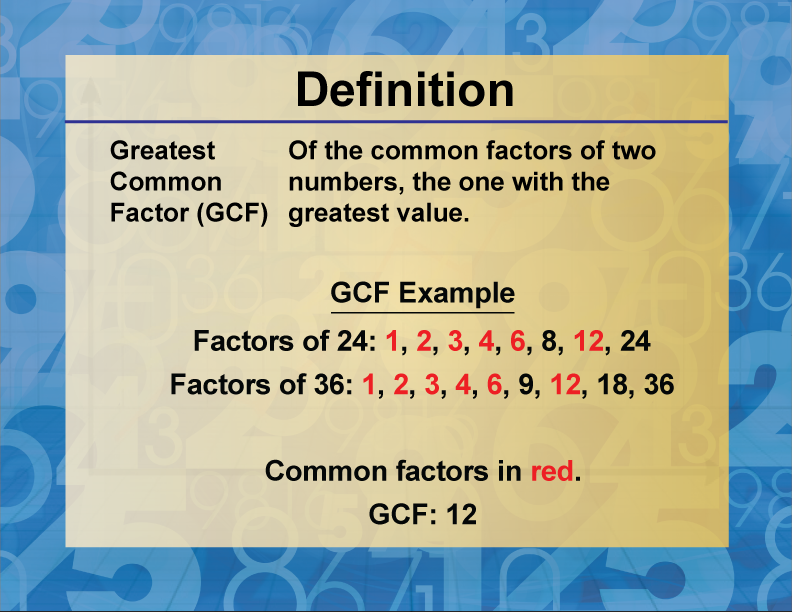
Remember, the key is to list the factors of each number. Then, identify the largest factor they have in common. It's a game of observation and deduction.
You can use online calculators. But where's the fun in that? The real thrill comes from solving it yourself. From piecing together the clues and uncovering the answer.
So, go forth and conquer those numbers! Embrace the challenge. And have fun on your GCF adventure! 12 and 20 were just the beginning!
Who knows, you might even discover that math isn't so scary after all. Maybe it's even a little… fun!
"Mathematics is not about numbers, equations, computations, or algorithms: it is about understanding." - William Paul ThurstonIt is all about enjoying the process!