
Gethashcode Object Trong C
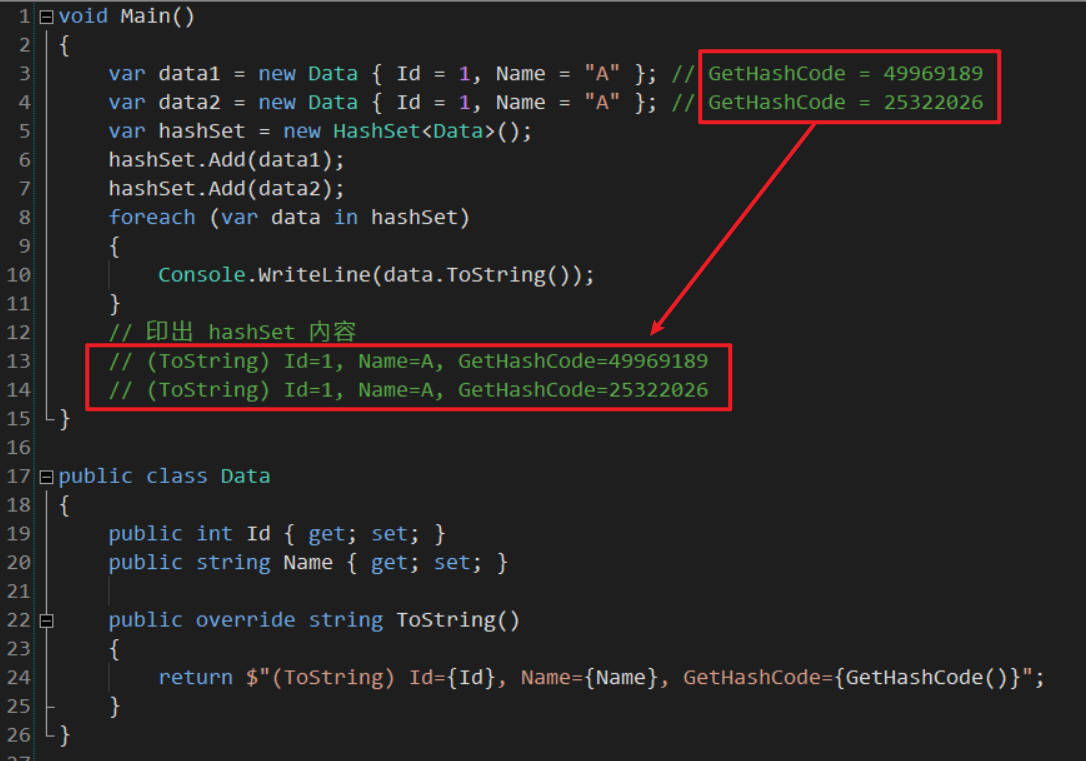
Alright, let's talk about something that might sound a bit intimidating at first: GetHashCode() in the world of .NET (and especially as it relates to objects!). Don't worry, we're not diving into the deep end of computer science today. Think of this more like learning a cool party trick for your code. Ready?
What's the Deal with GetHashCode()?
So, what is this GetHashCode() thing? Essentially, it's a method that every object in .NET inherits. Its job? To spit out an integer value – a hash code – that represents that object. Why? Well, imagine you're organizing a massive library. You wouldn't just pile the books randomly, right? You'd need some kind of system to find them quickly. That's where hash codes come in!
Think of the hash code as a super-fast way to categorize and locate objects. It's not a perfect identifier (more on that later!), but it's incredibly useful for things like dictionaries and hash tables – data structures designed for speed. These structures use the hash code to quickly determine where an object should be stored and located.
Must Read
Why Should You Care? (It's More Fun Than You Think!)
Okay, I know what you're thinking: "Sounds technical… why should I care?" Well, let me tell you! Understanding GetHashCode() opens up a world of possibilities for writing efficient and performant code. Nobody wants sluggish applications, right? We all want things to run smoothly and quickly.
And that’s not all! When you start overriding GetHashCode() (we'll get to that in a bit), you gain more control over how your objects behave in collections. You can ensure that your custom objects are handled correctly by data structures that rely on hashing. In short, you become a code wizard!
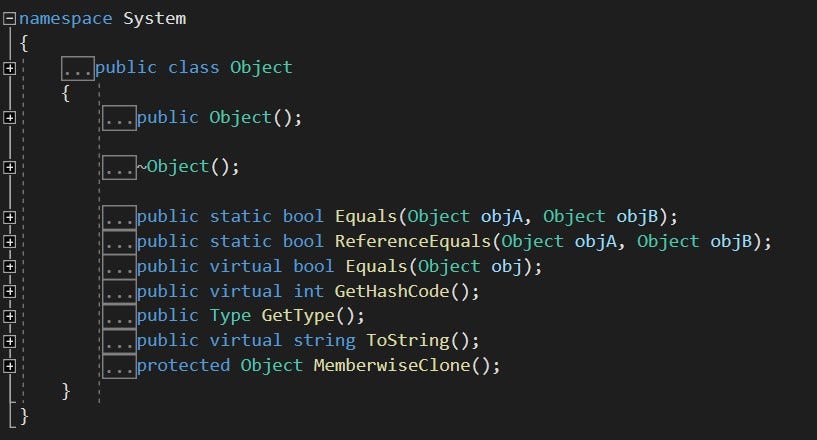
The Golden Rule: Equals() and GetHashCode() - A Dynamic Duo!
Now, here's the most important rule about GetHashCode(): If two objects are considered equal (meaning Equals() returns true), they must have the same hash code. This is absolutely crucial for maintaining the integrity of hash-based collections. Think of it as the "treat everyone fairly" rule for your objects. If you deem two objects to be the same, they need the same address (hash code) in the system.
Conversely, if two objects have different hash codes, they should be considered unequal. This isn't a strict requirement, but it's highly recommended to minimize collisions (when different objects have the same hash code). Collisions slow things down, and we want speed, remember?
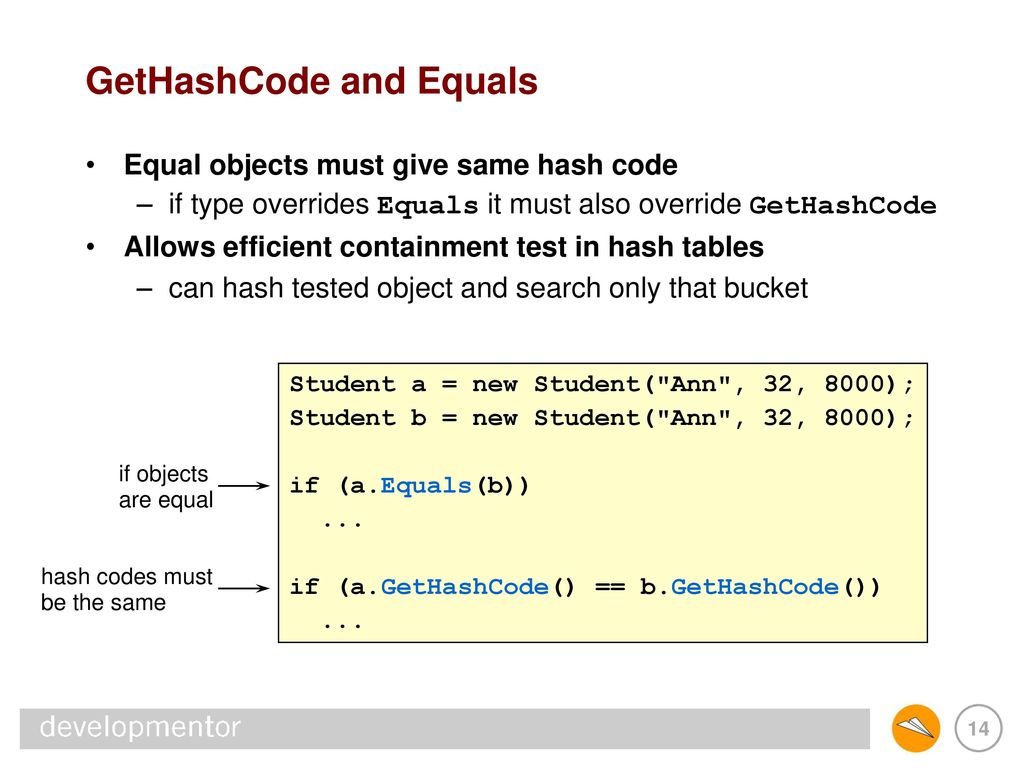
Overriding GetHashCode(): Taking Control
The default implementation of GetHashCode() in .NET is usually based on the object's memory address. While this works, it's not always ideal, especially when you're dealing with custom objects where equality is based on the object's content, not its location in memory. Imagine two books with the exact same content but stored in different locations in the library. Would you want to treat them as different books? Absolutely not!
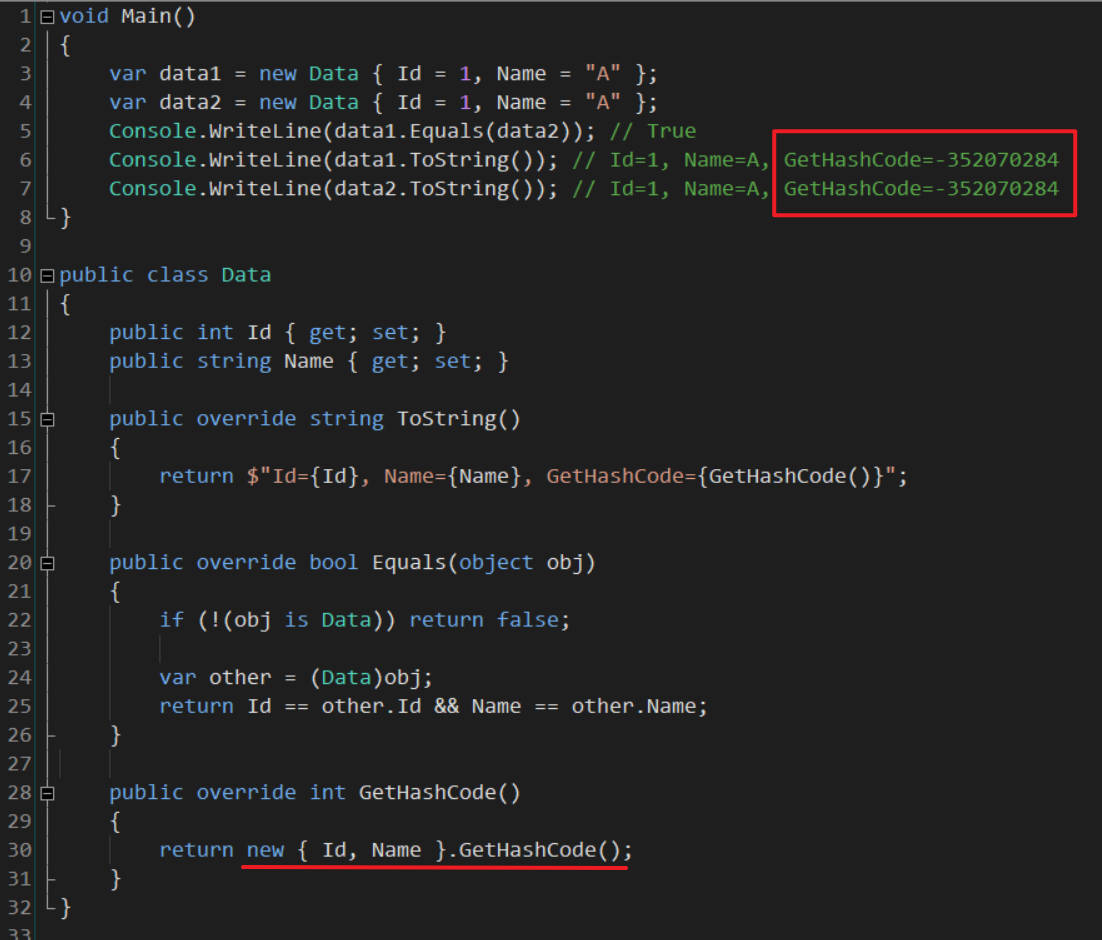
That's where overriding GetHashCode() comes in. When you override it, you're telling .NET: "Hey, I know better how to calculate the hash code for my objects." You can base the hash code on the object's relevant properties, ensuring that objects with the same content get the same hash code.

Important: When you override GetHashCode(), you must also override Equals(). They are two sides of the same coin. If you change how equality is determined, you also need to adjust how hash codes are generated.
A Simple Example (No C Code Required!)
Let's imagine a simple Person class:
public class Person
{
    public string FirstName { get; set; }
    public string LastName { get; set; }

    public override bool Equals(object obj)
    {
        if (obj == null || GetType() != obj.GetType())
        {
            return false;
        }

        Person other = (Person)obj;
        return FirstName == other.FirstName && LastName == other.LastName;
    }

    public override int GetHashCode()
    {
        // A simple (but not perfect) hash code implementation
        return FirstName.GetHashCode() ^ LastName.GetHashCode();
    }
}
In this example, the Equals() method checks if two Person objects have the same first name and last name. The GetHashCode() method combines the hash codes of the first name and last name using the XOR operator (^). This is a simple way to generate a hash code based on the object's content. (Note: More sophisticated approaches exist for better distribution, but this illustrates the principle.)
Final Thoughts: Embrace the Hash!
So, there you have it! A whirlwind tour of GetHashCode(). It might seem a bit abstract at first, but understanding it can significantly improve your code's performance and make you a more confident developer. Don't be afraid to experiment with overriding GetHashCode() and Equals(). The more you practice, the better you'll understand these concepts.
And remember, the world of .NET is vast and fascinating! Take the time to explore, learn, and have fun. With each new concept you grasp, you unlock even more potential and creativity. So go out there and conquer the hash! You got this!