
Game Improvement Irons Vs Players Distance Irons

So, you're staring down a golf club rack, feeling like you need a decoder ring to figure out what's going on? You're not alone. Two terms that often pop up, making golfers scratch their heads more than a bad lie in the rough, are "Game Improvement Irons" and "Players Distance Irons." Let's ditch the golf jargon and break it down like we're explaining it to your slightly golf-obsessed grandma.
Game Improvement Irons: Your Friendly Neighborhood Forgiveness Machine
Imagine you're baking a cake. Sometimes, you add a little too much sugar, or maybe the oven's a tad too hot. Game Improvement Irons are like that cake recipe that practically guarantees success, even if you mess up a little. These clubs are designed with one thing in mind: making your less-than-perfect shots still end up somewhere vaguely near the fairway. They're packed with features that are about as subtle as a neon sign reading "HIT THE BALL HERE!"
Think larger clubheads. It's like having a bigger target to aim at. Even if you don't nail the sweet spot (the magical center of the clubface), the ball will still get some oomph. Then there's weighting around the perimeter. This helps to minimize twisting when you mishit the ball. Picture it like training wheels on a bicycle for your golf swing. Not the most stylish, but incredibly helpful when you're just starting or trying to get better.
Must Read
These irons often launch the ball higher. For many, it's a blessing, helping get the ball up and over those pesky trees or hazards. The feeling of launching one high in the air after thinning the last 3 shots is something we all yearn for.
Players Distance Irons: A Bit More Demanding, A Lot More Rewarding
Now, let's talk about Players Distance Irons. These are like the exotic sports car of the golf world. They look sleek, sound amazing when you hit them pure, and are designed for golfers who have a pretty good idea of what they're doing. They still offer some forgiveness, but not to the same extent as Game Improvement Irons. They're for the golfer who says, "I know what I'm doing (most of the time), and I want to feel the shot, work the ball, and look good doing it."
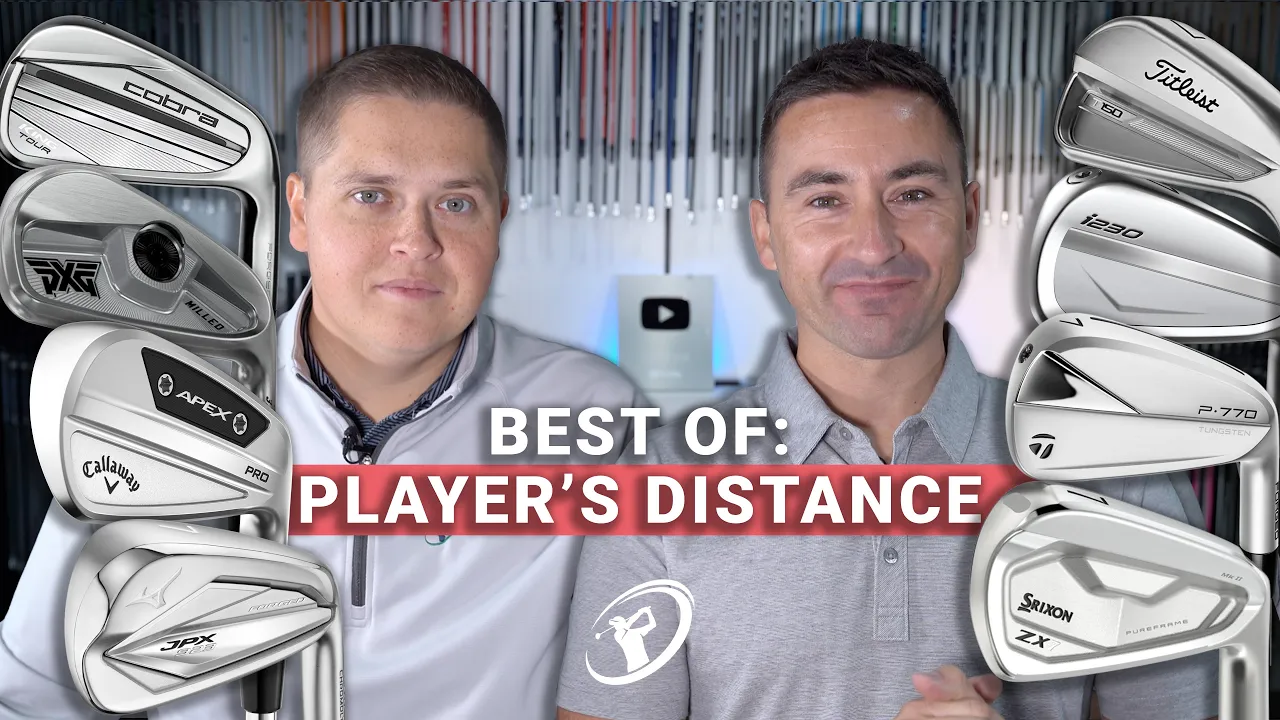
These irons usually have a sleeker profile – a thinner topline (the top edge of the clubface) and less offset (how much the clubface sits behind the shaft). This appeals to the eye of a more skilled player. The design emphasizes feel and control. They allow you to shape your shots, hitting draws (shots that curve left for a right-handed golfer) or fades (shots that curve right), something more difficult to accomplish with Game Improvement Irons.
Players distance irons tend to launch the ball a little lower. Golfers can control the trajectory and, ideally, adding distance to their shots. Imagine painting the perfect shot on the course with these irons. It's a feeling that keeps golfers coming back.
A well-struck shot with a Players Distance Iron feels incredible. It's a satisfying "thwack" that sends shivers down your spine. A mishit, however, will let you know it. It's a more demanding club, but the rewards are there for those who can consistently find the center of the face.

Which Iron is Right for You? It's All About Honesty (and a Little Self-Deprecation)
The big question: Which type of iron should you choose? The answer lies in honest self-assessment. Are you a beginner who's just trying to make contact with the ball? Or an experienced golfer who wants to fine-tune your game?
If you find yourself regularly hitting the ball off the toe (the outer edge) or heel (the inner edge) of the club, or if your shots have a tendency to slice wildly into the woods, a Game Improvement Iron is probably your best bet. There's no shame in admitting you need a little help! In fact, embracing the forgiveness is often the quickest path to actually improving.

On the other hand, if you consistently hit the ball relatively well, have a decent swing, and want more control over your shots, Players Distance Irons might be the way to go. Just be prepared to accept the consequences of your mishits. They'll be a little less forgiving, but the rewards for solid contact can be significant.
Ultimately, the best way to choose is to try them out. Head to your local golf shop, hit some balls with both types of irons, and see which ones feel better and produce better results. And remember, golf is supposed to be fun. Don't get so caught up in the technical details that you forget to enjoy the game.
Even the pros have bad days, so cut yourself some slack, and choose the clubs that help you have the most fun out on the course.
Happy golfing!
