
First Alert Wired Smoke Alarm Beeping
You know that feeling, right? It’s 3 AM. You’re deep in dreamland, probably solving some complex problem or perhaps just levitating over a pile of nachos. Then, out of the silent abyss, comes a sound. Not a full-blown siren, just a tiny, insistent, singular chirp. Then silence. Then, about 30 seconds later, another chirp. Your eyes snap open. Your brain, still foggy from sleep, begins the mental gymnastics of locating the source. Is it the smoke alarm? The carbon monoxide detector? Is it a dying car alarm down the street? Or maybe, just maybe, it’s a rogue cricket with a rhythm problem?
After what feels like an eternity of creeping around in the dark, straining your ears, you finally pinpoint it. It’s coming from the ceiling, specifically, from that white disc proudly emblazoned with the words “First Alert.” And here’s the kicker: you distinctly remember it being a wired smoke alarm. Wired! Doesn't that mean it’s powered by your house's electricity? Doesn’t that imply a blissful, battery-free existence? Ah, my friend, if only it were that simple. The universe, it seems, has a wonderfully ironic sense of humor when it comes to home safety devices.
The Mystery of the Beeping (Even When It's Wired!)
So, your First Alert wired smoke alarm is beeping, chirping, or generally making a nuisance of itself. You're probably scratching your head, thinking, "But it's wired!" And you're right to be confused! Most people assume "wired" means "set it and forget it." Unfortunately, that's not quite the full picture. Let's unravel this little mystery, shall we?
Must Read
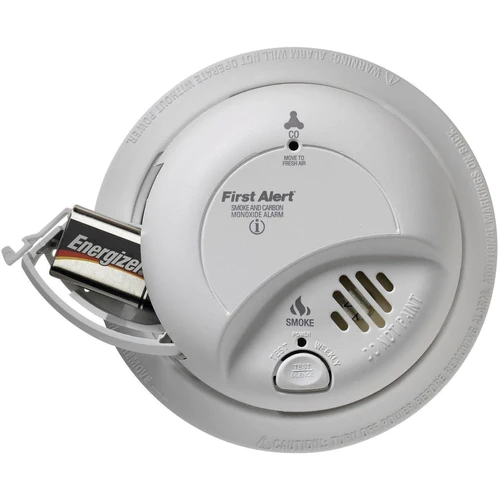
First and foremost, the most common culprit, even for wired units, is the backup battery. Yes, you heard that right! Those little discs often have a 9V or AA battery tucked inside, designed to keep them functioning during a power outage. When that battery starts to run low, the alarm doesn't care if it's wired to a nuclear power plant; it will chirp to let you know its backup power source is fading fast.
Then there's the dreaded End-of-Life (EOL) chirp. Smoke alarms aren't meant to last forever, and most have a lifespan of about 7-10 years. After this period, their sensors become less reliable. So, instead of just quietly expiring, many modern alarms, especially First Alert models, will start a distinct, regular chirp to tell you it's time for a replacement. It's their polite way of saying, "My watch has ended."
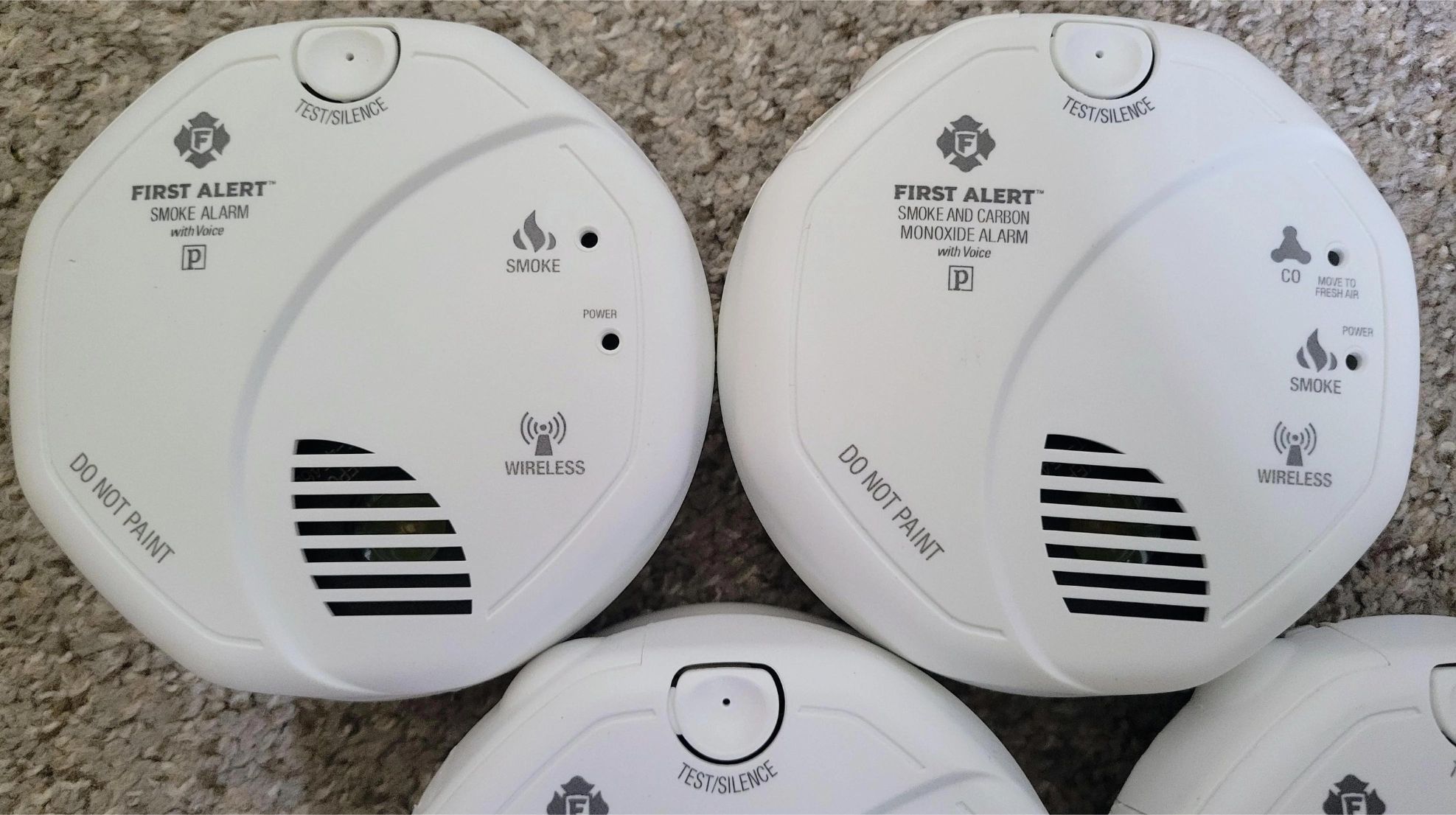
Sometimes, it's something as simple as dust bunnies and tiny critters. Believe it or not, an accumulation of dust, insects, or even cobwebs inside the sensing chamber can trigger false alarms or irregular chirps. The alarm thinks it's detecting smoke, or perhaps just gets confused by the unexpected internal house guests.
A momentary power hiccup or surge can also cause a wired alarm to chirp. If your power flickers, even for a second, the alarm might briefly switch to battery power, then back to AC. This transition can sometimes confuse the internal diagnostics, leading to a temporary chirp or a need for a reset.
Finally, there's always the possibility of a faulty unit or an interconnection issue. If you have multiple wired alarms in your home, they're often interconnected. A problem with one unit, or an issue with the wiring connecting them, can sometimes cause a cascade of confusion, leading to chirping from seemingly random alarms.
Okay, So What Now? Let's Troubleshoot!
Don't despair! Before you start ripping alarms off the ceiling in a fit of 3 AM rage (we've all been there), let's walk through some troubleshooting steps. You got this!
-
Find the Culprit: If you have multiple alarms, try to pinpoint which one is chirping. Sometimes, one alarm chirps, but another one in the interconnected system is the actual problem. Cover each alarm briefly with your hand (don't block the vents, just muffle it) to identify the specific noisemaker. It might sound obvious, but this step is often skipped in frustration!
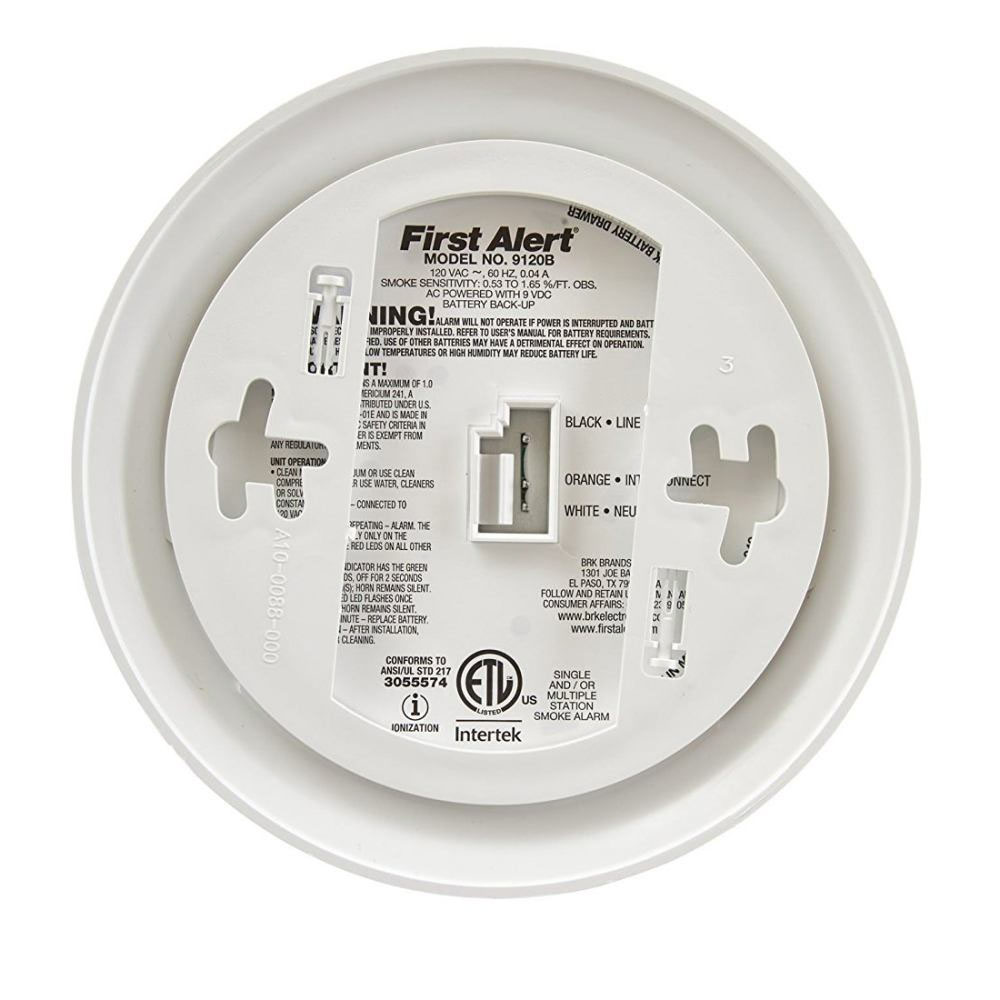
First Alert 9120B Hardwired Smoke Alarm with Battery Backup -
Battery Time (Yes, Really!): This is your number one suspect. Even though it's wired, grab a ladder and replace the backup battery. Most First Alert wired models use a 9V battery. Make sure the power to the alarm circuit is off at the breaker box before you start messing with the wiring! Twist the alarm counter-clockwise to remove it from its mounting bracket, pop out the old battery, wait a minute, then insert a fresh one. Don't cheap out here; use a good quality alkaline battery. This step solves like 90% of these issues, believe it or not!
-
Give it a Clean: While you have the alarm down, grab a can of compressed air (like for cleaning keyboards) and gently blow out any dust or debris from the vents and sensing chamber. Avoid using water or cleaning solutions, as they can damage the sensors.
-
Hit the Reset Button: After changing the battery and cleaning, reinstall the alarm. Then, locate the "Test" button. Press and hold it for 15-20 seconds. This often resets the internal circuitry and clears any residual fault codes. You might hear a loud siren during this, so be prepared!
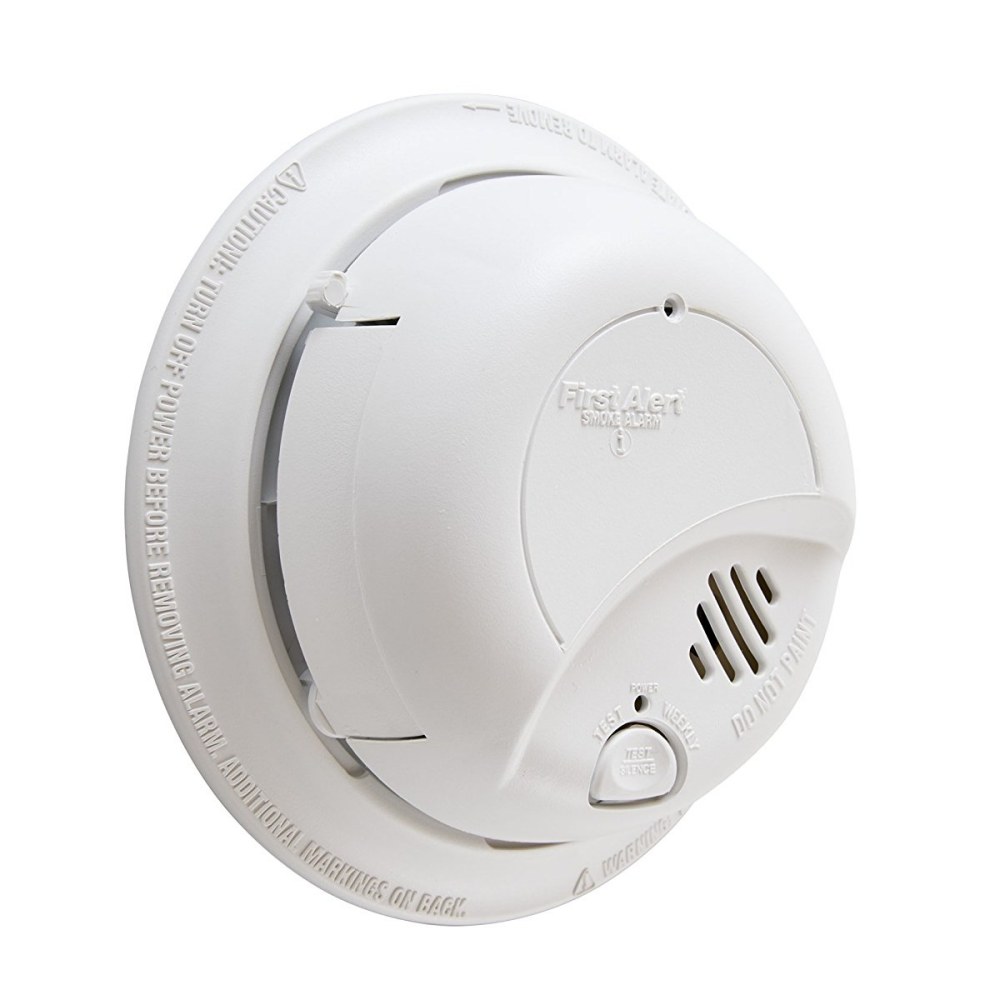
First Alert 9120B Hardwired Smoke Alarm with Battery Backup -
Check the Expiration Date: Look on the back or side of the alarm for a manufacturing date (MFG) or "replace by" date. If it's more than 7-10 years old, it's genuinely time for a replacement. No amount of battery changes or cleaning will bring an expired sensor back to life. Safety first, folks!
-
Still Beeping?: If you've done all of the above and the phantom chirp persists, you might have a faulty unit or a more complex electrical issue. In an interconnected system, if one alarm is faulty, it can make others chirp too. You might need to systematically disconnect and test each alarm, or even consider calling a qualified electrician if you're uncomfortable with further diagnosis.
The Takeaway
Dealing with a chirping smoke alarm, especially a wired one, can be incredibly frustrating. It feels counter-intuitive, right? But remember, these little guardians are doing their best to keep you safe. Most of the time, a fresh backup battery and a good clean will silence that annoying chirp and restore peace to your home. And if it's just old, well, think of it as a fond farewell and an opportunity to upgrade to newer, potentially smarter, technology!