
Examples Of Hazards In The Workplace
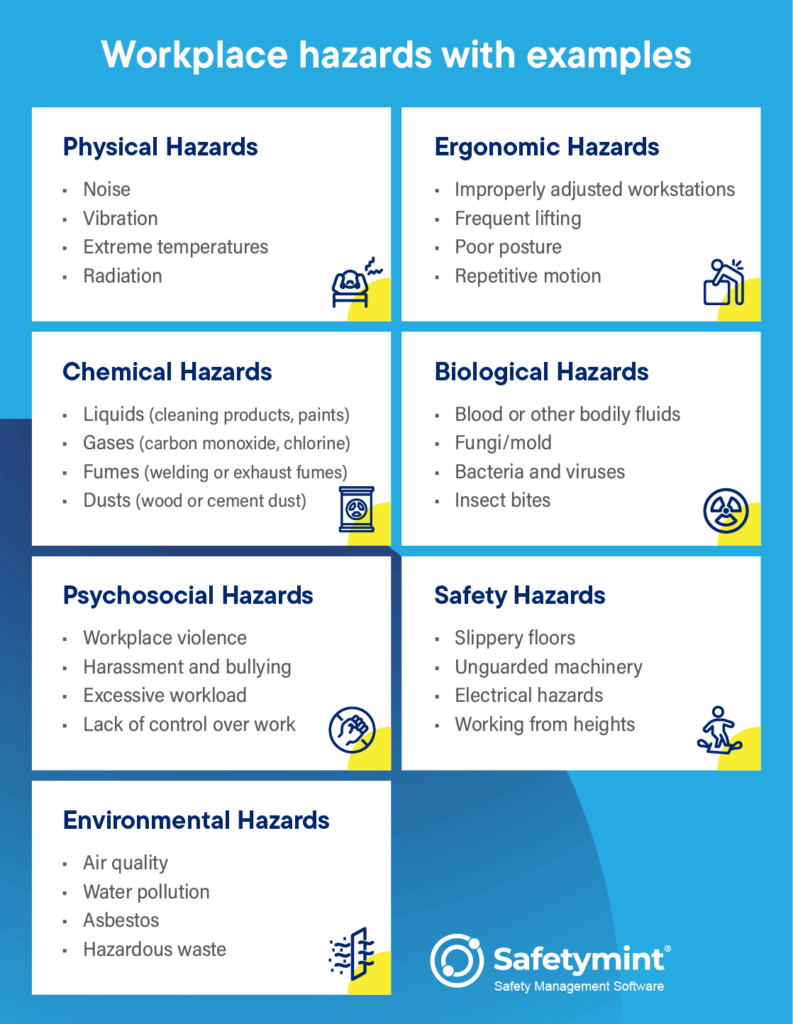
Ever paused to think about the secret world of dangers lurking in plain sight at your workplace? No, not super villains or booby traps (unless you work in a spy movie, lucky you!). I'm talking about hazards – those little things that could potentially cause harm, from a paper cut to something a bit more serious. It might sound a tad dramatic, but understanding these everyday "what ifs" is actually super fascinating and, honestly, pretty crucial.
Think of it like being a detective, but for safety. Once you start noticing them, you realize hazards are everywhere, just waiting for a keen eye to spot them. And it’s not about being paranoid; it's about being aware and making our workspaces better, safer places. So, grab a comfy seat, and let's explore some of these intriguing examples, shall we?
The Obvious Ones: Physical Hazards
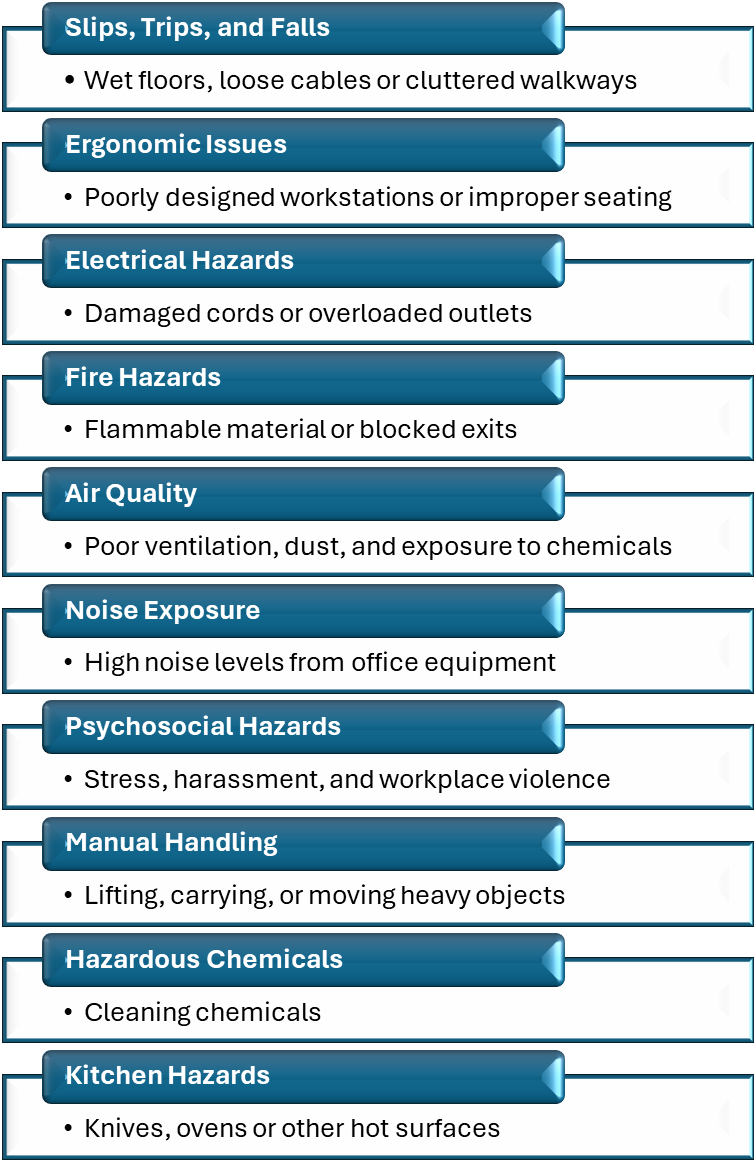
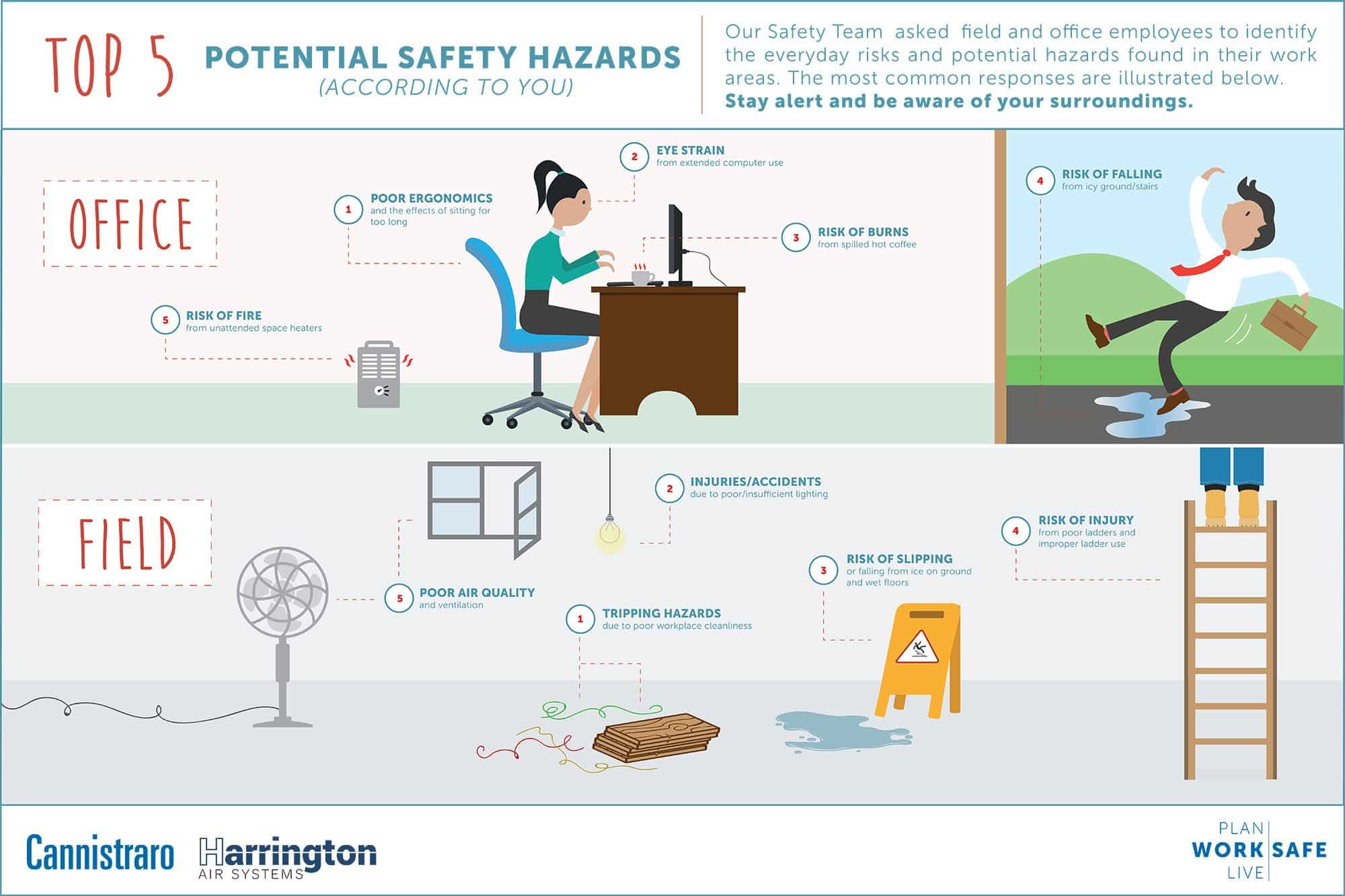
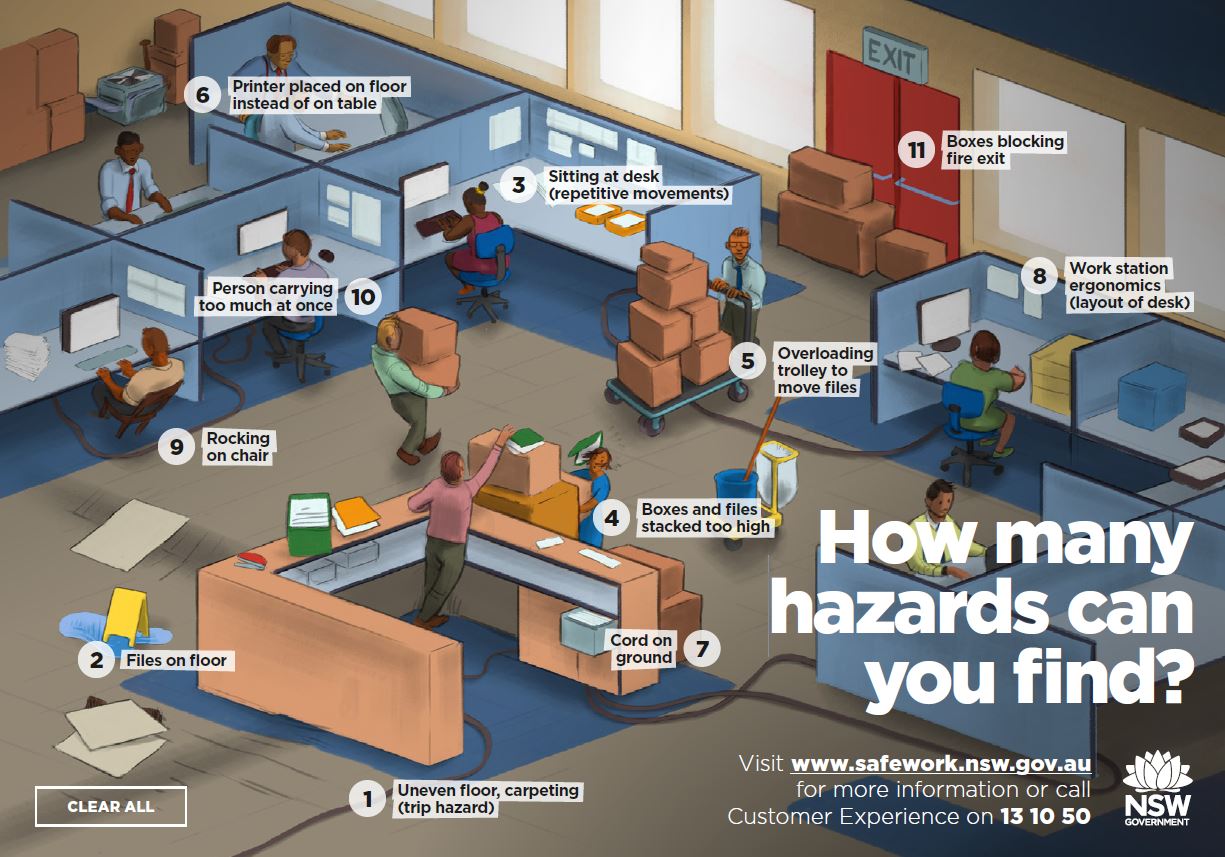
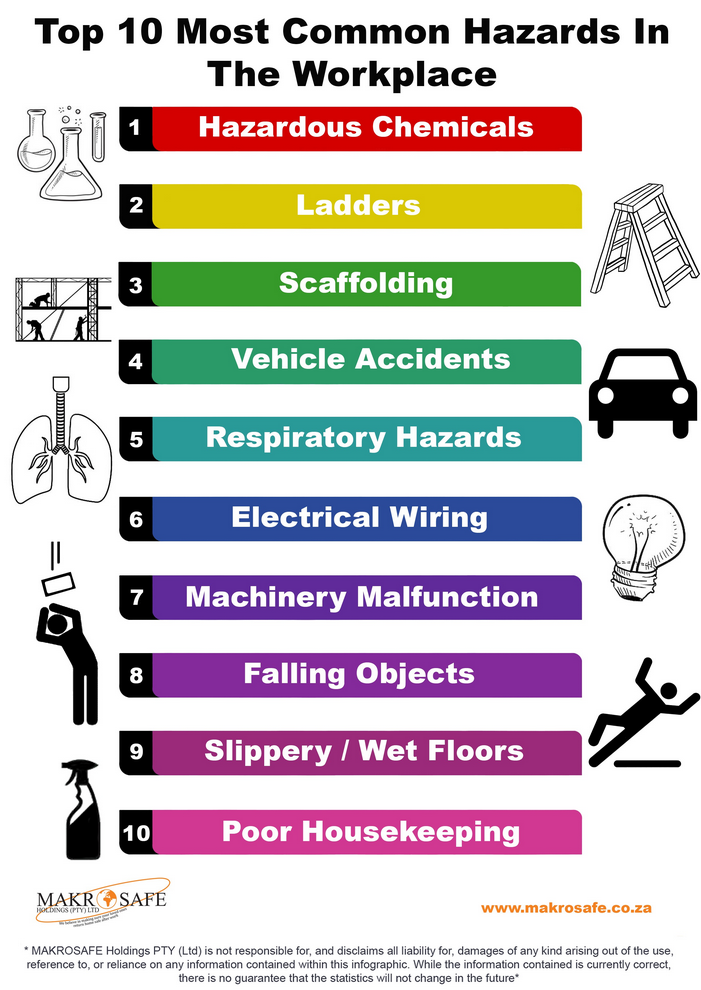
Let's kick things off with the kind of hazards that are often right there, smacking you in the face – or, more likely, tripping you up! These are the physical hazards. Ever walked into a room with a loose rug, a spilled drink, or a power cord snaking across the floor? Bingo! Those are classic examples of slip, trip, and fall hazards. It’s not just clumsy people; even the most graceful among us can take a tumble if the environment sets them up for it. Imagine a banana peel, but in real life – less cartoonish, more ouch.
Must Read
But physical hazards aren't just about gravity. Think about sound. A quiet hum is fine, but what if you work near machinery that sounds like a constant rock concert? That's a noise hazard. Too much loud noise can actually damage your hearing over time – sneaky, right? Or consider temperature: working in a freezer all day without proper gear, or near a super hot furnace. Extreme temperatures are another physical hazard that can really mess with your body's comfy equilibrium.
And let's not forget the big, powerful stuff! Machinery with moving parts, exposed electrical wires, or even things like poorly stacked boxes that could fall on someone. These all fall under the umbrella of physical hazards. It’s like a giant puzzle of "what could go wrong if X is left unchecked?"
The Invisible Intruders: Chemical Hazards
Now, this is where it gets a little more mysterious! Not all hazards are big and clunky. Some are practically invisible, yet powerful. Enter chemical hazards. When you hear "chemicals," you might picture bubbling beakers in a lab, but the truth is, they're often much closer to home. Think about the cleaning products under your sink at home, or the industrial-strength versions used in offices and factories. Bleach, detergents, even certain paints or glues – these are all chemicals with potential hazards.
It's not just about direct contact, either. Fumes from solvents, dust from certain materials (like wood dust or silica), or even gases can be inhalation hazards. Breathing them in can irritate your lungs, cause headaches, or worse. So, next time you smell that "freshly cleaned" scent, just remember there might be more to it than meets the nose!
The Creepy Crawlies: Biological Hazards
Ready for a slightly gross, but undeniably fascinating, category? Let's talk about biological hazards! These are the living organisms, or their by-products, that can make you sick. We're talking about bacteria, viruses, fungi (like mold), and even pesky insects or rodents. Think about healthcare settings, where exposure to patients' germs is a daily reality. Or what about office buildings where air conditioning systems might harbor mold? Yuck!
Even something as seemingly innocent as a plant in the office could, in rare cases, become a biological hazard if it harbors allergens or pests. It’s like a tiny, unseen world of potential mischief that reminds us why hygiene and proper waste disposal are actually super important – not just good manners!
The Slow Burn: Ergonomic Hazards
This category is perhaps the sneakiest of them all. Ergonomic hazards aren't about sudden accidents; they're about the slow, cumulative damage that happens over time. Imagine spending hours every day hunched over a keyboard, or repeatedly lifting heavy boxes using your back instead of your legs. Ouch!
Poor workstation design, repetitive motions, awkward postures, or even excessive force can lead to things like carpal tunnel syndrome, back pain, tendonitis, and other musculoskeletal disorders. It’s like your body is whispering a complaint, then shouting it over months or years. Understanding ergonomics is all about designing the workspace to fit the human, rather than forcing the human to fit the workspace. Pretty smart, right?
The Mind Games: Psychological Hazards
Finally, let's peek into a category that's often overlooked but incredibly important: psychological hazards. These aren't about physical injuries, but about the impact on our mental and emotional well-being. Think about working under extreme pressure, with impossible deadlines, or in a toxic environment where bullying or harassment is common. These situations can lead to stress, anxiety, burnout, and even depression.
Long working hours, lack of control over your work, poor communication, or even unclear job roles can all contribute to psychological strain. It’s a reminder that a safe workplace isn't just about protecting our bodies; it's also about safeguarding our minds and spirits. A happy mind often makes for a healthier, more productive worker, don’t you think?
So, there you have it – a whirlwind tour of the fascinating, sometimes hidden, world of workplace hazards! From the obvious trip hazards to the invisible chemicals, the creepy biologicals, the slow-burn ergonomics, and the mind-bending psychological stressors, understanding these potential pitfalls isn't just a dry, boring safety lecture. It’s about becoming a smarter, more observant human being, capable of identifying potential problems and contributing to a safer, happier environment for everyone. Who knew safety could be so interesting?