
Electronic Configuration Of Br
Alright, let's talk about Bromine (Br). I know, I know, chemistry class flashbacks, right? But trust me, this isn't going to be like those mind-numbing lectures. We're going to unravel the mystery of Bromine's electronic configuration in a way that's actually…dare I say…fun?
So, what exactly is electronic configuration? Think of it like organizing your sock drawer. You wouldn’t just throw all your socks in a tangled mess, would you? You'd probably group them by color, size, or maybe even how fancy they are. Electronic configuration is essentially doing the same thing, but with electrons around an atom. It's the way electrons are arranged in different energy levels and sublevels surrounding the nucleus.
Why should you care about where these tiny electrons are chilling? Well, it's kind of a big deal. The electronic configuration dictates how an atom interacts with other atoms. It determines whether it's going to be a social butterfly, easily forming bonds, or a bit of a loner, preferring to keep to itself. In short, it determines the chemical behavior of an element!
Must Read
Now, let's get to Bromine. Bromine, with the atomic number 35, has 35 electrons. And we need to figure out where they all live. Remember those energy levels and sublevels? They're like the different floors and rooms in an atom's electron apartment building.
The Bromine Apartment Layout
The first floor, or energy level, is called n=1. This floor is very close to the nucleus and can only hold a tiny little "s" room. That "s" room can only fit 2 electrons. So, we write 1s2. That means "1" is the energy level, "s" is the type of room, and "2" indicates two electrons are occupying it.
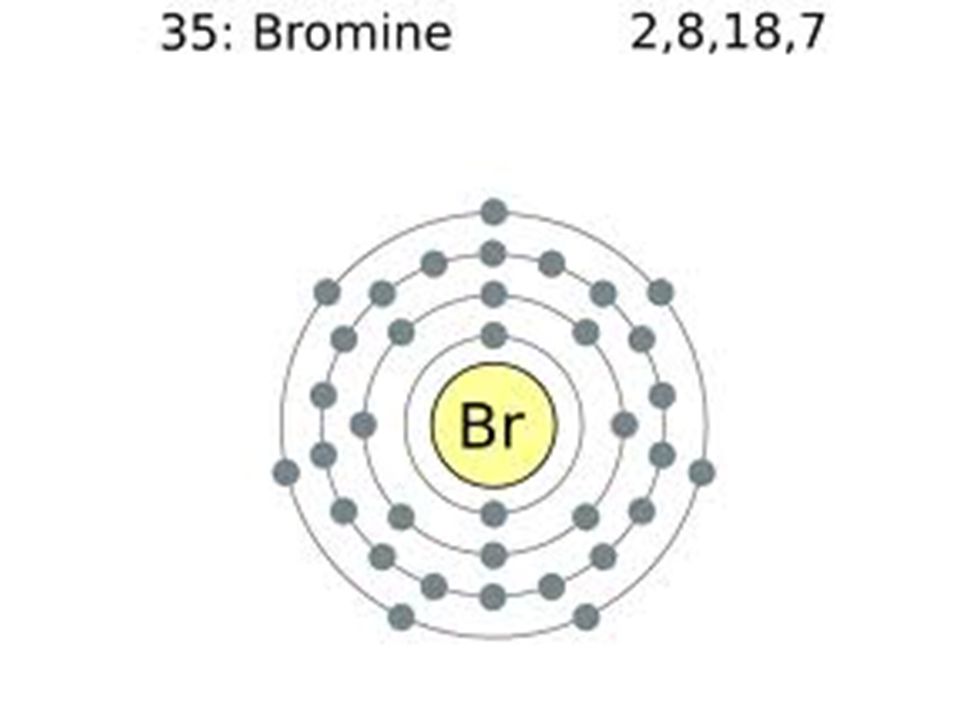
Moving on to the second floor, n=2. This floor has a bit more space. It has an "s" room that can hold 2 electrons (2s2) and a "p" room that can hold up to 6 electrons (2p6). Think of the "p" room like a bigger living room where more electrons can hang out.
The third floor, n=3, gets even more interesting. We've got the "s" room (3s2), the "p" room (3p6), and a new room called the "d" room. The "d" room is like the entertainment center, capable of holding 10 electrons! So, we have 3d10.
Finally, we reach the fourth floor, n=4. We start filling it with electrons by placing 2 in the "s" room (4s2). And here's where Bromine comes in. We move on to the "p" room of the 4th level. The 4p orbital holds 5 electrons, 4p5.
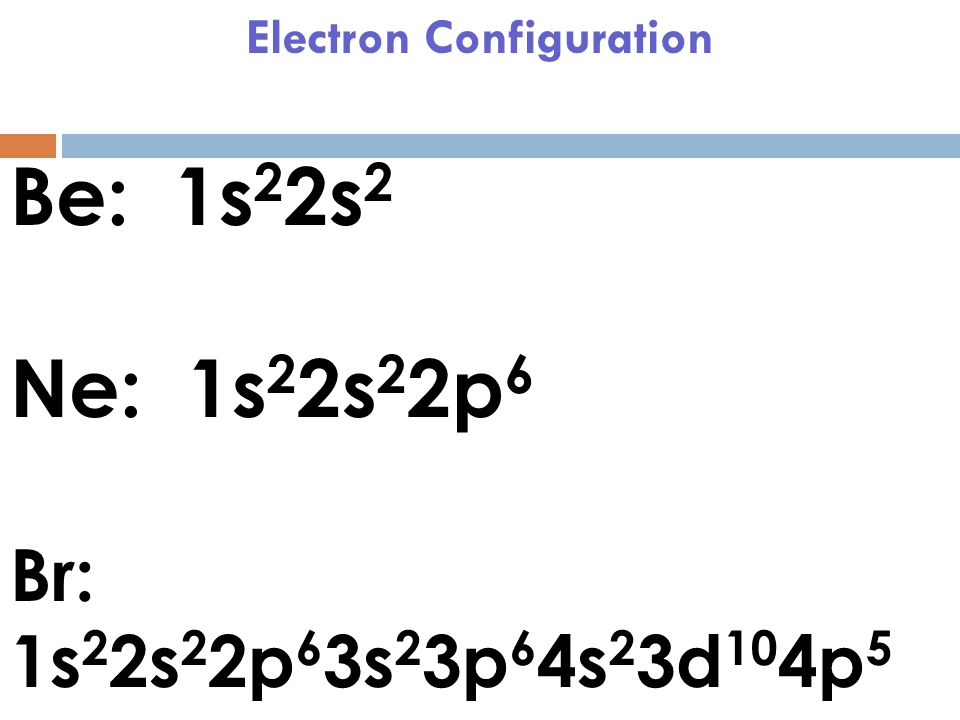
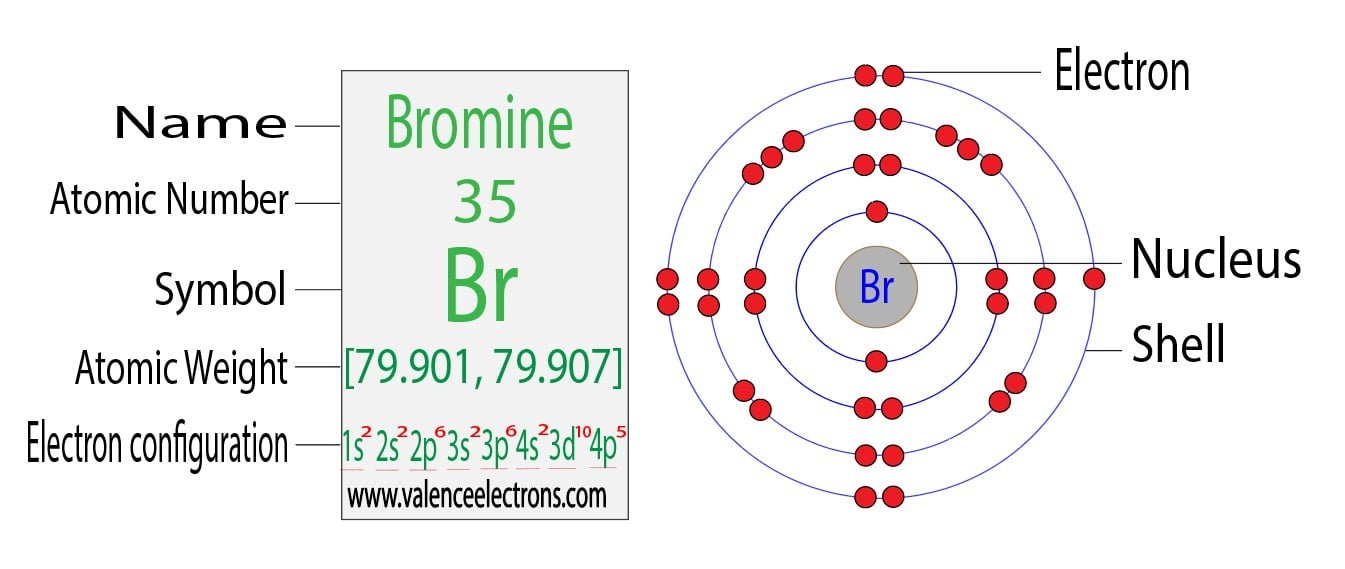
Putting it all together, the electronic configuration of Bromine is:
1s2 2s2 2p6 3s2 3p6 4s2 3d10 4p5
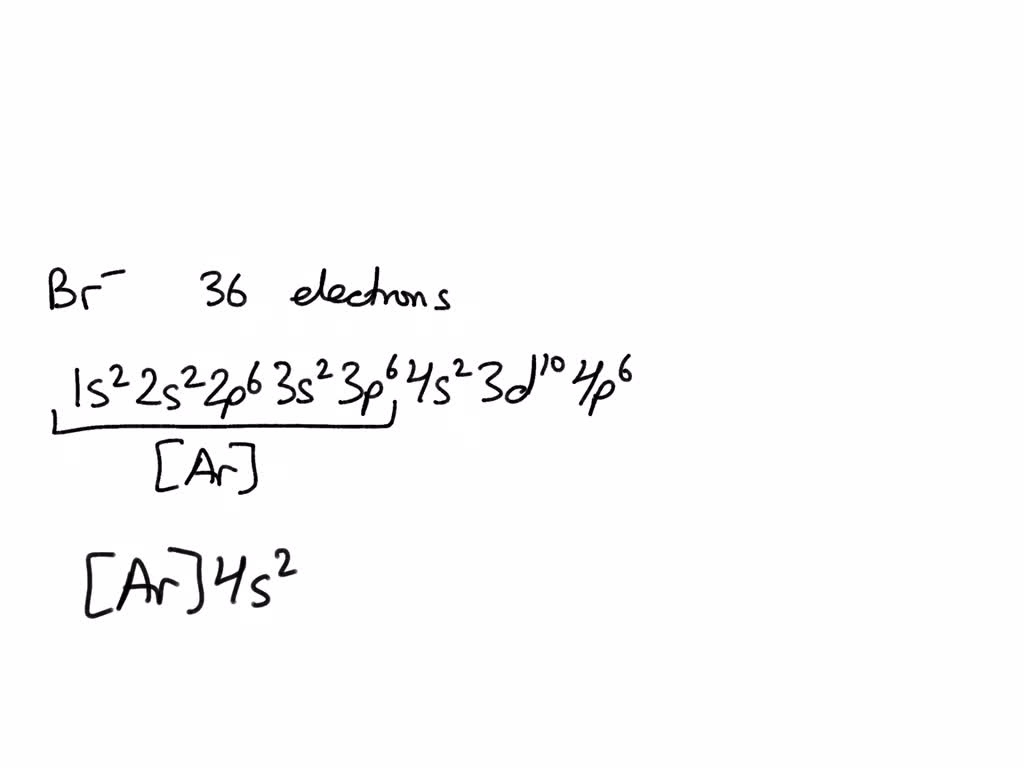
That's a mouthful, I know! Another, shorter way to write the electronic configuration of Bromine is using noble gas configuration. We find the noble gas that precedes Bromine on the periodic table, which is Argon (Ar). Argon's configuration is 1s2 2s2 2p6 3s2 3p6. So, we can write Bromine's configuration as:
[Ar] 4s2 3d10 4p5
Why All This Matters
So, what does this all tell us? Well, those electrons in the outermost energy level, the valence electrons, are the ones that do all the bonding. Bromine has 7 valence electrons (2 in the 4s sublevel and 5 in the 4p sublevel). It really wants to have 8, to achieve a stable octet (like the noble gases). This makes Bromine a very reactive element, always looking to grab an extra electron from somewhere to complete its outer shell.

Think of it like this: imagine you're trying to make a delicious pizza, but you're missing one crucial ingredient – pepperoni! You're going to be actively searching for pepperoni, right? Bromine is like that pizza chef, desperately seeking that last electron to complete its octet and become stable.
Because of this electron hunger, Bromine readily reacts with many other elements, often forming compounds that are important in various applications, from flame retardants to photographic materials and even some pharmaceuticals. You might not realize it, but Bromine is quietly playing a crucial role in many aspects of your daily life!
So, next time you hear about electronic configuration, don't run for the hills! Remember the sock drawer and the pizza analogy. It's simply a way of understanding how atoms are organized and how they interact with each other to create the amazing world around us. And who knows, maybe understanding Bromine's electron arrangement will help you win a trivia night someday!