Does Bh2- Have A Dipole Moment

Let's be honest, diving into the nitty-gritty of molecular polarity might not be everyone's idea of a fun Friday night. But understanding how molecules interact with each other, whether they have a "positive end" and a "negative end" (a dipole moment), is surprisingly relevant to everyday life. Think of it like understanding the secret language of the universe – a language that dictates everything from how water cleans your dishes to how your medication works!
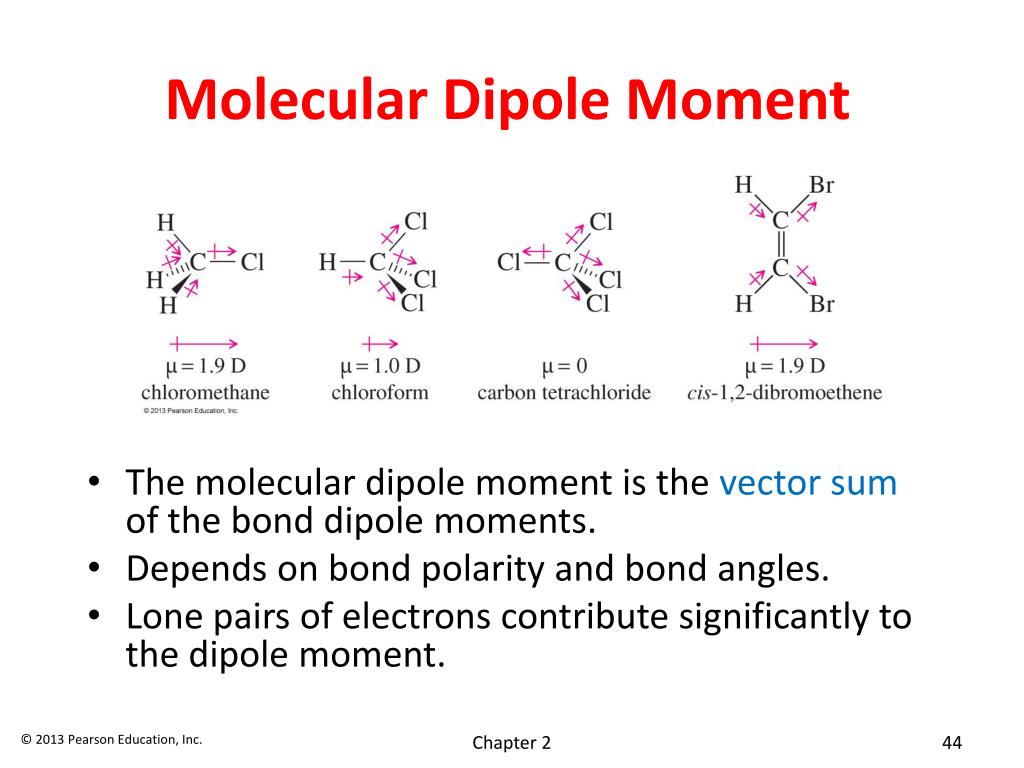
The concept of a dipole moment helps us understand why certain substances dissolve in others, and why some materials conduct electricity while others don't. It boils down to the uneven distribution of electrons within a molecule. When one atom pulls more strongly on the shared electrons in a bond, it creates a partial negative charge (δ-) on that atom and a partial positive charge (δ+) on the other. This separation of charge is what we call a dipole moment. So, why does this matter in the real world?
Well, consider the humble water molecule (H2O). Oxygen is more electronegative than hydrogen, meaning it hogs the electrons. This creates a significant dipole moment, making water a powerful solvent. This is why water is so good at dissolving ionic compounds like salt (NaCl), and many other polar substances. Without this property, washing your hands, cooking, and even basic bodily functions would be drastically different! Similarly, the effectiveness of certain adhesives, the properties of plastics, and even the way your body absorbs nutrients are all influenced by the dipole moments of the molecules involved.
Must Read
Now, let's get to the heart of the matter: BH2-. Does it have a dipole moment? To answer this, we need to consider its geometry and the electronegativity difference between boron and hydrogen. Boron is slightly more electronegative than hydrogen. However, BH2- isn't a linear molecule. It's bent due to the lone pair on the boron atom. This bent shape is crucial. If it were linear, the individual bond dipoles (the small dipoles between each B-H bond) would cancel each other out, resulting in a zero net dipole moment. However, because it's bent, these bond dipoles don't cancel; instead, they add up to give the entire molecule a net dipole moment. So the answer is: Yes, BH2- does possess a dipole moment.
So, how can you enjoy delving deeper into this fascinating topic more effectively? Start by visualizing molecules in 3D! There are great online tools and apps that allow you to explore molecular structures and even see representations of their dipole moments. Practice drawing Lewis structures and predicting molecular shapes using VSEPR theory. This will help you understand why certain molecules are polar and others aren't. And don't be afraid to experiment! Try dissolving different substances in various solvents (water, oil, alcohol) and see which ones mix well. This hands-on approach can really solidify your understanding of molecular polarity. Finally, remember that understanding dipole moments is a journey, not a destination. Keep exploring, keep asking questions, and keep enjoying the process of uncovering the secrets of the molecular world!