Ever wondered if that little gadget on your ceiling or wall is a superhero doing double duty? We're talking about those essential home safety devices that beep, shriek, and generally get your attention when something’s amiss. Specifically, let's chat about a couple of very important guardians: the smoke detector and the carbon monoxide detector.
It's a common question, one that pops up in many households: "Does my carbon monoxide detector also catch fire?" Or, perhaps, "Will my smoke detector warn me about that tricky invisible gas?" Let's clear the air, quite literally, and get to the bottom of this fascinating home safety mystery.
The Big Reveal: Do They Detect Each Other?
Alright, drumroll please! The simple, straightforward answer is: No, a carbon monoxide detector does NOT detect smoke. And a smoke detector does NOT detect carbon monoxide.
Surprised? You're not alone! It’s easy to think of them as general "danger alarms," but they are actually quite specialized in their superhero roles. Think of it like this: your car has a speedometer to tell you how fast you're going, and a fuel gauge to tell you how much gas you have left. They're both important for driving, but they do completely different jobs, right? It's the same principle with these essential home safety tools.
Meet the Specialists: Smoke Detector
Let's introduce our first hero: the smoke detector. This little champion is specifically designed to sniff out particles that are created by a fire. When something starts to burn – whether it’s toast in the toaster, a forgotten pan on the stove, or something more serious – it releases tiny, visible particles into the air. Your smoke detector is constantly on the lookout for these microscopic trespassers.
Kidde Hardwired Smoke & Carbon Monoxide Detector, AA Battery Backup
It’s looking for the smoke itself, the visual cue that fire is present. It’s like a guard dog for visible trouble, barking loudly to give you an early warning sign that something is heating up, potentially before flames even appear. It’s your first line of defense against the very real and immediate danger of fire.
Meet the Specialists: Carbon Monoxide Detector
Now, let's talk about our other vital guardian: the carbon monoxide detector. This device has a totally different mission. It's not looking for anything you can see, smell, or even taste. Instead, it’s searching for an invisible, odorless, tasteless gas called carbon monoxide (often shortened to CO).
Why is this so important? Because carbon monoxide is often referred to as the "silent killer." It’s produced when fuels like gas, oil, wood, or charcoal don't burn completely. Think of furnaces, water heaters, fireplaces, gas stoves, or even cars running in an enclosed space. If these appliances are faulty or improperly vented, they can leak carbon monoxide into your home. And since you can’t detect it with your own senses, it’s incredibly dangerous.
The carbon monoxide detector is equipped with a special sensor that can chemically react with CO molecules in the air. When it detects a dangerous level of this invisible gas, it sounds its alarm, giving you a critical warning to get fresh air immediately and investigate the source.
Why You Need Both
So, there you have it. These two devices are like specialized members of a safety squad. The smoke detector tackles the threat of fire, while the carbon monoxide detector stands guard against the unseen menace of CO gas.
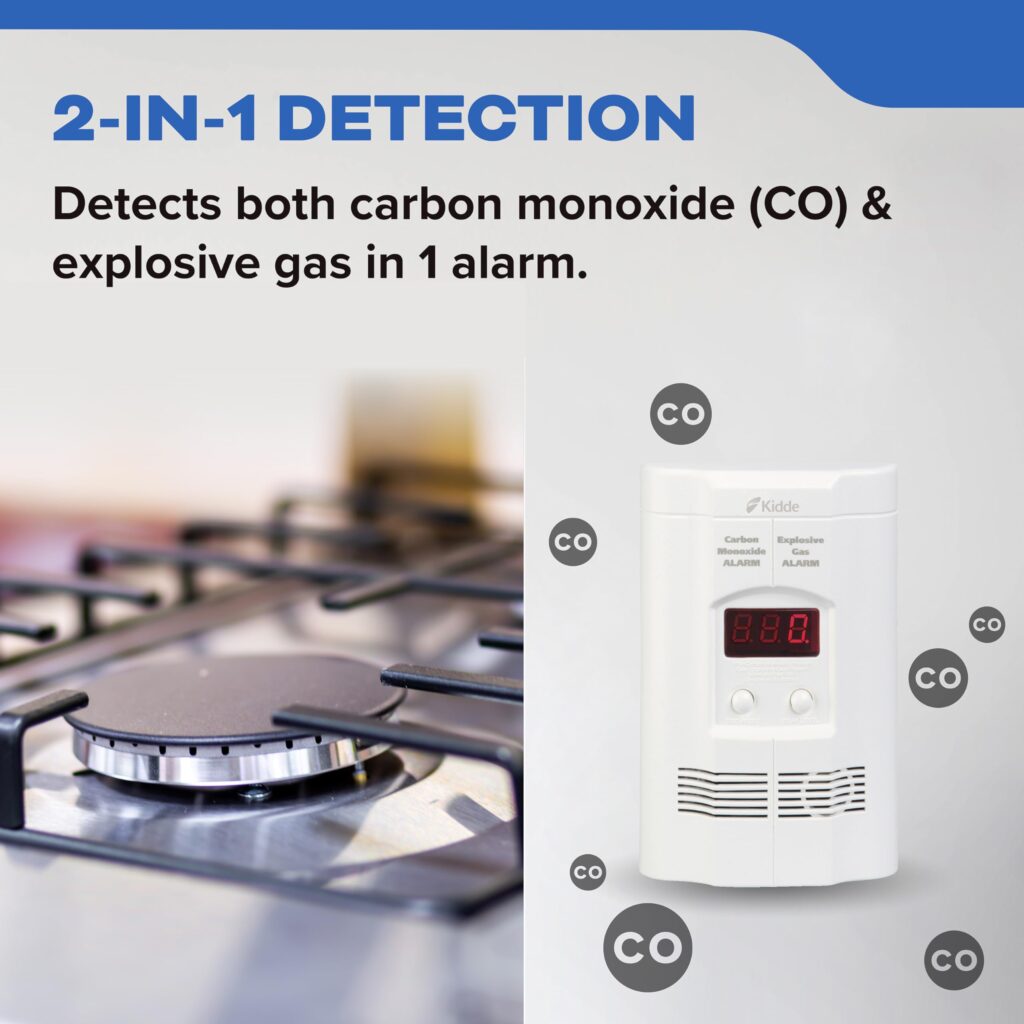
Does Carbon Monoxide Detector Detect Gas Leak? Find Out Here
Having one does not replace the other. In fact, for complete home safety, you absolutely need both working properly.
Think of it as having two different kinds of security cameras for your home. One watches for intruders breaking in through the door (fire), and the other listens for a suspicious, silent hum from inside (carbon monoxide). Both are crucial for comprehensive protection!
Does Carbon Monoxide Detector Detect Propane: Unveiling the Truth - Go
They are designed with different technologies because they are looking for different types of dangers. Mixing up their roles would be like asking a fish to climb a tree – it's just not what they're built for!
Time to Check Your Squad!
Now that you know the distinct superpowers of your smoke detector and carbon monoxide detector, it’s a great time to give them some attention.
Do you have both types of detectors in your home?
Are they placed in the right spots (e.g., outside sleeping areas for smoke, near potential CO sources for carbon monoxide)?
Have you tested them recently? Most detectors have a test button – give it a press!
Are the batteries fresh? Or, if they're sealed 10-year units, are they still within their lifespan?
Taking a few moments to understand and maintain these vital devices can make all the difference in keeping your home and loved ones safe. So go ahead, check on your safety superheroes today!