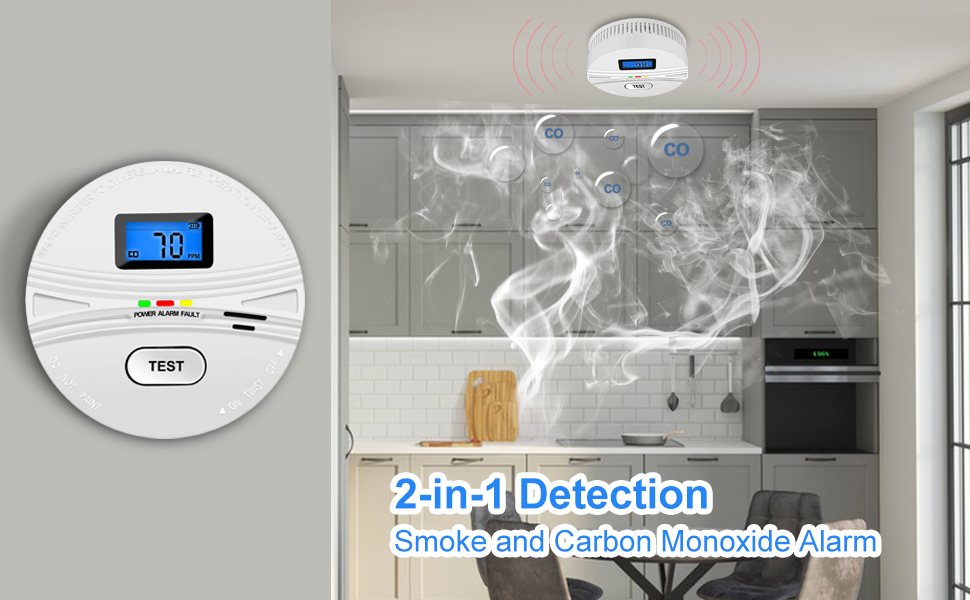
Do Fire Alarms Also Detect Carbon Monoxide
Alright, let's talk about those chirpy little guardians on our ceilings. You know the ones. They usually make their presence known right when you're searing a steak to perfection (or, let's be honest, incinerating a piece of toast). We're talking about fire alarms! But here's a question that pops up more often than a burnt bagel in a toaster: do fire alarms also detect that other sneaky home invader, carbon monoxide?
It's a fair question, right? They're both about safety, they both usually live on the ceiling or high on a wall, and they both make a racket when something's amiss. It feels like they should be a package deal, like peanut butter and jelly, or socks and sandals (maybe not that last one). But alas, it’s not always so simple.
The Burnt Toast Brigade vs. The Silent Stalker
Think of your typical smoke detector – your classic fire alarm. Its job, its sole purpose in life, is to sniff out smoke particles. It's like the neighborhood gossip who sees everything. Burnt popcorn? BEEP BEEP BEEP! A candle left a little too close to the curtains? WOOP WOOP WOOP! It's looking for those visible, tangible signs of a fire breaking out. It’s an expert at spotting the obvious troublemakers.
Must Read
Now, carbon monoxide (CO) is a whole different beast. This stuff is the ultimate ninja. It’s colorless, odorless, and tasteless. You can’t see it, you can’t smell it, you can’t taste it. It’s like a super-stealthy villain in a spy movie, quietly doing its damage without anyone noticing until it’s too late. That's why it's often called the "silent killer." Because it's invisible, your trusty smoke detector, which relies on seeing smoke, is utterly useless against it.
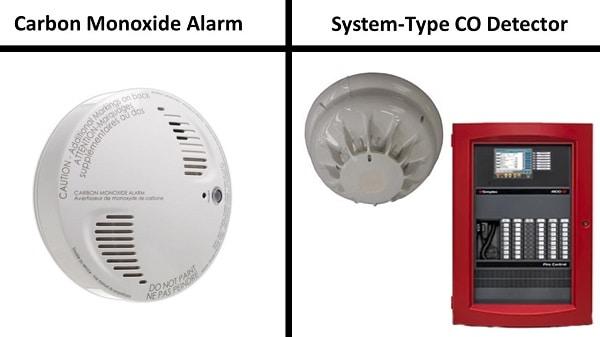
So, to cut to the chase: a standard, run-of-the-mill smoke detector does not detect carbon monoxide. They're designed for different jobs, like a locksmith and a plumber. Both important for your house, but you wouldn't ask the locksmith to fix your leaky faucet, would you?

The Marvelous Multi-Taskers: Combination Units!
"Hold on a minute," you might be thinking, "I'm pretty sure I've got one device that does both!" And you'd be absolutely right, my friend! This is where the plot thickens, in a good way. While a pure smoke detector can't do the CO job, and a pure CO detector can't do the smoke job, manufacturers, being the clever folks they are, invented the combination unit.
These are like the superheroes of home safety. They're a single device that houses two separate sensors: one for smoke and one for carbon monoxide. It's not one sensor magically doing double duty; it's two specialized detectors sharing a single casing and often, a single battery. Think of it like a 2-in-1 shampoo and conditioner – two distinct functions, one convenient bottle. Or a multi-tool: it has a knife and a screwdriver, but the knife isn't also the screwdriver.
These combination units are super popular because, let's face it, who wants two separate chirping devices on their ceiling? It’s enough to keep track of one, especially when the battery starts its infamous 3 AM chirp, making you question all your life choices.
Why Does It Matter? And What Should You Do?
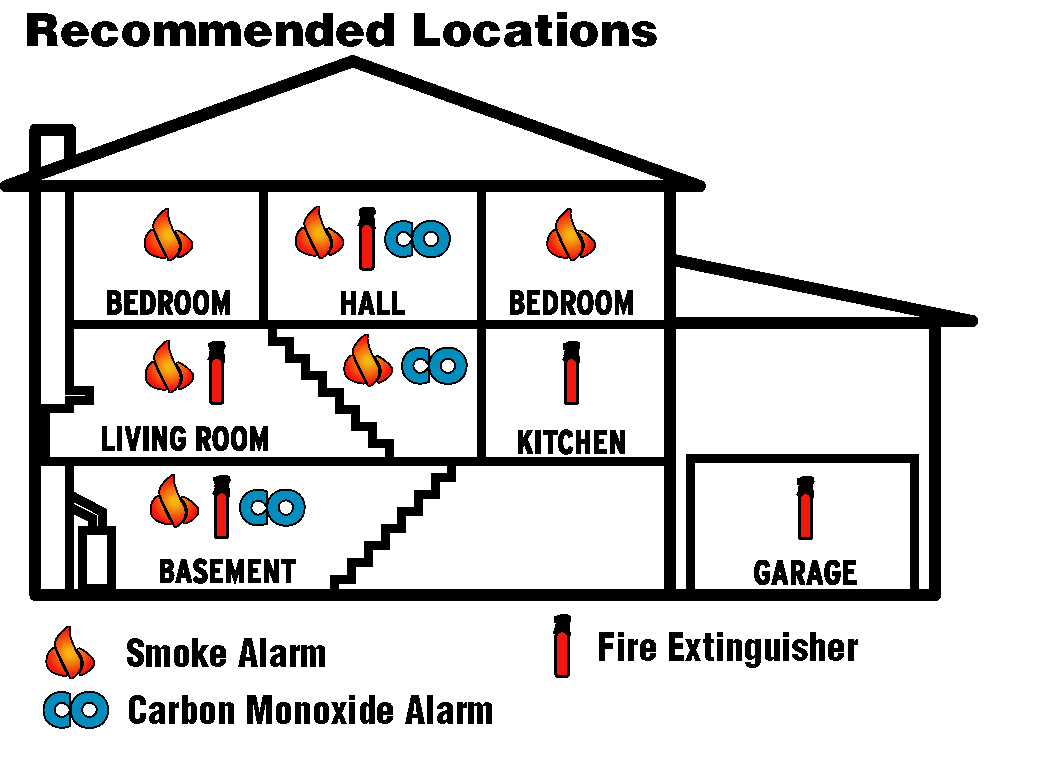
Understanding this difference is crucial for your peace of mind and, well, your actual safety. Having a smoke detector is great for fires. Having a CO detector (or a combination unit) is non-negotiable if you have fuel-burning appliances in your home – think gas stoves, furnaces, water heaters, fireplaces, or even an attached garage where car exhaust could seep in.
Here’s the simple takeaway, straight from the "been there, done that" department:
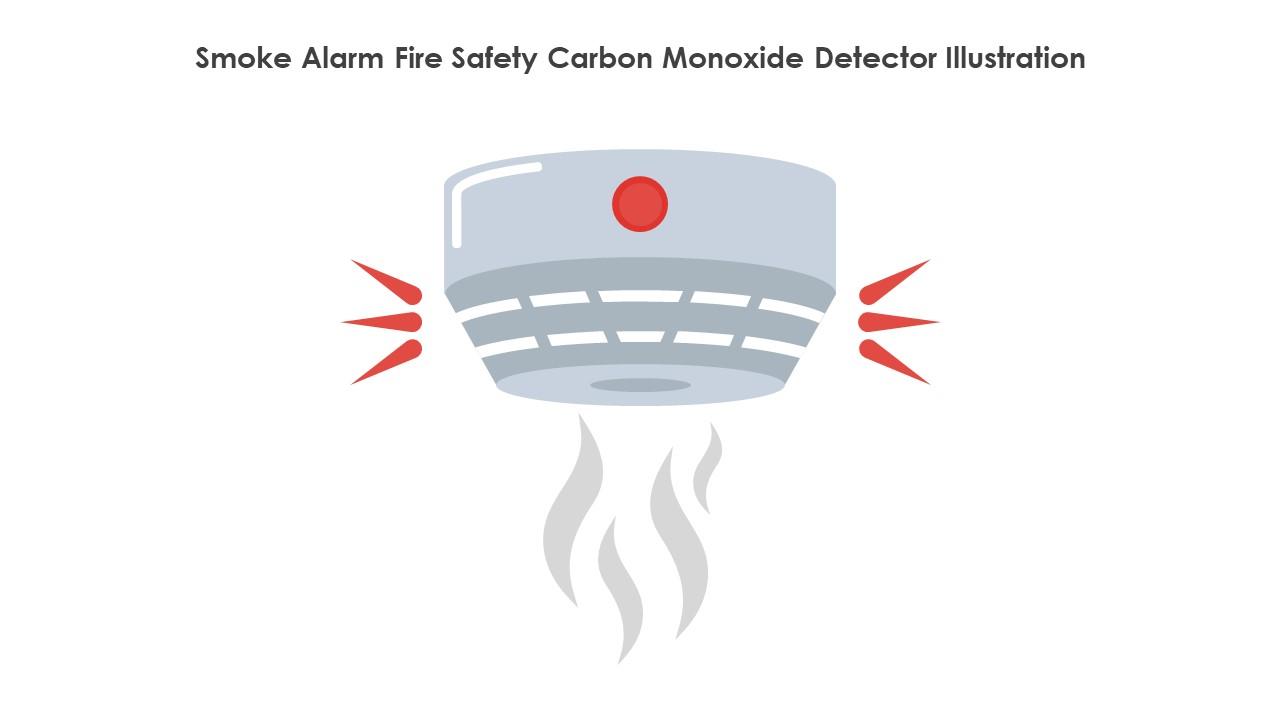
- If your alarm only says "Smoke Detector" or has a picture of smoke, it's just for fire.
- If it says "CO Detector" or "Carbon Monoxide Alarm," it's just for CO.
- If it says "Smoke & CO Alarm" or "Combination Detector," then hooray! You've got both bases covered in one neat package.
Regardless of what you have, remember to:
- Test them monthly: Press that little button. It’s annoying, but it works.
- Change batteries regularly: Usually twice a year, or when they start that soul-piercing chirp.
- Replace the whole unit: Detectors aren't forever. They actually have an expiration date, typically 7-10 years. Just like that yogurt in the back of your fridge, they lose their effectiveness over time. Check the back for the manufacturing date or "replace by" date!
So, the next time your ceiling guardian decides to get chatty because of your culinary "experiments," you'll know exactly what kind of threat it's detecting. Stay safe, stay smiling, and maybe invest in one of those combination units. It's one less thing to worry about, letting you focus on the important stuff, like perfecting that steak (or avoiding another burnt toast incident).