
Do All Septic Tanks Have A Leach Field

Ah, the humble septic tank. It's often the unsung hero, quietly doing its vital work beneath our feet. For many, it's a mystery shrouded in dirt and vague apprehension. But what if I told you that delving into the world of septic systems isn't just about understanding plumbing, but about unlocking a little piece of environmental magic and becoming a more informed, empowered homeowner?
You've probably heard the term "leach field" tossed around, often right alongside "septic tank." They seem like an inseparable duo, don't they? Like peanut butter and jelly, or socks and sandals (okay, maybe not that last one). But here's the burning question that sparks our adventure today: Do all septic tanks have a leach field?
The Classic Combo: Septic Tank & Leach Field
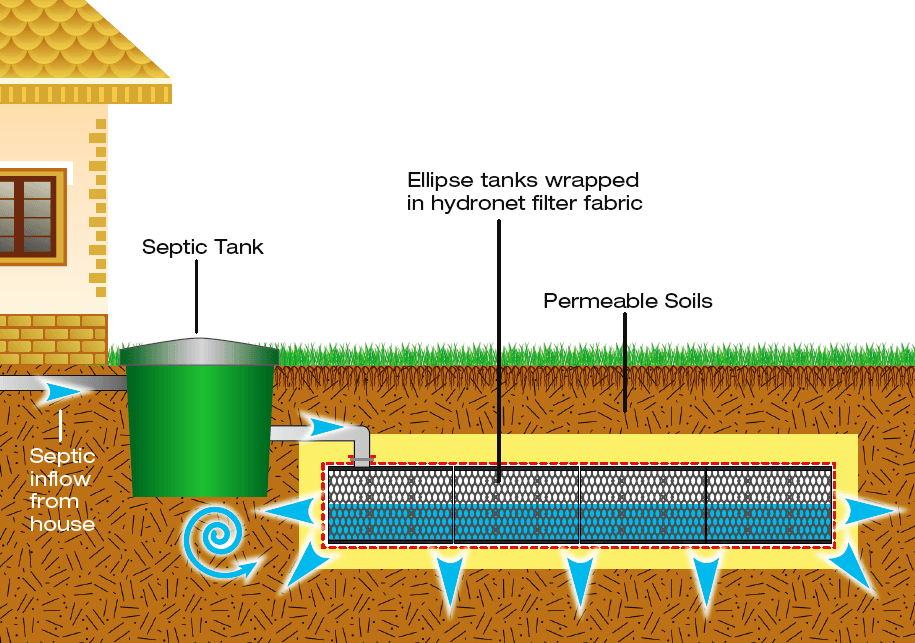
Let's paint a picture, shall we? You flush, it goes down. But where does it go after that? For most homes not connected to a municipal sewer system, it heads straight to the septic tank. Think of this as your home's personal, underground wastewater treatment plant. It’s a sealed container, usually concrete or fiberglass, where the magic of separation happens. Solids sink to the bottom (sludge), lighter stuff like grease floats to the top (scum), and the liquid in the middle (effluent) gets ready for its next act.
Must Read
And that next act, for the vast majority of systems, is the leach field (also known as a drain field or absorption field). This is where the partially treated liquid from the septic tank is slowly released into the soil. It’s like nature's own filtration system! As the effluent trickles through layers of gravel and soil, natural bacteria and oxygen further purify it before it rejoins the groundwater. It’s elegant, it’s effective, and frankly, it’s pretty darn clever.
So, for many, the answer to our big question seems like a resounding "YES!" The septic tank and leach field are the ultimate tag team, working together to keep things clean and green. But here's where our story gets a little more interesting, a little more nuanced... because not all stories are the same.

Plot Twist! When the Leach Field Takes a Day Off (or Doesn't Exist At All)
Prepare yourself, because the answer to "Do all septic tanks have a leach field?" is actually a fascinating "Not always!" (Cue dramatic music). And understanding why opens up a whole new world of septic system smarts.
1. The Holding Tank: The Lone Wolf
Imagine a very large bucket. That, my friends, is essentially a holding tank. These are septic tanks in the sense that they hold wastewater, but they have absolutely no leach field or dispersal system. They're common in areas where soil conditions are terrible for absorption, or where a permanent septic system simply isn't feasible.
What's the catch? Well, every drop of water that goes into a holding tank stays there until it's pumped out by a professional. This means regular, and sometimes very frequent, pump-outs are essential. It's not a treatment system; it's purely a storage solution. So, if your home has a holding tank, you can definitively say, "My septic tank does not have a leach field!"

2. The High-Tech Heroes: Advanced Treatment Units (ATUs)
Sometimes, simply relying on a traditional septic tank and leach field isn't enough, especially in environmentally sensitive areas or where the soil is a bit finicky. Enter the Advanced Treatment Units (ATUs). These systems take wastewater treatment to the next level, often using aeration (bubbling air through the wastewater) or special media to grow more helpful bacteria. They produce a much cleaner effluent than a conventional septic tank.
Here's the thing: While the water coming out of an ATU is significantly cleaner, it still often needs somewhere to go. This might be a much smaller traditional leach field, or it could be dispersed through a drip irrigation system or even spray irrigation. So, while they might not have a conventional, large leach field, they often still have a form of soil absorption or dispersal. It's a different beast entirely!
3. Specialized Drain Fields: The Adaptable Architects
And what about those tricky soils? Sometimes the ground just isn't suitable for a standard in-ground leach field. But fear not, innovation steps in! Systems like mound systems or at-grade systems are designed to overcome these challenges. They create an elevated, engineered drain field on top of the natural soil, using specific layers of sand and gravel to ensure proper treatment and dispersal.

Are these "leach fields"? In a broader sense, yes! They are designed to leach treated wastewater into the soil. They just don't look like the trench-and-pipe system you might typically imagine. They are a testament to human ingenuity in adapting to nature's quirks.
Why Does This Matter to You, My Curious Friend?
So, we've journeyed through the world of septic systems, uncovering that not every tank comes with the classic leach field sidekick. Why should this little nugget of information bring a smile to your face or a spark to your eye?
Because knowledge is power, my friend! Understanding these nuances makes you a more informed homeowner, a savvier property buyer, and a more responsible environmental steward. It transforms that mysterious "thing in the yard" into something you understand and can manage effectively.
Knowing your system's specifics means you can ask the right questions, perform the right maintenance, and appreciate the hidden engineering marvel beneath your lawn. It’s about being truly connected to your home, from the roof down to the deepest pipes.
So go forth, armed with your newfound wisdom! Ask your septic professional about your specific system. Research the regulations in your area. Embrace the fascinating, often overlooked, world of wastewater management!
The world is full of hidden wonders, even underground. And realizing that even something as seemingly straightforward as a septic tank can have different solutions and designs just goes to show: there's always more to learn, more to discover, and more to appreciate about the amazing world we live in! Keep that curiosity flowing!