
Difference In Skin Tag And Wart

Alright, gather 'round, folks! Let's talk about something we all secretly Google at 3 AM: those little skin bumps that pop up and make us question our very existence. I'm talking about skin tags and warts. Now, before you start hyperventilating about some rare jungle disease, take a deep breath. We're going to untangle this mess with a little humor and a whole lot of common sense.
First things first: skin tags and warts are NOT the same thing. Think of them as distant cousins who showed up to the family reunion. They might look a little similar from afar, but once you get closer, you'll see they have vastly different personalities. One's just kinda... there, while the other's throwing a viral party on your skin.
Skin Tags: The Dangly Dudes
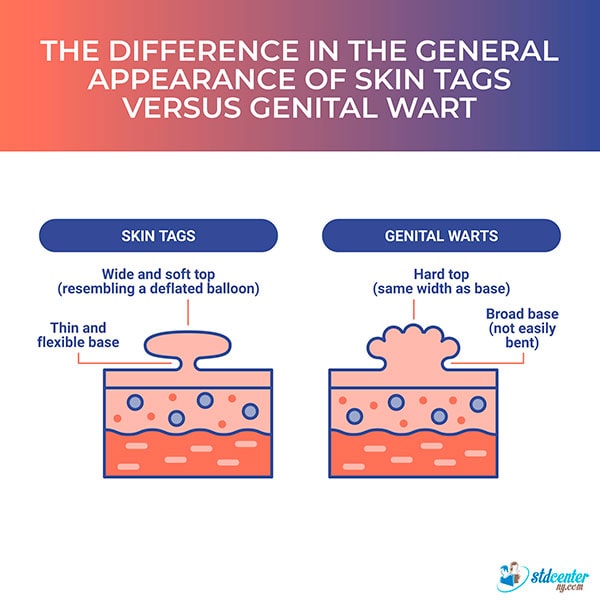
Imagine a tiny, deflated balloon hanging off your skin. That's pretty much a skin tag. They're these soft, fleshy little growths that often appear in areas where skin rubs against skin – think armpits, neck folds (blame that comfy couch!), and groin area. Basically, anywhere your body parts are doing a little tango.
Must Read
Skin tags are, for the most part, harmless. They're like that quiet uncle at the reunion who just sits in the corner and eats all the potato salad. They don't cause pain (unless you snag them on something, which, ouch!) and they're not contagious. You can't "catch" a skin tag from your friend, no matter how much you hang out. It's just your skin deciding to grow a little extra piece of itself.
Why do we get them? Well, genetics play a role. If your parents had a garden full of skin tags, chances are you might inherit the green thumb, so to speak. Also, friction is a big factor. All that rubbing creates tiny tears in the skin, and your body tries to repair them by, uh, creating a little dangly dude. Some people with insulin resistance or who are overweight are more prone to developing skin tags. So, maybe lay off the donuts... just kidding! (But maybe just one less).
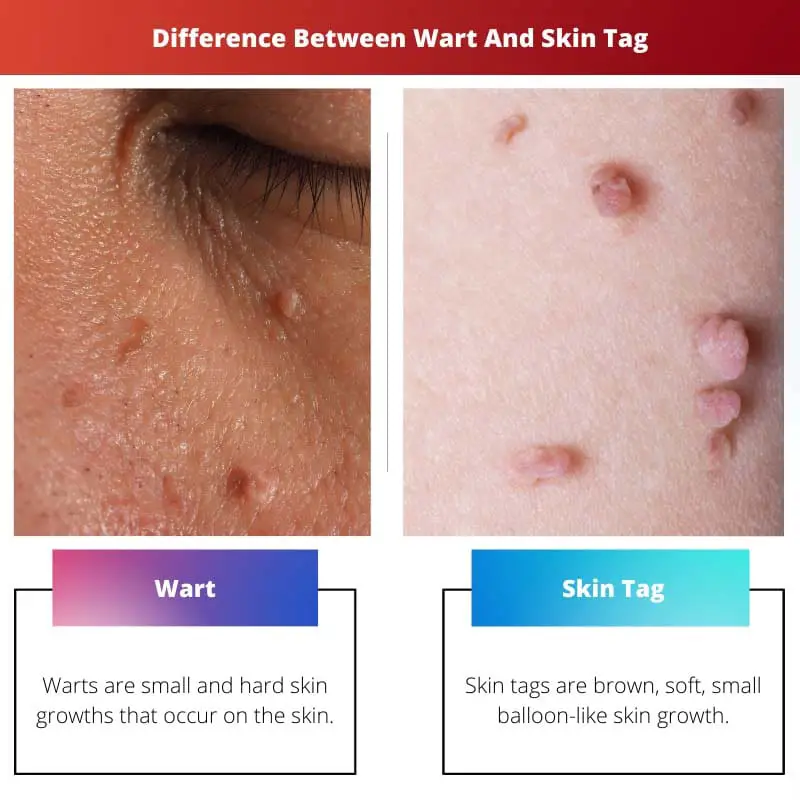
The good news is, if you really hate them, skin tags are generally easy to remove. A doctor can snip them off, freeze them off, or even tie them off with a piece of string (don't try this at home, folks! Seriously!). Don't try DIY surgery! Leave it to the professionals. Remember, you only get one body, treat it with a little respect and a licensed professional.
Warts: The Viral Vixens
Now, let's talk about warts. These are the rambunctious cousins at the reunion, the ones who started the karaoke session after three margaritas. Warts are caused by the Human Papillomavirus (HPV). No, not that HPV! There are over 100 different types of HPV, and only a few cause skin warts. So, don't panic!
Unlike skin tags, warts are contagious. They're spread through direct contact, which means you can catch them from touching someone who has them, or even from touching a surface that someone with a wart has touched. Think public showers, swimming pools, or even sharing a towel. It's like playing tag, only the "it" is a pesky virus.
Warts come in all shapes and sizes. There are common warts (those rough, bumpy ones), plantar warts (on the soles of your feet - feels like you're walking on pebbles!), flat warts (small, smooth, and often clustered), and even genital warts (we won't go there today!). Each type has its own unique charm... or lack thereof.
Warts can be stubborn little buggers. Your immune system eventually clears up the virus, but sometimes it takes months, or even years. Treatment options range from over-the-counter salicylic acid (which basically peels the wart away, layer by layer) to more aggressive procedures like cryotherapy (freezing them off), laser treatment, or even surgical removal.
Here's a fun fact: some people swear by duct tape as a wart treatment. The theory is that the duct tape suffocates the wart, eventually killing it. Does it work? Some studies say yes, some say no. But hey, it's worth a shot, right? Just don't blame me if you end up with a sticky situation!
The Tell-Tale Signs: How to Tell Them Apart
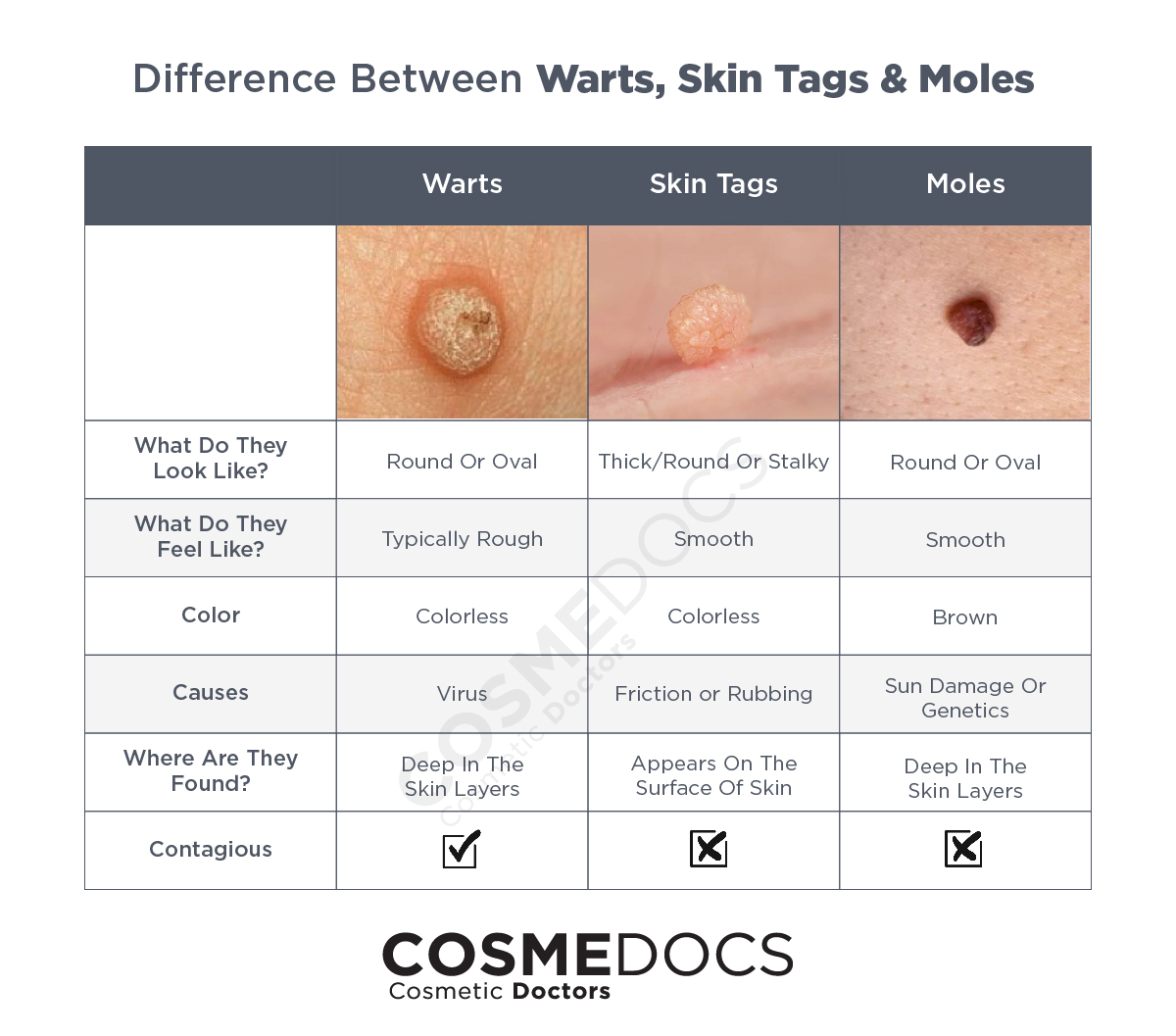
So, how can you tell the difference between a skin tag and a wart? Here's a cheat sheet:
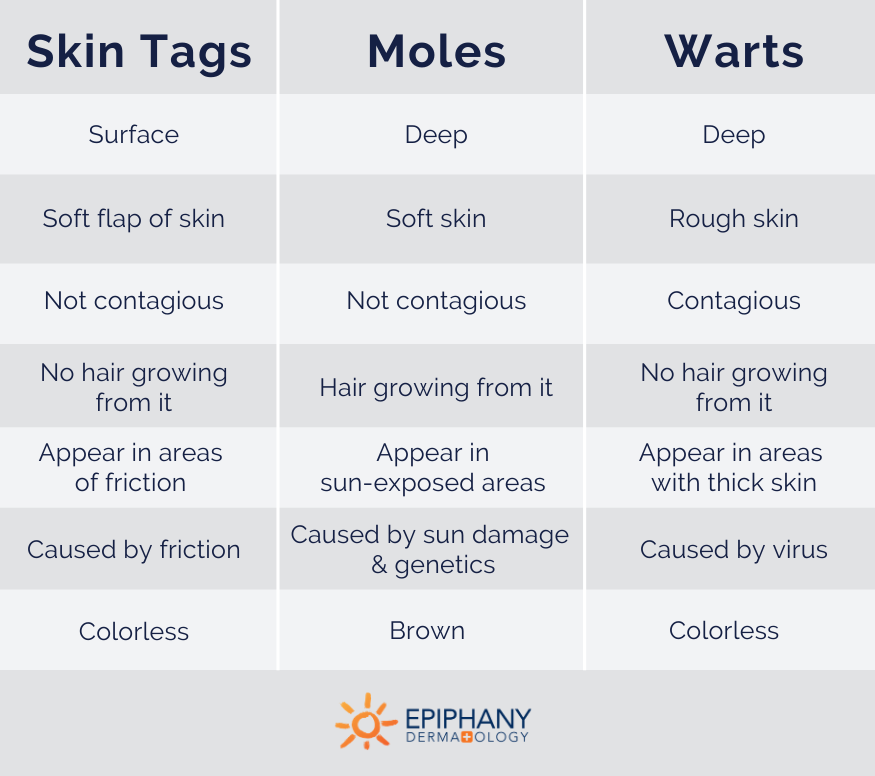
- Skin tags are usually soft, fleshy, and dangly. They're often skin-colored or slightly darker.
- Warts are typically rough, bumpy, and raised. They can be skin-colored, pinkish, or even brownish. They might also have tiny black dots in them (those are clotted blood vessels).
- Location, location, location! Skin tags like skin folds. Warts can pop up anywhere, but are common on hands and feet.
- Contagiousness. Skin tags are not contagious; warts are.
If you're still unsure, the best thing to do is see a doctor or dermatologist. They can give you a definitive diagnosis and recommend the best course of treatment. Plus, they've seen it all before. Trust me, you're not going to shock them with your skin weirdness. They're professionals!
In conclusion, skin tags and warts are two different beasts. One is a harmless little growth, the other is a viral party crasher. Knowing the difference can save you a lot of unnecessary worry (and frantic Googling at 3 AM). So, embrace your skin quirks, keep it clean, and don't be afraid to ask for help if something doesn't look quite right. And remember, laughter is the best medicine... except for warts. Those need salicylic acid.