
Did The Benefits Of Industrialization Outweigh The Costs
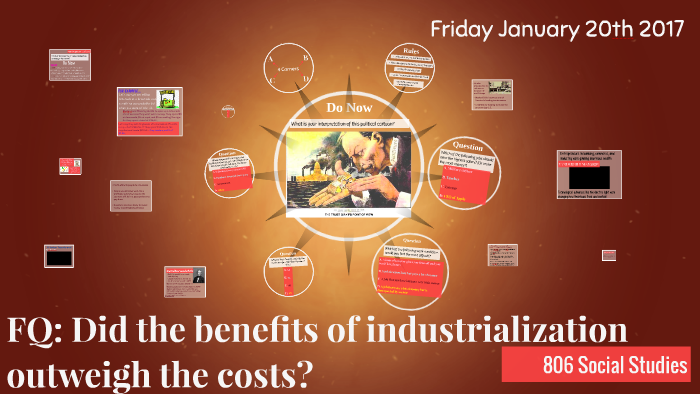
Okay, so we're kicking back, maybe sipping some iced tea (or something stronger – no judgment!), and pondering the big questions, right? Like, did that whole Industrial Revolution thing, with all its steam engines and soot, actually make life better?
It's a tough one, because on the one hand, we've got, like, indoor plumbing. On the other hand...child labor. Yikes. So, let’s dive in and see if the benefits outweighed the costs.
The Good Stuff: Progress, Progress Everywhere!
Let's start with the shiny, happy parts. Industrialization basically meant things got faster, cheaper, and more abundant. Think about it: Before, everything was made by hand, slowly, and usually only affordable for the rich.
Must Read
Suddenly, factories were churning out textiles, tools, and all sorts of goodies. Mass production! It was like a perpetual Black Friday, but without the annoying crowds (well, except for the factory workers...more on them later).
And it wasn't just about stuff. Industrialization led to massive advancements in transportation and communication. Suddenly, trains were chugging across continents, and telegraphs were zipping messages across the globe. Before, if you wanted to talk to Aunt Mildred, you had to write a letter and wait six months for a reply by horseback. Now? Almost instant contact! (Though Aunt Mildred might still prefer a handwritten note, bless her heart.)

Oh, and let’s not forget the medical breakthroughs! New medicines and technologies emerged, helping to fight diseases and extend lifespans. People started living longer, healthier lives. Pretty great, right?
The Not-So-Good Stuff: Soot, Sweat, and Tears
Alright, now for the reality check. It wasn't all sunshine and automated cotton gins. Industrialization had a dark side, a side covered in soot and powered by exploited labor.
The working conditions were often horrific. Long hours, low wages, and dangerous environments were the norm. Imagine spending 14 hours a day in a noisy, dusty factory, with the constant threat of injury. No thanks!

And it wasn't just adults suffering. Child labor was rampant. Kids as young as five or six were working in factories and mines, performing dangerous tasks. It’s truly heartbreaking. Forget playtime – it was all work, all the time.
Then there's the environmental impact. Factories belched out pollution, polluting the air and water. Cities became overcrowded and unsanitary. It was like a perpetual smog alert! Our planet definitely paid a price for all that progress.

The Verdict: Weighing the Scales
So, did the good outweigh the bad? It's a complicated question. On the one hand, industrialization drastically improved living standards for many. On the other hand, it came at a huge cost to the working class and the environment.
Perhaps the most honest answer is that the benefits were unevenly distributed. Some people – factory owners, entrepreneurs, and the growing middle class – reaped enormous rewards. Others – the working class, particularly those in factories – bore the brunt of the negative consequences. And let’s not forget the environment, which really got a raw deal.
The Industrial Revolution ultimately forced societies to grapple with issues of inequality, worker rights, and environmental protection. These are problems we're still dealing with today, which shows just how significant and lasting the impact of industrialization has been.

And here's the really awesome thing: because of the Industrial Revolution, we learned. We learned that unchecked progress can be dangerous. We learned that human rights matter. We learned that we have a responsibility to protect our planet. And those lessons, my friend, are invaluable.
Looking on the Bright Side (Because We Can!)
So, next time you flip a light switch, drive a car, or order something online, take a moment to think about the Industrial Revolution. It was a messy, complicated, and often painful period in history. But it also laid the foundation for the modern world we live in today.
And hey, at least we've (hopefully) learned a few lessons along the way. We can now strive for progress that's both innovative and sustainable, fair to all, and respectful of our planet. And that, my friend, is something to smile about!