
Data Engineer Interview Questions
So, you're eyeing a career as a Data Engineer? Awesome! Get ready to dive into a world of pipelines, platforms, and petabytes! But before you land that dream job, there's… the interview. Dun dun DUNNN! Okay, okay, don't panic. Interviews can actually be… dare I say… fun? Well, maybe not exactly fun, but definitely a chance to show off your brilliance. And that, my friend, is always a good time.
Let's demystify those pesky Data Engineer interview questions. We're not just going to list them; we're going to understand why they're asked and how to answer them like the rockstar you are. Ready? Let's roll!
The Fundamentals: Show You Know Your Stuff
First up, the basics. Expect questions testing your understanding of core concepts. These are the building blocks, the foundation upon which your data empire will be built. You wouldn't build a skyscraper on quicksand, would you? (Unless you're trying to make a statement, I guess.)
Must Read
What is the difference between a relational database and a NoSQL database? This is a classic! Think about it: Relational databases (like MySQL and PostgreSQL) are structured, with predefined schemas. NoSQL databases (like MongoDB and Cassandra) are more flexible, often schema-less, and designed for scalability. Know your pros and cons for each! Which one is suitable for different scenarios? You’ve got this!
Explain the concept of ETL (Extract, Transform, Load). This is Data Engineering 101. Can you articulate each step clearly? Extraction: getting the data from various sources. Transformation: cleaning, shaping, and preparing the data. Loading: getting the transformed data into its final destination (like a data warehouse). Boom! You're a pro.
What are some common data warehousing architectures? Star schema? Snowflake schema? Be ready to discuss these and why you might choose one over the other. Consider the trade-offs between simplicity and query performance.
The Technical Deep Dive: Get Ready to Code!
Alright, now it's time to prove you can actually do stuff. Expect questions that require you to demonstrate your coding skills, often in Python, SQL, or Java (depending on the role). Don't worry; they're not looking for perfection; they're looking for logical thinking and problem-solving abilities.
Write a SQL query to find the top 10 customers by total purchase amount. Brush up on your SQL skills! Knowing how to use aggregations (SUM, AVG, COUNT), GROUP BY, and ORDER BY is crucial. Also, knowing how to use LIMIT can save you a lot of time.
How would you design a data pipeline to ingest data from a real-time streaming source like Kafka? This requires you to think about the entire flow: reading data, transforming it, and loading it into a data store. Consider tools like Apache Spark or Apache Flink for real-time processing. Be prepared to discuss trade-offs in latency, throughput, and fault tolerance.
Explain how you would handle duplicate data in a dataset. Deduplication is a critical skill. Think about techniques like using unique identifiers, hashing algorithms, and windowing functions (in SQL). Also, consider the performance implications of each approach.
The Big Picture: Systems Thinking and Design
Data Engineering isn't just about writing code; it's about designing systems. This section explores your ability to think strategically and architect scalable and reliable solutions. This is where you show you're not just a coder; you're an architect!
How would you design a data warehouse for a large e-commerce company? This is a broad question! Consider the data sources (website, mobile app, payment gateway), the data volume, the reporting requirements, and the scalability needs. Think about the architecture, the technologies, and the trade-offs. Don't forget security!
How do you ensure data quality in your pipelines? Data quality is paramount. Discuss techniques like data validation, data profiling, and monitoring. Consider how you would handle data errors and implement alerting mechanisms.
Explain your experience with cloud platforms like AWS, Azure, or GCP. Cloud platforms are becoming increasingly important in data engineering. Showcase your experience with services like S3, Azure Blob Storage, Google Cloud Storage, and related services for data processing and warehousing.
The Behavioral Stuff: Show You're a Great Teammate
Technical skills are important, but so are soft skills. Interviewers want to know if you're someone they'd enjoy working with. Be prepared to answer questions about your teamwork, communication, and problem-solving abilities. Hint: Be honest and enthusiastic!
Tell me about a time you had to overcome a challenging technical problem. Use the STAR method (Situation, Task, Action, Result) to structure your answer. Explain the situation, the problem you faced, the actions you took, and the positive results you achieved. Highlight your problem-solving skills and resilience.
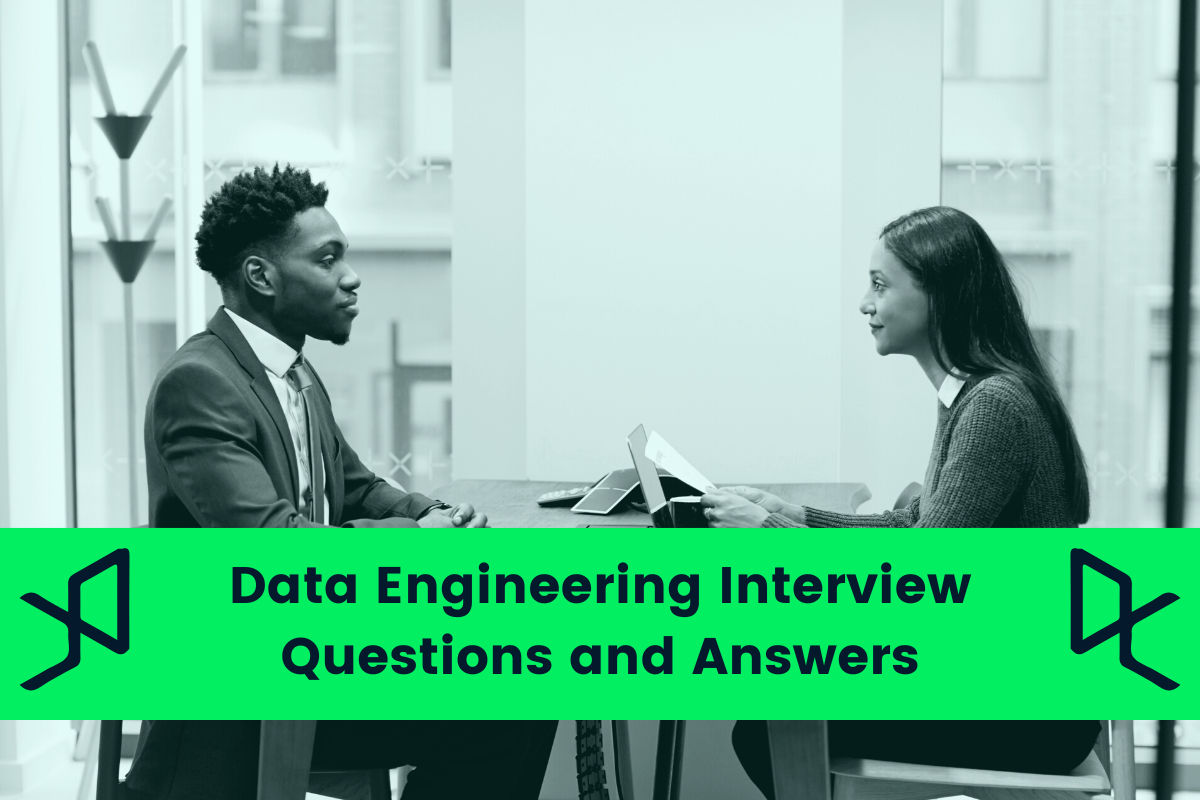
Describe your experience working in a team. Emphasize your ability to collaborate, communicate effectively, and contribute to a positive team environment. Give examples of successful team projects.
Why are you interested in this particular data engineering role? This is your chance to show your passion and alignment with the company's mission. Research the company, understand the role, and articulate why you're excited about the opportunity.
Go Forth and Conquer!
See? Not so scary, right? Data Engineer interview questions are all about showcasing your skills, your knowledge, and your passion for data. Prepare thoroughly, practice your answers, and be yourself. You've got the skills, you've got the knowledge, and now you've got the inside scoop.
The world of data is constantly evolving, so keep learning, keep exploring, and keep building! The journey is challenging, but the rewards are immense. Now go out there and land that dream job! And remember, even if you don't get the first job you interview for, every interview is a learning experience. Take it as a chance to refine your skills and come back even stronger next time. The future of data is bright, and you're a part of it. Embrace the challenge and have fun! Good luck, future Data Engineer!