
Cuã¡ntas Millas Es Un Kilã³metro

Ever been road tripping, glanced at a sign boasting kilometers to the next quirky roadside attraction, and thought, "Wait, how far is that in real people miles?" You're not alone! We've all been there, grappling with the metric system's sneaky little secrets. So, let's unravel this mystery: how many miles are in a kilometer? Get ready for the wonderfully weird world of distance conversion!
The short and sweet answer? One kilometer is approximately 0.621371 miles. Boom. Mic drop. Okay, not quite. While that number is technically correct, it's about as memorable as your great aunt Mildred's pickle recipe. Let's make this a bit more relatable, shall we?
Think of it this way: a kilometer is just a smidge more than half a mile. Imagine you're jogging. If you run a kilometer, you've gone a little over half the distance you'd cover if you ran a mile. See? Suddenly, those kilometer signs don't seem so intimidating, do they?
Must Read
The Mind-Bending Metric System
The metric system, the brainchild of clever folks who decided things should be in units of ten (because, you know, we have ten fingers), can feel like a foreign language when you're used to miles, feet, and inches. But don't despair! It's actually quite logical once you get the hang of it.
Instead of memorizing that 0.621371 number, consider using a simple rule of thumb: for a quick and dirty conversion, you can multiply kilometers by 0.6. It's not perfectly accurate, but it'll give you a decent ballpark figure. So, if a sign says 10 kilometers to the nearest ice cream parlor (a very important destination, indeed!), you can estimate it's about 6 miles away. Enough to justify a second scoop, wouldn't you say?

Of course, there are apps and websites galore that can do the exact conversion for you. But where's the fun in that? Embracing the approximation is part of the adventure! Think of it as a mental workout, keeping your brain cells happy and engaged.
A Tale of Two Systems: The Miles vs. Kilometers Divide
The great debate over which system is superior has raged for decades. The United States, along with a couple of other nations, stubbornly clings to the imperial system (miles and all), while the rest of the world gleefully measures in kilometers. Why? Well, that's a story for another day involving stubbornness, tradition, and perhaps a little bit of good old-fashioned American exceptionalism.
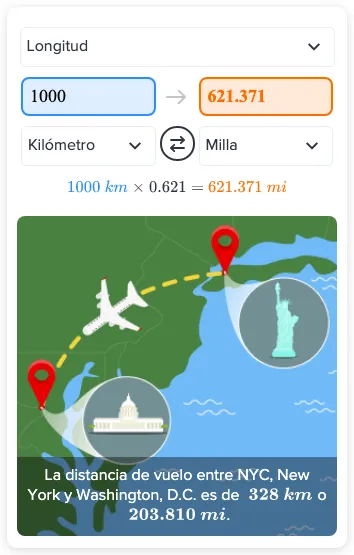
Regardless of your personal preference, understanding the relationship between miles and kilometers is essential for navigating the globe. Whether you're renting a car in Europe, following a trail map in Canada, or simply trying to decipher the distances in your favorite video game, knowing that 1 kilometer is roughly 0.6 miles will save you from a lot of confusion (and potentially, a wrong turn or two).
"Measurement is theory laden." - Werner Heisenberg, probably thinking about kilometers and miles.
But beyond the practical applications, there's something oddly charming about this little mathematical dance. It's a reminder that the world is full of different perspectives, different ways of measuring things, and different ways of experiencing the same journey.

Embrace the Confusion, Enjoy the Ride
So, the next time you encounter a kilometer sign, don't panic! Take a deep breath, multiply by 0.6 in your head (or just guess!), and embrace the fact that you're participating in a global conversation about distance. After all, the journey is often more important than the destination, regardless of how many miles or kilometers it takes to get there. And who knows, maybe you'll even learn a thing or two along the way. Or at least justify that extra scoop of ice cream.
Just remember, knowing that a kilometer is a little over half a mile is a handy tool in your travel arsenal. Now go forth, explore the world (or just your neighborhood), and conquer those kilometers with newfound confidence! And maybe, just maybe, the next time someone asks you, "Cuantas millas es un kilometro?" you'll be ready with a smile and a slightly-better-than-accurate answer.
