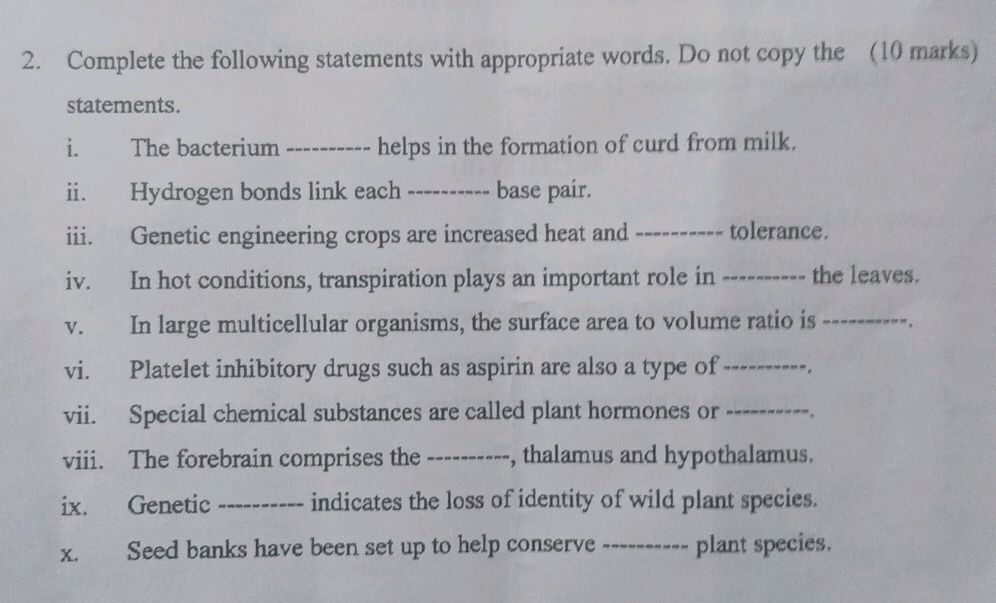
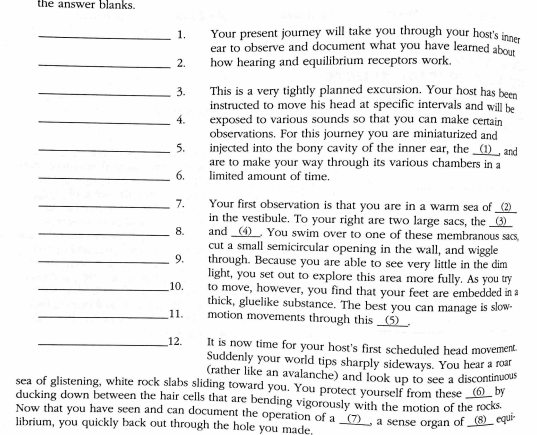
Complete The Statements With The Appropriate Words.

Have you ever found yourself pondering the perfect word to complete a sentence, feeling that satisfying click when the right one slots into place? That's the power of "Complete the Statements," a deceptively simple exercise that engages your brain and boosts your understanding of language. It might sound like a basic test question, but its relevance extends far beyond the classroom. It’s actually a fantastic way to improve your vocabulary, grasp nuances in meaning, and sharpen your critical thinking skills.
At its core, the purpose of "Complete the Statements" is to assess and enhance your ability to understand context and use language effectively. The benefits are numerous. For students, these exercises directly improve reading comprehension, writing proficiency, and performance on standardized tests. Think of it as a workout for your verbal muscles, strengthening your ability to choose the most appropriate word or phrase to convey a specific idea. But the benefits aren't limited to academia. In daily life, being able to quickly and accurately understand what someone means, and respond in a clear and concise way, is invaluable for communication, building relationships, and navigating professional situations. It’s about understanding the implicit meaning alongside the explicit words.
Examples of "Complete the Statements" exercises abound. In education, you might see questions like: "The scientist conducted an ___________ to test her hypothesis." (Possible answers: experiment, observation, analysis). This tests not only vocabulary but also knowledge of scientific processes. In a business setting, a question might be: "To ensure customer satisfaction, we must always strive to ___________ their expectations." (Possible answers: meet, exceed, understand). This assesses understanding of customer service principles. Even in everyday conversation, we implicitly "complete the statement" all the time. Consider this scenario: "It's raining, so I'll take my ___________ ." Your mind automatically fills in the blank with a logical choice like "umbrella" or "coat," demonstrating your understanding of cause and effect.
Must Read
Exploring "Complete the Statements" is easier than you might think. One simple way is to actively engage with the written word. When you read a book or article, pay attention to the author's word choice and consider why they chose a particular word over another. Try to predict what word might come next in a sentence, then see if you were right. Many websites and apps offer practice exercises specifically designed to improve vocabulary and comprehension. Look for quizzes that present incomplete sentences and ask you to select the best word from a list of options. Don't be afraid to make mistakes; each incorrect answer is an opportunity to learn and refine your understanding. You can even create your own exercises, challenging yourself or your friends to complete sentences with varying levels of difficulty. Focus on understanding the relationship between words and how they create meaning.
So, the next time you encounter a "Complete the Statements" exercise, don’t just see it as a task to finish. Embrace it as an opportunity to sharpen your language skills, improve your critical thinking, and become a more effective communicator. It’s a skill that will benefit you in all aspects of your life.