
Complete The Autoionization Reaction For Water.
Water. We drink it. We swim in it. It covers most of the planet. But did you know it's also having a tiny, ongoing party with itself?
Yep, water molecules aren’t just sitting there, being H₂O. Sometimes, they get a little… reactive. Get ready for the super-secret agent of chemistry: autoionization of water.
The Great Water Swap
Imagine a crowded dance floor. Everyone's politely swaying, but occasionally, one person spontaneously decides to switch partners. That's kind of like what's happening with water.
Must Read
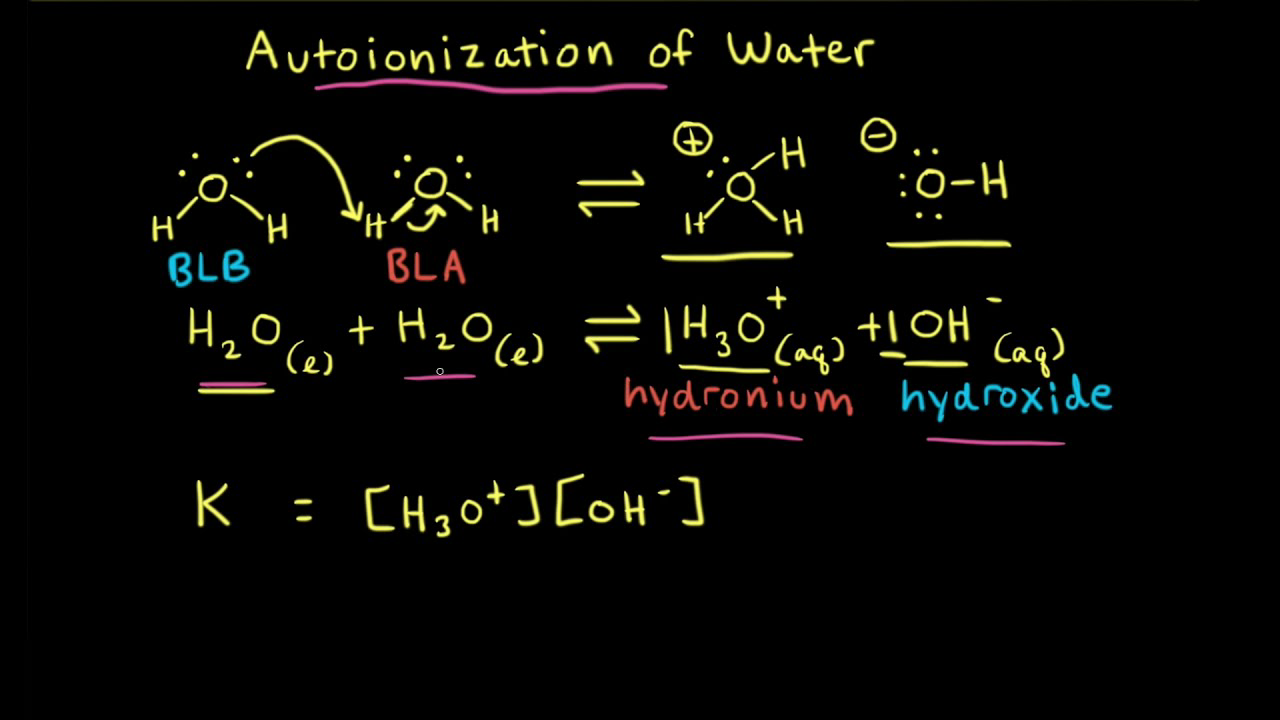
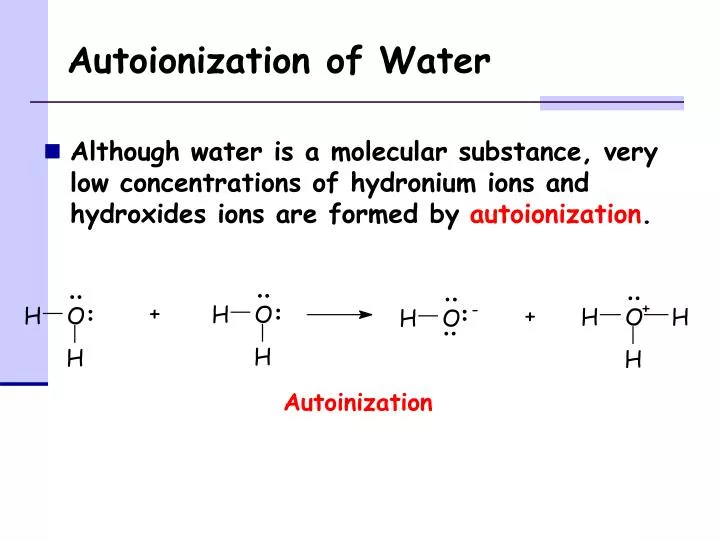
One H₂O molecule bumps into another. In this collision, something interesting happens. A hydrogen atom (H) decides to jump ship from one water molecule to the other! It's like a proton taking a mini vacation.
The H₂O that gains the extra hydrogen becomes H₃O⁺. This is called a hydronium ion. It's a water molecule with a plus sign – extra baggage!
The H₂O that loses the hydrogen becomes OH⁻. This is the hydroxide ion. It's a water molecule feeling a little lighter, rocking a minus sign.
Decoding the Chemical Equation
Okay, let's get a little sciency, but I promise it won't hurt. We can write this whole dance party as a simple equation. Think of it as the recipe for water-based fun.
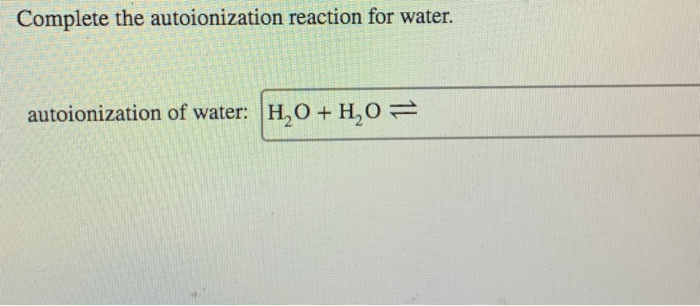
It looks like this: 2 H₂O ⇌ H₃O⁺ + OH⁻. That little double arrow (⇌) is important. It means the reaction goes both ways. It's not a one-time thing. It's a dynamic equilibrium.
Think of it as a reversible dance. Some couples are swapping partners, while others are getting back together. The party never stops!
Why is this even cool?
You might be thinking: "So what? Water's playing musical chairs with its hydrogens." But trust me, this little reaction is a HUGE deal.
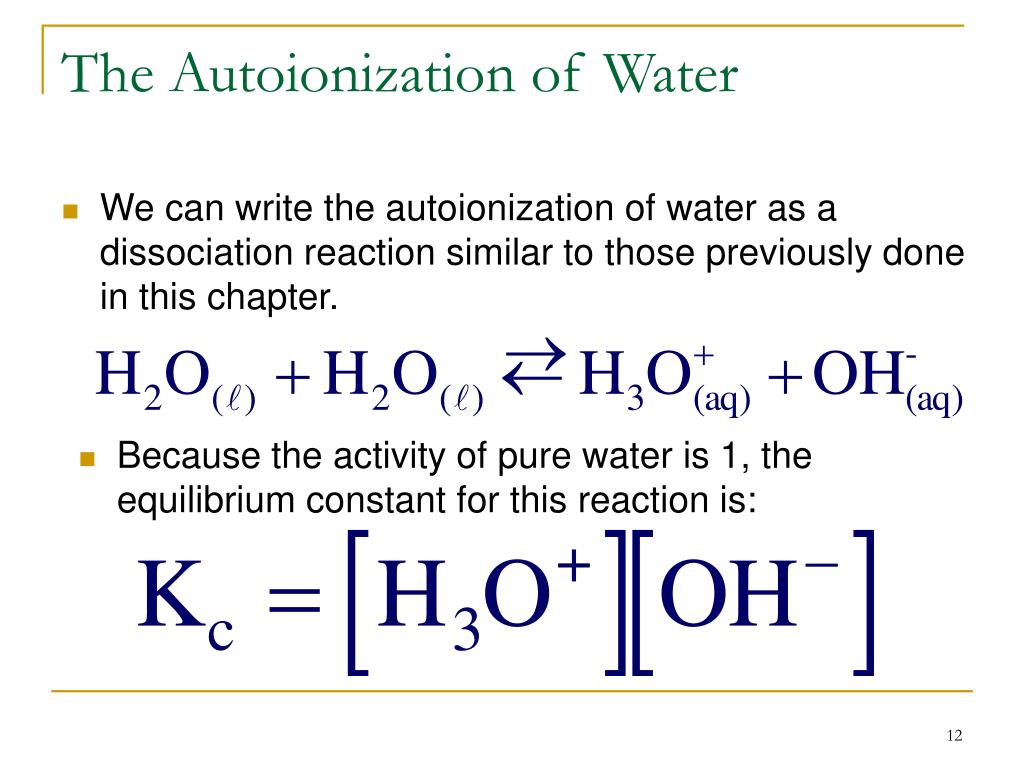
Autoionization is the reason we can define acidity and basicity. It provides the foundation for the pH scale. All those experiments with lemons and baking soda? Thank autoionization!
Without this tiny, continuous dance of protons, life as we know it wouldn't exist! Water's ability to act as both an acid and a base is crucial.
The Power of Balance
Even though water is constantly autoionizing, it's doing it on a very small scale. The vast majority of water molecules are just chilling, being regular H₂O.

At any given moment, only a tiny fraction of water molecules exist as hydronium (H₃O⁺) or hydroxide (OH⁻) ions. This balance is key to water's unique properties.
If water autoionized too much, it would be a super-strong acid or base. We wouldn't be able to drink it, swim in it, or use it to wash our hands.
Keep Exploring
Autoionization of water might sound complicated, but it’s really a simple, elegant process. It shows us that even the most familiar things can have hidden depths.
So next time you take a sip of water, remember that tiny dance party happening at the molecular level. It’s a constant reminder that chemistry is all around us.
Dive deeper! There are tons of resources online and in libraries. Learning about acids, bases, and the pH scale will expand your understanding of this remarkable process.
Bonus Fun Fact
Did you know that the extent of autoionization changes with temperature? Warmer water autoionizes more than cold water. So the dance party gets wilder as the temperature rises!
This seemingly small detail has significant implications for chemical reactions and biological processes. The water dance is sensitive!
So, keep asking questions. Keep exploring the amazing world of chemistry. And never underestimate the power of a simple water molecule!